What Should Furnace Humidifier Be Set at in Winter: Optimal Tips
Winter is here. The air is cold. Your heat is on. Suddenly, your skin feels like paper. You touch a doorknob and—ZAP! You get a shock. Your throat hurts when you wake up.
Does this sound like your home?
You are not alone. Dry air is a big problem. But there is a fix. You likely have a furnace humidifier. It is a metal box on your heater. It adds water to the air. But you must set it right. If you set it wrong, bad things happen. Too low? You stay dry. Too high? You get mold.
So, what should furnace humidifier be set at in winter?
I have fixed many homes. I have seen the damage dry air does. I want to help you. I will share my tips. I will tell you exactly what to do.
Let’s make your home cozy again.
Why Your Nose and Home Hate Winter Dryness
Dry air is mean. It pulls water from everything. It pulls water from your skin. It pulls water from your wood floors.
When the air is dry, you feel it. Your lips crack. Your nose bleeds. Your eyes itch. It is not fun.
But your house feels it too.
Wood needs water. When the air is too dry, wood shrinks. Gaps open in your floor. Your expensive furniture might crack. Even your walls can peel.
My First Winter Mistake
Let me tell you a story. Years ago, I lived in an old farmhouse. It was very drafty. I bought a humidifier. I thought, “More water is better!” I set the dial to 50%.
It was a cold night. The temperature dropped to zero.
The next morning, I woke up. I looked at the window. It was covered in ice. Not on the outside. On the inside. The ice melted later. The water ran down the wall. It ruined the paint. It turned black with mold.
I learned a hard lesson. You cannot just set it to high. You must balance it.
The Magic Number: Ideal Indoor Humidity Winter
You want a simple answer. I will give it to you.
For most homes, aim for 35% to 45%.
This is the sweet spot. It is safe for most days.
At 35%, your skin feels good. You won’t get static shocks. Your nose stays moist.
At 45%, the air is very comfortable. But be careful. If it gets very cold outside, 45% might be too high.
Why Not 50% or Higher?
You might think 50% feels like a tropical island. But your house is not an island.
If the air is too wet, mold grows. Mold loves wet spots. It grows in corners. It grows in your attic. Mold is bad for your lungs. It smells bad too. Also, dust mites love wet air. If you have asthma, this is bad news.
Why Not 15%?
Some homes drop to 15% in winter. This is like a desert.
Viruses love dry air. The flu virus spreads faster in dry air. Your body cannot fight germs well when your nose is dry. You need at least 30% to stay healthy.
Credit: www.gorjanc.com
The Golden Rule: Adjusting for Outside Temperatures
This is the most important part. Please read this carefully.
The colder it is outside, the lower your setting must be.
Why?
Cold air cannot hold water. Warm air can hold water. Your windows are cold. If warm, wet air hits a cold window, it turns to water. This is called condensation.
You must lower the humidity as the temperature drops.
The Temperature Chart (Crucial Expert Data)
Print this list. Tape it to your furnace.
- Outdoor Temp: +20°F or warmer
- Set Humidifier To: 40%
- Outdoor Temp: +10°F to +20°F
- Set Humidifier To: 35%
- Outdoor Temp: 0°F to +10°F
- Set Humidifier To: 30%
- Outdoor Temp: -10°F to 0°F
- Set Humidifier To: 25%
- Outdoor Temp: -20°F or colder
- Set Humidifier To: 15% to 20%
Do you see the pattern? As it gets colder, you turn the dial down.
If you leave it at 40% when it is -10°F outside, your windows will sweat. That sweat will rot your wood.
How to Prevent Window Condensation Winter
Condensation is your enemy. It is a warning sign.
Look at your windows in the morning. Is there a little fog at the bottom corners? That is okay. A tiny bit is fine.
Is the whole window wet? Is water dripping?
Stop!
Your setting is too high.
Turn the dial down by 5%. Wait a day. Check again.
If the water is gone, you are safe. If it is still there, turn it down more.
Your windows tell you the truth. Listen to them. They act like a warning light.

Credit: www.reddit.com
Manual vs. Automatic Humidifiers: What Do You Have?
Go look at your furnace. Look at the humidifier control. It is a small box. It usually has a dial.
The Manual Dial (The “Set It and Check It” Method)
Does your dial have numbers like 10, 20, 30, 40? Does it click when you turn it?
This is a manual humidistat.
You are the brain for this machine. It does not know it is cold outside. It only knows what you tell it.
If a cold snap comes, you must run to the basement. You must turn it down. If it warms up, you can turn it up.
My Tip: Check the weather app on your phone every morning. If the temp drops a lot, go adjust the dial. Make it part of your routine. Like making coffee.
The Automatic Sensor (The “Set and Forget” Method)
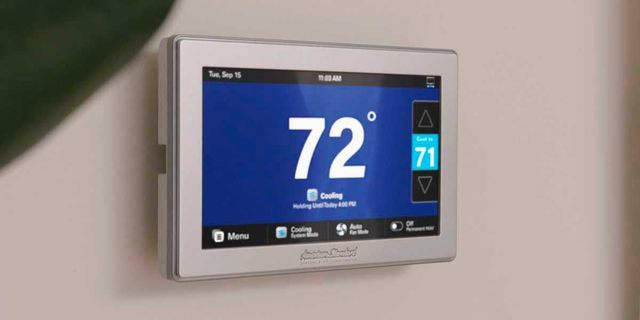
Some controls are digital. They might have a screen.
These often have an outdoor sensor. A wire goes from the furnace to the outside of your house.
This sensor feels the cold. It tells the humidifier what to do.
If it gets cold, the machine lowers the humidity. You do not have to do anything.
This is great for busy people. It is also safer for your home. It prevents mistakes.
Measuring Your Air: Using a Hygrometer
Do not trust the dial on the wall. It might be old. It might be wrong.
You need a tool. It is called a hygrometer.
It looks like a small clock. It shows the temperature and humidity. You can buy one for $10.
Where to Put It
Do not put it in the kitchen. Cooking adds steam.
Do not put it in the bathroom. Showers add steam.
Do not put it near a door.
Put it in your living room. Put it on a shelf. Keep it away from direct sunlight.
How to Read It
Look at the percentage. It usually says “% RH”. This means Relative Humidity.
If it says 32%, you are okay.
If it says 18%, you need more water.
If it says 60%, turn the humidifier off!
Check it once a day. It helps you learn how your house feels.
Health Benefits of Proper Humidity
Why do we do this? It is not just for the windows. It is for your body.
1. Less Sickness
Your nose has mucus. Sorry, it is gross, but true. This mucus traps germs. When the air is dry, your nose dries out. Germs get in easier. Moist air keeps your nose working. It helps you fight the flu.
2. Better Sleep
Do you snore? Dry air makes snoring worse. It swells your throat. Moist air soothes your throat. You sleep deeper. You wake up rested.
3. Soft Skin
Winter itch is real. Dry air sucks moisture from your hands. Lotion helps, but air helps more. With a humidifier, your skin stays soft. You won’t feel so itchy.
Protecting Your Home’s “Bones”
Your house is made of wood. The frame is wood. The floor is wood. The cabinets are wood.
Wood is like a sponge. It drinks water.
In summer, wood swells. In winter, wood shrinks.
If the air is too dry, the wood shrinks too much.
- Floors: You will see dark lines between planks. Dirt gets in there. It looks bad.
- Doors: Your doors might not latch. The frame moves.
- Furniture: Antiques can crack. Glue joints can fail.
Also, think about your electronics.
Static Electricity
Dry air causes static. You walk on the rug. You touch your laptop. SNAP!
That spark is tiny lightning. It can hurt your computer. It can fry sensitive chips. Keeping humidity at 35% stops the static. No more shocks.
Maintenance Matters: Keeping It Clean
A dirty humidifier is bad. It can grow mold. It can blow bacteria into your air.
You must clean it. It is easy. You can do it.
Changing the Water Panel (Evaporator Pad)
Inside the humidifier is a “pad.” It looks like a metal mesh or a paper honeycomb.
Water drips onto it. Air blows through it.
Minerals from the water stick to it. It turns white and hard. It gets clogged.
Do this once a year:
- Turn off the power. There is a switch on the furnace. Or turn off the breaker.
- Find the cover. It usually snaps off.
- Pull out the pad. It sits in a frame.
- Throw it away. Do not wash it. It is meant to be replaced.
- Buy a new one. They cost about $15. Make sure it is the right size.
- Slide the new one in. Look for a mark that says “TOP.” Paint helps mark the spot.
- Put the cover back.
- Turn the power on.
That is it. It takes five minutes.
Cleaning the Drain Line
Your humidifier has a tube. It drains extra water.
Sometimes slime grows in there. If it clogs, water spills. It spills on your furnace. It spills on the floor.
Once a year, pour some bleach and water down the tube. Or blow air through it. Make sure water flows fast.
Signs Your Humidifier Is Not Working
You set the dial. You wait. But the air is still dry. What is wrong?
1. The Water is Off
Did you turn off the water valve in summer? Go check. The small pipe leading to the humidifier must be open. Turn the handle so it lines up with the pipe.
2. The Pad is Old
If the pad is full of rocks (minerals), air cannot pass. Water cannot soak in. Replace the pad.
3. The Damper is Closed
Look at the duct. Is there a lever that says “SUMMER” and “WINTER”?
In summer, we close it. In winter, we open it.
Make sure it is open. Air needs to flow through.
4. The Solenoid is Broken
This is the electric valve. It clicks when it opens.
Turn the dial all the way up. Do you hear a click? Do you see water flowing?
If not, the valve might be dead. You might need a pro to fix this part.
Common Myths About House Humidity
Let’s bust some myths.
Myth: “Higher is always better.”
Fact: No. High humidity rots homes. It feeds mold. Keep it under 50%.
Myth: “Boiling a pot of water is enough.”
Fact: Maybe for one tiny room. Not for a whole house. A furnace humidifier adds gallons of water a day. A pot is not enough.
Myth: “I don’t need it if I have plants.”
Fact: Plants add a little water. But in winter, the furnace dries air fast. You need a machine to keep up.
Myth: “It causes pneumonia.”
Fact: Only if it is dirty. If you clean it, it prevents sickness. Dirty water is bad. Clean water is good.
Advanced Tips for Old vs. New Homes
Your home is unique. Is it old? Is it new?
Old Homes (Built before 1980)
These homes breathe. They have gaps. Cold air leaks in.
Windows might be single pane. They get cold fast.
Tip: Keep humidity lower. Aim for 30%. If you go higher, you will get ice on windows quickly.
New Homes (Built after 2000)
These homes are tight. They are wrapped in plastic. They hold air well.
Windows are double or triple pane. They stay warm.
Tip: You can keep humidity higher. You might reach 40% or 45% safely. The windows won’t sweat as easily.
But still, watch the windows. They are the boss.
Frequently Asked Questions (FAQ)
Here are answers to common questions. I made them simple for you.
Can I run the furnace fan constantly?
Yes, you can. It helps. If the fan runs, air moves. The humidifier can work longer. It keeps humidity even in all rooms. Switch your thermostat from “Auto” to “On.”
Does a humidifier help with snoring?
Yes, it often helps. Dry air swells the nose and throat. This blocks air. This causes snoring. Wet air soothes the tissue. It opens the airway. You might sleep quieter.
How often should I check the setting?
Check it when the weather changes. If a storm comes, check it. If it gets sunny and warm, check it. At least twice a week is a good habit.
What if I have hard water?
Hard water has minerals. It creates white dust. It clogs the pad fast. You might need to change the pad twice a winter. Or, install a filter before the humidifier.
Is a steam humidifier better?
Steam humidifiers are strong. They boil water. They work great for big homes. They cost more to run. Bypass humidifiers (the normal kind) use less energy but work slower.
Why does my house smell like a wet dog?
This is likely mold. Or dirty water. Check the humidifier pad. Is it black? Smell it. If it smells bad, change it. Check the drain line too. Clean it with bleach.
Conclusion: Stay Cozy This Winter
Winter does not have to be uncomfortable. You do not have to suffer from dry skin. You do not have to shock your cat every time you touch him.
The secret is balance.
Remember the magic range: 35% to 45%.
Remember the golden rule: When it gets colder, turn it down.
Use a hygrometer. Watch your windows. Change your pad.
It sounds like a lot, but it is easy. Once you get the hang of it, it takes seconds.
Your body will thank you. Your sleep will be better. Your home will last longer.
So, go check your dial right now. What is it set at? Make the change. Enjoy the comfort.
Stay warm. Stay healthy. Happy Winter!