
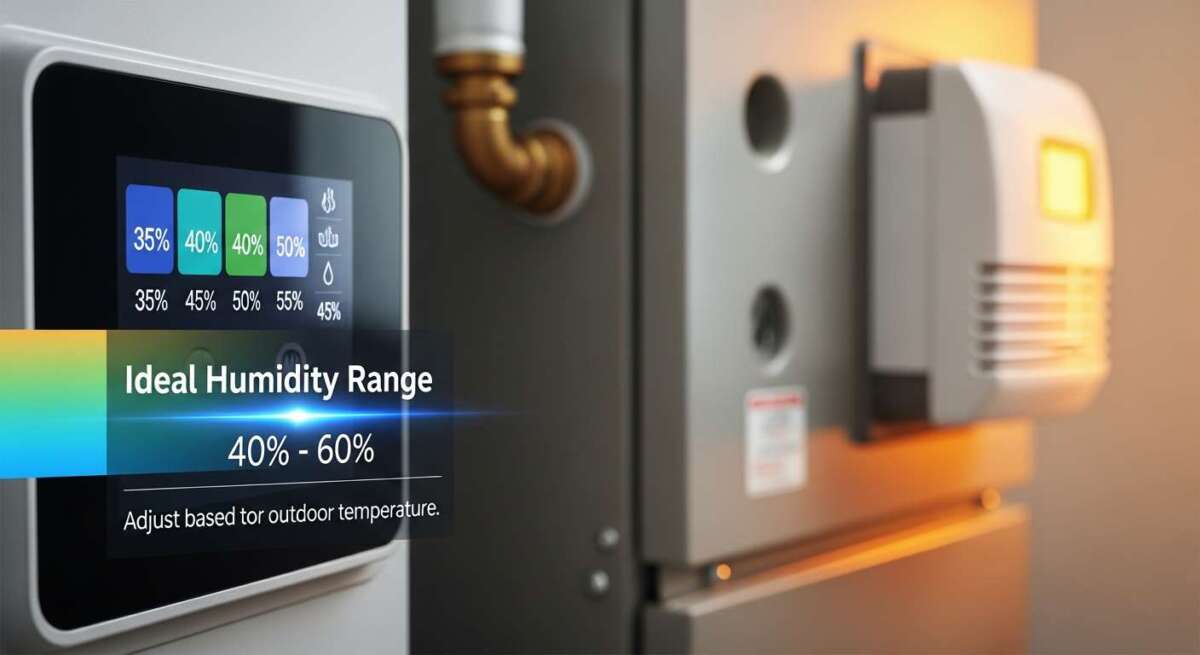
What Should a Furnace Humidifier Be Set at: Settings Guide
Hello, friends!
Is your skin itchy? Do you wake up with a scratchy throat? Or maybe you touched a doorknob and got a shock?
I know that feeling well.
It is winter time. The air gets cold. The air gets dry.
You want your home to feel warm. So, you turn on the furnace. But the heat makes the air even drier.
This is why you have a furnace humidifier. It adds water to the air. It makes your home feel soft and cozy.
But many people ask me a big question.
What should a furnace humidifier be set at?
It is a great question. If you set it too low, you feel dry. If you set it too high, you get mold.
Today, I will help you find the perfect number. I will share my own stories. I will also give you simple tips.
We will fix your dry air together. Let’s get started.
The Short Answer for Busy Homeowners
You might be in a rush. You just want the number.
Here is the quick answer.
Set your humidifier between 30% and 40%.
This is the sweet spot.
Why is this the best range?
First, it is comfortable for your skin. Second, it is safe for your house.
If you go higher than 40%, you risk water on your windows. If you go lower than 30%, the air feels like a desert.
However, the weather changes. So, your settings must change too.
We will talk about that soon. But for now, aim for 35%. It is usually safe.

Credit: www.reddit.com
My “Frozen Window” Lesson: A Personal Experience
I want to tell you a story. It is about a mistake I made.
I have worked with homes for a long time. But even I mess up sometimes.
Years ago, I bought a new house. It had a big, fancy humidifier. I was so happy.
It was very cold outside. It was January. The temperature dropped to 5°F.
I wanted to feel warm. So, I walked to my basement. I turned the dial up to 45%.
I thought, “More water means more comfort.”
I went to bed. I slept great.
But the next morning, I walked into the kitchen. I looked at the window.
I was shocked.
There was ice on the inside of the glass. Not on the outside. On the inside!
The water in the air had touched the cold glass. It froze instantly.
I had to grab a towel. I wiped up the water as the ice melted. It was a mess.
The water could have ruined my wood frame. It could have caused mold.
I learned a big lesson that day.
When it gets colder outside, you must lower the humidity inside.
It sounds strange, right? But it is true.
I do not want you to have ice on your windows. So, please listen to my advice.
Why Your Home Feels So Dry in Winter
Let’s talk about the air.
Why is winter air so dry?
Cold air is small. It cannot hold much water.
Warm air is big. It can hold a lot of water.
Think of a sponge.
Warm air is like a big sponge. It holds a cup of water easily.
Cold air is like a tiny sponge. It can only hold a few drops.
When winter comes, the outside air is cold. It is dry.
Then, your furnace pulls that air inside. It heats the air up.
Now the air is warm. It becomes a big sponge. But it is an empty sponge.
It wants water. It is thirsty.
So, it steals water.
It steals water from your plants. It steals water from your wood floors.
Most importantly, it steals water from your skin.
This is why you feel dry.
Your humidifier fixes this. It feeds water to the thirsty air.
But you must control how much water it gets.
Furnace Humidifier Settings Chart
You need to know when to change the dial.
The outside temperature is the boss. When the temperature drops, your setting drops.
This helps you reach the ideal indoor humidity level winter demands.
I made a simple chart for you. You can print this out. Tape it to your furnace.
| Outdoor Temperature | Recommended Humidity Setting |
| +40°F and above | 45% |
| +20°F to +40°F | 40% |
| +10°F to +20°F | 35% |
| 0°F to +10°F | 30% |
| -10°F to 0°F | 25% |
| -20°F or lower | 15% |
Do you see the pattern?
As it gets colder, the number goes down.
If it is very cold, like -20°F, you set it very low.
Why?
Because your windows are cold. If the air is too wet, water forms on the cold glass.
We call this condensation.
Condensation is bad. It rots wood. It grows mold.
So, check the weather. Then, check your dial.
Signs Your Humidity is Too Low
How do you know if you need more water?
Your house will tell you. Your body will tell you too.
Here are the clear signs of low humidity in house.
1. Static Electricity Shocks
Do you walk on the carpet? Then you touch a metal handle.
Zap!
It hurts a little.
This is static electricity.
Static loves dry air.
If you get shocked often, your air is too dry. You need to turn the humidifier up a little.
2. Dry Skin and Lips
Look at your hands. Is the skin cracked?
Are your lips dry?
Do you need lotion all the time?
This is a big sign. The air is stealing water from you.
Also, look at your pets. Is your dog scratching? Dry skin hurts them too.
3. Nose Bleeds
This is scary, but common.
The inside of your nose needs to be wet.
Dry air dries out your nose. The skin cracks. Then, it bleeds.
If your kids get nose bleeds in winter, check the humidifier.
4. Gaps in Wood Floors
Look at your floor. Do you have hardwood?
Wood acts like a sponge too.
When air is dry, wood shrinks. It gets smaller.
You might see gaps between the planks.
This means the wood is thirsty.
If you see these signs, check your setting. Is it below 30%?
If yes, turn it up. But do it slowly.
Signs Your Humidity is Too High
More is not always better.
Too much water is dangerous. It can hurt your home.
You must avoid the “swamp” effect.
Here are signs that you went too high.
1. The Crying Window
This is the most common sign.
Look at your windows in the morning.
Is there fog on the glass?
Are there water drops running down?
This means your setting is too high.
The warm, wet air hit the cold glass. It turned back into water.
If you see this, turn the dial down right away.
Turn it down by 5%. Wait a day. Check again.
2. Musty Smells
Does a room smell like old wet clothes?
This is a bad sign.
It might mean mold is growing.
Mold loves wet places.
You want a safe humidity level to prevent mold.
Mold likes humidity above 50% or 60%.
Keep your home under 50%. This keeps mold away.
3. Damp Spots on Walls
Look at your ceilings. Look at your walls.
Do you see soft spots? Do you see dark rings?
This is water damage.
Sometimes, humidity gets into the walls. It condenses inside.
This is very bad. It can rot your house frame.
Always stay alert.
If the air feels heavy or sticky, turn the humidifier down.
Manual vs. Automatic Humidifiers: What Do You Have?
Not all humidifiers are the same.
You need to know your type.
There are two main kinds.
The Manual Humidistat
This is the most common type.
It is a small white box. It is usually on the return air duct.
It has a dial. The dial has numbers like 10, 20, 30, 40.
You are the brain for this machine.
It does not know the weather outside.
If it gets cold, you must walk downstairs. You must turn the dial.
If it gets warm, you must turn it back up.
This is what I have in my home.
I check it every time the weather changes.
It takes work. But it gives you control.
The Automatic Humidistat
This is the fancy type.
It has a digital screen.
It also has a sensor outside your house.
The sensor feels the cold air. It talks to the humidifier.
It says, “Hey, it is cold. Turn down the water.”
Or, “It is warm today. Add more water.”
It does the work for you.
This is great for busy people.
However, sometimes they are not perfect.
You should still check it.
Make sure the screen matches how you feel.
Do you have a manual or automatic one?
Go check your furnace room right now. I will wait.
…
Did you check? Good.
Now you know if you need to adjust it yourself.
How to Adjust Furnace Humidifier: A Step-by-Step Guide
You are ready to touch the dial.
But maybe you are nervous.
Don’t worry. It is easy.
Here is how to adjust furnace humidifier settings safely.
Step 1: Find the Humidistat
Go to your furnace. Look for a small box.
It is usually on the silver metal duct. It is near the main furnace unit.
It might say names like Honeywell, Aprilaire, or GeneralAire.
Step 2: Check the Current Setting
Look at the knob or screen.
Where is the line pointing?
Is it at 50%? Is it at 10%?
Or is it set to “Summer” or “Off”?
Step 3: Check the Weather
Pull out your phone.
Look at the outdoor temperature.
Is it 30°F? Is it 0°F?
Step 4: Use the Rule of Thumb
Remember our chart?
If it is a normal winter day (around 30°F), aim for 35% or 40%.
Turn the dial slowly.
Step 5: Listen for the Click
This is a pro tip.
Turn the dial all the way up.
Do you hear a click?
That click is the solenoid valve opening. It means the water is on.
Now, turn it down to your number.
If the furnace is running, you might hear a hiss. That is water flowing.
Step 6: Wait and Watch
Humidity does not change fast.
It is slow.
Wait for 24 hours.
Then, check your windows. Check your skin.
If you feel good, leave it.
If windows are wet, turn it down.
See? It is simple.
You can do this.

Credit: www.reddit.com
The Hidden Benefit: Relative Humidity for Health
We talked about dry skin. We talked about shocks.
But there is something more important.
Your health.
Did you know humidity fights germs?
It is true.
Scientists have studied this. They found a link between relative humidity for health and viruses.
Fighting the Flu
Viruses like the flu love dry air.
When air is dry, viruses float longer. They stay in the air.
You breathe them in. You get sick.
But when the air has moisture, things change.
The water droplets grab the virus. They make it heavy.
The virus falls to the floor. It does not float.
So, you are safer.
Studies show that 40% to 60% humidity is best for killing flu viruses.
But wait.
We said 35% is best for winter.
Is that okay?
Yes. 35% is much better than 10%.
If you keep your home at 35% or 40%, you help your body fight sickness.
Sleep Better
Do you snore?
Does your partner snore?
Dry air makes snoring worse.
It dries out your throat. It swells your nose tissues.
This blocks the air. So, you snore loud.
A humidifier keeps your throat wet. It soothes your nose.
You sleep deeper. You wake up rested.
Asthma and Allergies
This is tricky.
Some people with asthma love humid air. It feels soothing.
But be careful.
Dust mites love humid air too.
Dust mites are tiny bugs. They live in dust. They cause allergies.
If humidity is over 50%, dust mites grow fast.
This is why the 30% to 50% range is golden.
It is high enough to soothe your lungs.
It is low enough to stop dust mites.
It is a perfect balance.
Protecting Your Home’s Structure
Your body is not the only thing that needs water.
Your house is made of wood.
Wood is a living material. It breathes.
When it gets dry, it shrinks. When it gets wet, it swells.
This movement can damage your home.
Hardwood Floors
I love hardwood floors. They are beautiful.
But they hate dry air.
Have you seen gaps between your floorboards in winter?
That is shrinkage.
The wood lost its water. It pulled apart.
If the air gets too dry, the wood can crack.
Once it cracks, it is broken forever.
Keeping your humidifier set right protects your investment.
It keeps the wood stable. No gaps. No cracks.
Drywall and Paint
Your walls can crack too.
The wood frame behind the wall shrinks. The drywall moves.
Suddenly, you see a thin crack near the ceiling.
Or you see a nail popping out.
This is often caused by low humidity.
Electronics
Remember the static shock?
Zap!
That shock is tiny lightning.
It can hurt sensitive electronics.
Computers. TVs. Laptops.
A strong static shock can fry a circuit board.
Keeping the air moist stops static. It protects your gadgets.
So, a humidifier saves you money.
It saves your floors. It saves your walls. It saves your computer.
Maintenance Tips for Best Performance
You have the right setting.
But is your machine working?
A humidifier needs love. You cannot just ignore it.
If you ignore it, it breaks. Or it grows mold.
Here are simple tips to keep it running strong.
1. Change the Water Panel
Inside the humidifier, there is a filter.
We call it a water panel. Or an evaporator pad.
It looks like a metal mesh or a honeycomb.
Water drips onto it. Air blows through it.
Over time, it gets clogged.
Minerals from the water stick to it. It turns white and hard like rock.
When it is clogged, it does not work.
You should change this once a year.
I do it every fall. Just before I turn the furnace on.
It is cheap. It costs about $15.
It takes 5 minutes to change.
Check your manual for the size. Buy a new one. Do it today.
2. Check the Drain Line
Most humidifiers have a drain tube.
Excess water flows out of it.
Sometimes, this tube gets blocked.
Algae can grow inside.
If it blocks, water spills.
It spills on your furnace. It spills on your floor.
This is a disaster.
Check the tube. Make sure water flows freely.
If you see green gunk, clean it out.
Use a mix of water and vinegar. It kills the algae.
3. The Summer Damper
This is a big one.
Many people forget this.
Does your humidifier have a “Winter” and “Summer” switch on the duct?
It is a mechanical damper.
In winter, it must be OPEN.
This lets air flow through the humidifier.
In summer, it must be CLOSED.
This stops cold air from the AC from going through.
If you leave it open in summer, you waste energy.
If you leave it closed in winter, you get no humidity.
Go look at your duct.
Is the damper open?
Usually, the handle should be parallel to the duct for OPEN.
It should be perpendicular for CLOSED.
Check it now.
4. Clean the Solenoid Valve
This is a bit technical. But you can do it.
The solenoid valve turns the water on and off.
It has a tiny screen inside.
This screen catches dirt from the water.
If it gets clogged, no water comes out.
If your humidifier is running but the air is dry, check this.
You might need to clean the screen.
Or call a pro to do it.
Regular maintenance keeps the air fresh.
It stops mold. It stops leaks.
Treat your humidifier well, and it will treat you well.
Frequently Asked Questions (FAQ)
I get asked these questions all the time.
Here are the answers you need.
What is the difference between bypass and fan-powered humidifiers?
This is a good technical question.
A bypass humidifier uses the furnace’s fan. It needs a duct that connects the supply and return air. Air is pushed through a bypass duct, over the water panel, and back into the furnace. It only works when the furnace blower is running.
A fan-powered humidifier has its own fan. It blows air across the water panel itself. It can run even when the furnace fan is off. It is more powerful. It is good for big houses. It does not need a bypass duct.
Can I run my furnace humidifier in the summer?
No. Do not do this.
In summer, the air is already hot and humid. You use an air conditioner to remove water.
If you run a humidifier, you fight the AC.
Your house will feel like a swamp. It will be sticky.
Turn the humidifier to “Off” in spring. Close the damper.
Wait until late fall to turn it back on.
Does a humidifier lower my heating bill?
Yes, it can!
Here is why.
Humid air feels warmer than dry air.
Think about a hot summer day. 80°F feels like 90°F if it is humid.
The same is true in winter.
If the air is humid, 68°F feels like 70°F.
So, you can set your thermostat lower.
You save money on gas or electricity.
But you still feel warm.
It is a magic trick. But it is science.
What if I have no outdoor sensor?
If you have a manual dial, you are the sensor.
You must watch the weather.
If the weatherman says, “Cold front coming!”, you go to the basement.
Turn the dial down.
If he says, “Warm spell this week,” turn it up.
It takes effort. But it works.
If you hate this, you can upgrade.
Ask a pro to install an automatic humidistat. It costs money, but it saves time.
How do I know if my humidifier is working?
This is simple.
Turn the dial all the way up.
Do you hear a click?
Do you hear water flowing?
Wait one hour.
Check the drain line. Is water dripping out?
If yes, it is getting water.
Check the humidity gauge on your wall (if you have one).
Does it go up after a day?
If yes, it works.
If the air stays dry, check the water panel. It might be old.
Where should I put a humidity monitor?
Do not put it in the kitchen. Cooking makes steam.
Do not put it in the bathroom. Showers make steam.
Put it in the living room. Or a bedroom.
Put it away from windows. Away from doors.
This gives you the true reading of your home.
You can buy a cheap digital hygrometer online. It costs $10.
It is a great tool. It tells you the truth about your air.
Credit: www.diychatroom.com
Conclusion: Staying Cozy and Safe
We have covered a lot today.
We talked about dry skin. We talked about frozen windows.
We learned that winter air is thirsty.
So, let’s review the big lesson.
What should a furnace humidifier be set at?
- Aim for 35% on a normal winter day.
- Lower it when the temperature drops below freezing.
- Raise it slightly if the weather warms up.
- Never go above 50% to prevent mold.
Think of your humidifier like a musical instrument. You have to tune it.
You cannot just set it once and walk away.
You must listen to the weather. You must listen to your house.
If you see condensation, turn it down.
If you get a shock, turn it up.
It is a balance.
I hope my story about the frozen window helps you. Don’t make my mistake!
Take care of your home. Take care of your health.
Go check your dial right now.
Is it set correctly?
Make the change today. You will sleep better tonight.
Stay warm, stay cozy, and stay safe!