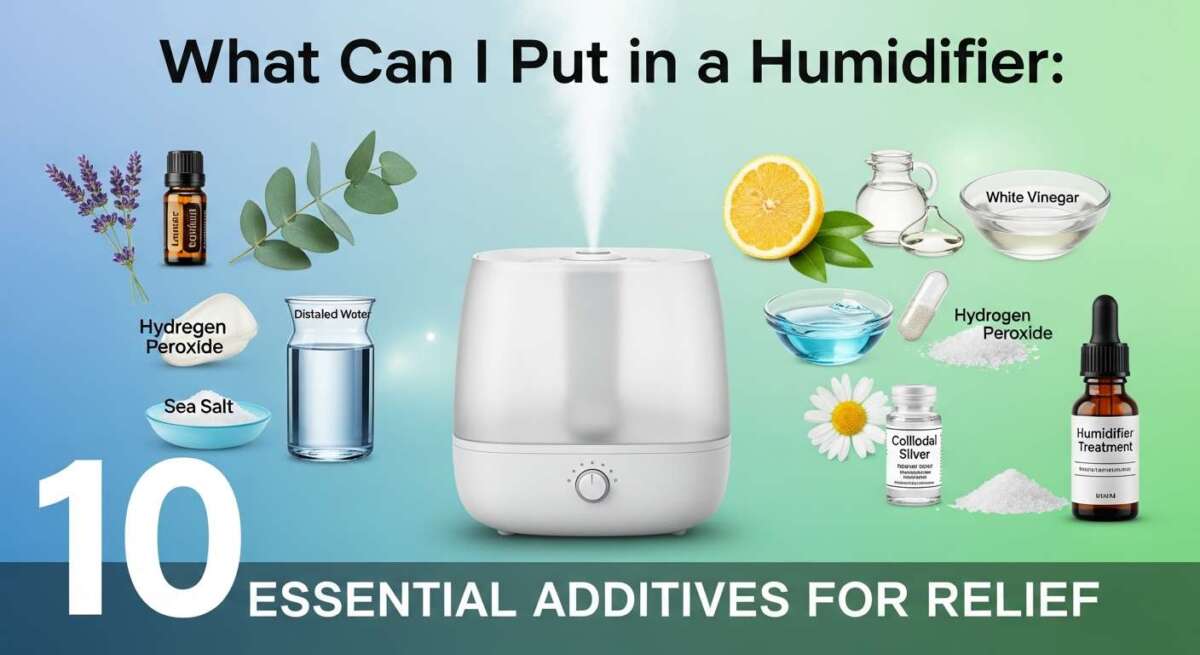
What Can I Put in a Humidifier: 10 Essential Additives for Relief
You want your home to feel fresh. You want the air to feel clean. Maybe your skin feels dry, or your nose feels stuffy. You look at your humidifier and think, “Can I add something to this water to make it better?”
I have been there. I remember staring at my bubbling machine one winter night. I had a bad cold. I wanted relief. I thought adding a splash of something extra would help.
But wait.
Before you pour anything into that tank, we need to talk. A humidifier is a simple machine, but it is also delicate. Putting the wrong thing inside can break it. Worse, it can hurt your lungs.
So, what can I put in a humidifier safely?
In this guide, I will share everything I know. I have learned these lessons the hard way. We will look at safe additives, dangerous mistakes, and expert tips.
Let’s make your home air perfect.
Introduction
We all love a home that smells good. We also love air that feels good. A humidifier does a great job with moisture. But it is just water, right? That can feel boring.
You might see videos online. People add oils, fruits, or cleaners to their tanks. It looks fun. It looks like a “life hack.”
But here is the truth.
Most humidifiers are made to handle only water.
When you add other things, you change how the machine works. You change the air you breathe.
I want you to be safe. I want your machine to last for years.
I will walk you through the Do’s and Don’ts. We will cover essential oils, cleaning hacks, and water types.
Let’s start with a story from my own life. It might save you some money.
My “Lemon Oil” Disaster
A few years ago, I bought a nice ultrasonic humidifier. It was quiet and sleek. It cost me about $60.
I loved the smell of lemons. I thought, “Why not make the mist smell like lemons?”
I grabbed a bottle of essential lemon oil. I put ten big drops right into the water tank. I turned it on. The room smelled great for about an hour. I felt like a genius.
The next morning, I woke up. There was water all over my nightstand. The humidifier was empty.
I looked closely at the tank. The plastic was cracked. It looked like a spiderweb.
The oil had eaten the plastic.
I ruined my new machine in one night. I also voided the warranty.
I learned a hard lesson that day. Essential oils and plastic tanks do not mix.
I don’t want you to make my mistake. So, let’s learn how to do this the right way.
Understanding Your Machine: The First Step
Not all humidifiers are the same. This is the most important part of this guide.
If you know your machine, you know what is safe.
There are three main types. Go check your machine right now. Which one do you have?
Ultrasonic Humidifiers (The Sensitive Type)
These are the most common today. They are quiet. They create a cool mist.
How they work:
They use a small metal plate. This plate vibrates very fast. It turns water into a fine mist.
The Risk:
These are very sensitive. The vibrating plate can get clogged easily. The tanks are usually made of plastic that oils can destroy.
- Can you add things? Usually, NO. Unless it has a special tray.
Evaporative Humidifiers (The Filter Type)
These are a bit louder. They have a fan and a wick filter inside.
How they work:
A fan blows air through a wet filter. The water evaporates into the air.
The Risk:
The filter traps dirt. If you put additives in the water, the filter will get stuck. It will stop working. It can also grow mold faster.
- Can you add things? No. It will ruin the filter.
Warm Mist Vaporizers (The Boiling Type)
These are old-school. They boil the water. You can see the steam.
How they work:
A heating element boils the water. The steam rises out.
The Benefit:
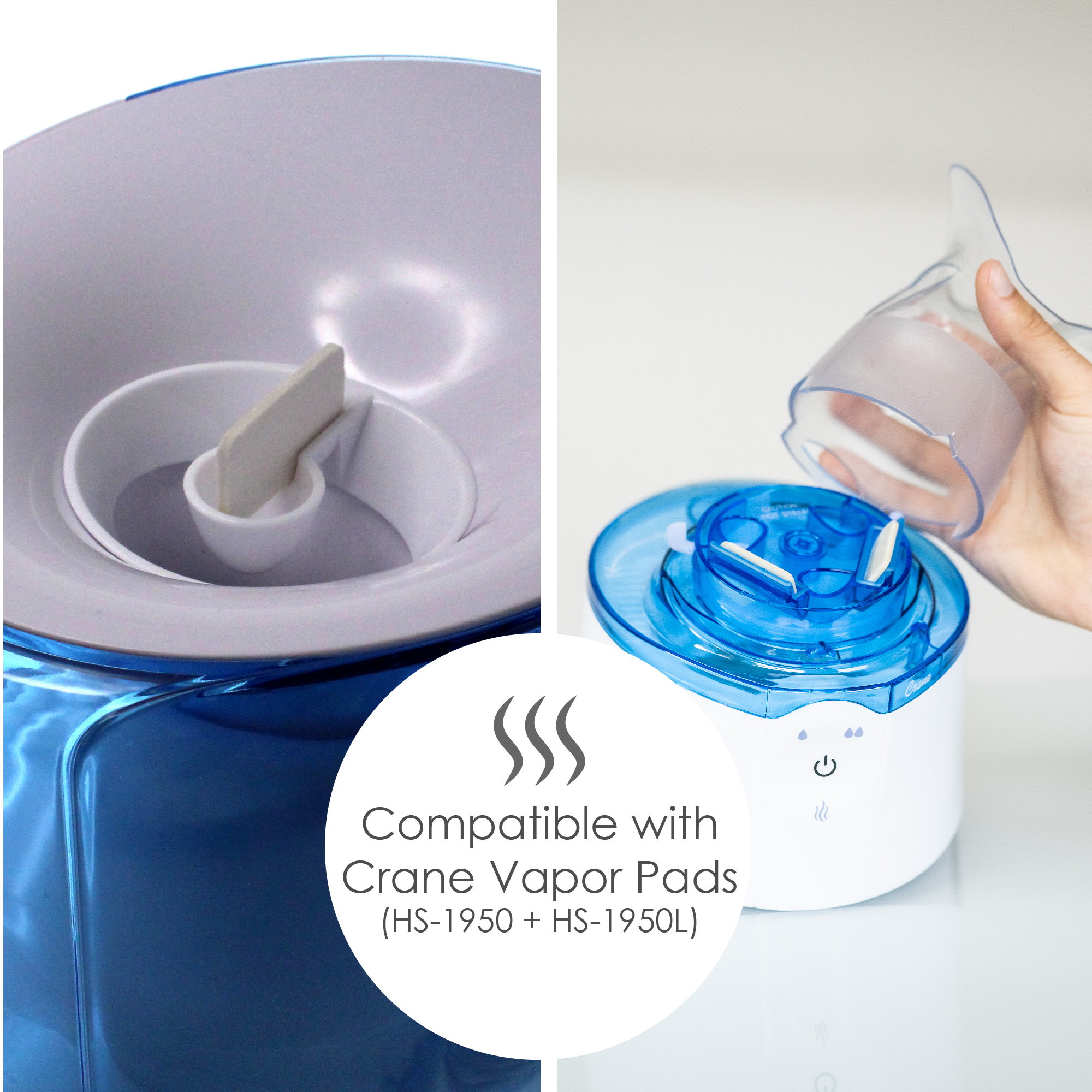
These are tough. Since they boil water, they don’t have sensitive plates. Many come with a “medicine cup” near the steam vent.
- Can you add things? Yes, but only in the medicine cup. Not in the water tank.
Air Washers (The Heavy-Duty Type)
These are big. They humidify and clean the air.
How they work:
Discs spin in water. They trap dust and release moisture.
The Risk:
These are expensive. They need specific additives made by the brand.
- Can you add things? Only brand-approved fluids.

Credit: www.dreo.com
The Foundation: Choosing the Right Water
Before we add scents, we must talk about the base. The water.
You might think, “Water is water.”
That is not true for your lungs.
Distilled Water vs. Tap Water
This is the golden rule of humidifiers.
Use Distilled Water.
Why?
Tap water has minerals. It has calcium, magnesium, and sometimes lead. It also has chlorine.
When you drink tap water, your kidneys filter these out.
When you put tap water in a humidifier, the machine throws it into the air. You breathe it in. Your lungs do not have a filter like your stomach does.
What is “White Dust”?
Have you ever seen fine white powder on your furniture? It looks like dust, but it is sticky.
That is “White Dust.”
It comes from the minerals in tap water. The humidifier breaks the minerals into tiny pieces. They float in the air. Then they land on your TV, your table, and in your lungs.
This dust can irritate your throat. It is bad for babies. It is bad for pets.
The Hidden Dangers of Minerals
Breathing in minerals over time is not good. It can cause coughing. It can trigger asthma.
Also, minerals build up in the machine. We call this “scale.” It looks like hard, crusty rock. It is hard to clean. It can break your machine.
Can I Use Boiled Water?
Some people ask, “If I boil tap water, is it safe?”
Boiling kills bacteria. That is good.
But boiling does not remove minerals. The salt and calcium stay in the pot. In fact, they get more concentrated.
So, boiling water helps with germs, but it does not fix the white dust problem.
Best Choice: Buy distilled water. Or use a high-quality reverse osmosis filter.
What Can I Put in a Humidifier? (The Safe List)
Okay, you have your distilled water. Now, what else can go in?
Here are things that are generally safe. Always check your manual first.
Manufacturer-Approved Inhalants
Some brands make their own liquids. For example, Vicks makes VapoSteam.
These are made for warm mist vaporizers. You put them in the medicine cup. The steam warms the liquid. It releases a menthol scent.
This is safe because it is tested. It does not go into the tank water. It goes into a separate cup.
Humidifier Tablets and Cartridges
You can buy cleaning tablets. These are sold by humidifier companies.
You drop them in the tank. They dissolve.
What they do:
They stop bacteria from growing. They do not add scent. They keep the water clean.
This is a smart thing to add. It keeps slime away.

Credit: www.aircare.com
Specialized Demineralization Balls
If you must use tap water, use these.
They look like small plastic fish or balls. You throw them in the tank.
They trap minerals. They help stop white dust. They are not perfect, but they help.
Bacteriostatic Treatments
This is a liquid you buy. You add a small capful to the water.
It stops mold and algae. It keeps the water fresh.
Make sure it says “Safe for Humidifiers” on the bottle. Do not use pool cleaner!
The Great Debate: Essential Oils in Humidifiers
This is the big question. “Can I put essential oils in my humidifier?”
The short answer: Usually, No.
The long answer: It depends on where you put it.
The Risk of Cracked Tanks
Remember my lemon oil story?
Essential oils are powerful. They are chemical compounds.
Most humidifier tanks are made of a plastic called ABS or Styrene. Essential oils attack this plastic. They melt it.
If you put drops in the water, they float. They touch the sides. The tank will crack.
Also, the oil can gum up the motor. It coats the vibrating plate. The mist will stop.
The Safe Way: Using the Aromatherapy Tray
Many new humidifiers have a secret drawer. Look at the bottom of your machine.
Is there a small tray with a sponge pad?
That is the Aromatherapy Tray.
How to use it:
- Pull out the tray.
- Put 3-5 drops of oil on the pad.
- Slide it back in.
- Turn on the machine.
A fan blows air over the pad. The scent mixes with the mist. The oil never touches the water. The oil never touches the plastic tank.
This is the only safe way to use oils in a standard humidifier.
Humidifier vs. Diffuser: What is the Difference?
If you want strong scents, buy a Diffuser.
- Humidifier: Adds moisture. Big tank (1 gallon). Runs all night. Weak scent capability.
- Diffuser: Adds scent. Tiny tank (1 cup). Runs for 2 hours. Strong scent capability.
Diffusers use special plastic. They are made for oils.
If you want your room to smell like a spa, use a diffuser. If you want to breathe easier, use a humidifier. You can run both at the same time!
Best Essential Oils for Air Quality
If you have a tray, which oils are good?
- Lavender: Great for sleep. It helps you relax.
- Eucalyptus: Great for colds. It opens the nose.
- Tea Tree: It fights germs. It smells very strong/clean.
- Peppermint: Good for energy. It wakes you up.
Warning: Be careful with pets. Some oils like Tea Tree and Peppermint can be toxic to dogs and cats.
Medical Additives and Respiratory Relief
When we are sick, we want relief. We want that medicated steam.
Liquid Inhalants (e.g., Vicks VapoSteam)
These contain camphor, menthol, and eucalyptus.
Rule: Only use these in Warm Mist Vaporizers.
Look for the “Medicine Cup” near the steam hole. Pour it there.
Never put this in an ultrasonic cool mist machine. It will clog it instantly.
Saline Solution: Is it Safe?
Saline is salt water. It is great for rinsing your nose.
But should you put it in a humidifier?
No.
Salt is a mineral. If you put salt water in the tank, it creates dust. It will rust the metal parts of the machine.
If you need saline, use a nasal spray. Spray it directly in your nose. Do not try to mist it into the room.
Why You Should Never Add Prescription Meds
You might have liquid medicine for a nebulizer.
Do not put it in a humidifier.
A humidifier is not a medical device. It cannot measure the dose. You might get too little, or way too much.
It can also hurt other people in the room who are not sick.
Consulting Your Doctor First
If you have asthma, be careful.
Humidifiers are good for asthma, usually. But additives can be triggers.
Scents can make asthma worse. Always ask your doctor before adding smells to the air.
Cleaning Agents: What Goes In For Maintenance (Not Running)
We have talked about what to add while the machine runs.
Now, let’s talk about what to add to clean it.
You must clean your humidifier. If you don’t, mold will grow. You will breathe mold spores. That is bad.
White Vinegar for Scale Removal
Vinegar is your best friend.
What it does:
It eats calcium. It dissolves the crusty white scale.
How to use it:
- Turn off the machine. Unplug it.
- Pour 1-2 cups of white vinegar into the tank.
- Add some water.
- Let it sit for 30 minutes.
- Swish it around.
- Pour it out. Rinse well.
Do not turn the machine on with vinegar inside. It will stink up your whole house!
Hydrogen Peroxide for Disinfection
Vinegar removes scale. Peroxide kills germs.
What it does:
It kills mold and bacteria.
How to use it:
- Mix 1 part hydrogen peroxide (3%) with 4 parts water.
- Pour it in the tank.
- Let it sit for 30 minutes.
- Rinse very, very well.
Bleach: A Hazardous Last Resort
Some manuals say you can use bleach.
I do not like bleach. It is harsh. If you don’t rinse it perfectly, you will inhale bleach fumes. That is dangerous.
Stick to vinegar and peroxide. They are safer.
Step-by-Step Deep Cleaning Guide
You should do this once a week.
- Unplug. Take the tank off the base.
- Empty. Pour out all old water.
- Soak. Fill the base and tank with your vinegar mix. Let it sit.
- Scrub. Use a soft toothbrush. Scrub the metal plate gently. Scrub the corners.
- Rinse. Rinse with water until the vinegar smell is gone.
- Dry. Let all parts air dry on a towel.
Natural Additives and DIY Risks
People love DIY. I love DIY. But be careful here.
Herbal Teas and Infusions
Can you put tea in a humidifier?
If you have a Warm Mist machine, maybe. You can put tea bags in the medicine cup. The steam might pick up a little scent.
Do not put tea in the tank. Tea has particles. It will grow mold very fast. Sugar in tea? Bacteria food.
Fruit Peels and Juices (The Mold Risk)
Some blogs say, “Add lemon juice to the water!”
Do not do this.
Fruit juice contains sugar. Sugar feeds bacteria.
If you put lemon juice in your tank, you are making a bacteria soup. The machine will spray germs into the air. It will also clog the motor with pulp.
Vanilla Extract
Vanilla smells lovely.
But real vanilla has sugar and alcohol. It is sticky. It will gum up the machine.
If you want vanilla scent, put a drop on a cotton ball. Place the cotton ball near the air vent (on the outside). Do not put it inside.
Flower Petals
Fresh flowers in the tank look pretty.
But they will rot. In a few hours, the water will be slimy.
Keep flowers in a vase. Keep water in the humidifier.
What You Must NEVER Put in a Humidifier
Let’s make a clear “No-Go” list. Never put these in.
Perfumes and Colognes
Perfumes have alcohol and synthetic chemicals. They are oily.
They are meant for skin, not lungs. Breathing them constantly can cause headaches. They will also melt the plastic tank.
Alcohol (Rubbing Alcohol or Spirits)
Adding vodka or rubbing alcohol is dangerous.
Alcohol is flammable. The humidifier motor gets warm. This is a fire risk.
Also, inhaling alcohol vapor is toxic. It can make you dizzy or sick.
Household Cleaners (Lysol, Windex)
Never add disinfectants to the running water.
Chemicals like Lysol are for surfaces. If you aerosolize them (turn them into mist), they burn your lungs. It can cause serious chemical damage to your airways.
Oil-Based Products (in the tank)
Any product with “oil” in the name stays out of the tank.
Baby oil, olive oil, coconut oil. No.
They do not mix with water. They clog the machine. They breed bacteria.
Managing Humidity Levels and Home Health
We are adding water to the air. But how much is too much?
The Ideal Humidity Range (30% – 50%)
The EPA says your home should be between 30% and 50% humidity.
- Below 30%: Viruses live longer. Skin gets dry. Wood furniture cracks.
- Above 50%: Mold grows. Dust mites breed. Air feels heavy.
Using a Hygrometer
How do you know the number?
Buy a Hygrometer. It is a small thermometer for moisture. It costs about $10 online.
Keep it in the room. Check it daily.
Signs of High Humidity (Mold, Condensation)
If your windows are wet on the inside, turn the humidifier off.
If the air smells musty, turn it off.
If you see wet spots on the carpet, turn it off.
Too much moisture causes mold in your walls.
Signs of Low Humidity (Static, Dry Skin)
If you get shocked when you touch a doorknob, the air is dry.
If your lips are chapped, the air is dry.
This is when you need the humidifier most.
Troubleshooting Common Issues
Let’s fix some problems.
Why Does My Humidifier Smell Bad?
If the mist smells like old socks, you have mold.
Fix: Stop using it. Clean it with vinegar and peroxide immediately.
Why Is My Humidifier Making Noise?
- Gurgling: This is normal. It is water moving.
- Grinding: The motor might be dying. Or there is scale on the fan.
- Buzzing: The vibrating plate might be loose or dirty.
Why Is No Mist Coming Out?
- Is it plugged in?
- Is there water?
- Scale Buildup: The metal plate might have white crust on it. Clean it with vinegar.
- Clog: Did you put oil in the tank? If so, the machine might be dead.
Credit: crane-usa.com
Frequently Asked Questions (FAQ)
Can I put lemon juice in my humidifier?
No. Lemon juice has sugar and pulp. It will cause bacteria to grow and can clog the machine. Use lemon essential oil in a diffuser instead.
Is tap water safe for cool mist humidifiers?
It is safe to run, but not great for your air. It creates white dust. Distilled water is much better for your lungs and the machine.
Can I put Vicks VapoRub in my humidifier?
No. VapoRub is an ointment (grease). It will clog the machine. Use VapoSteam liquid in a medicine cup, or use pads designed for the machine.
How often should I change the water?
Change it every single day. Dump the old water, rinse, and fill with fresh water. Stale water grows germs fast.
Is it safe to sleep with a humidifier on?
Yes, as long as the humidity doesn’t go above 50%. It helps keep your throat and skin moist while you sleep.
Conclusion
We have covered a lot.
We learned that distilled water is the king. We learned that essential oils belong in the tray, not the tank. We learned that cleaning is not optional.
I know it is tempting to experiment. We want our homes to be magical.
But a humidifier is a tool for health. Treat it with respect.
If you stick to these rules, your machine will last for years. You will breathe easier. Your skin will thank you.
So, go ahead. Fill up that tank (with distilled water!). Check your humidity level. Relax.
You are now a humidifier expert.
Breathe easy, my friends.