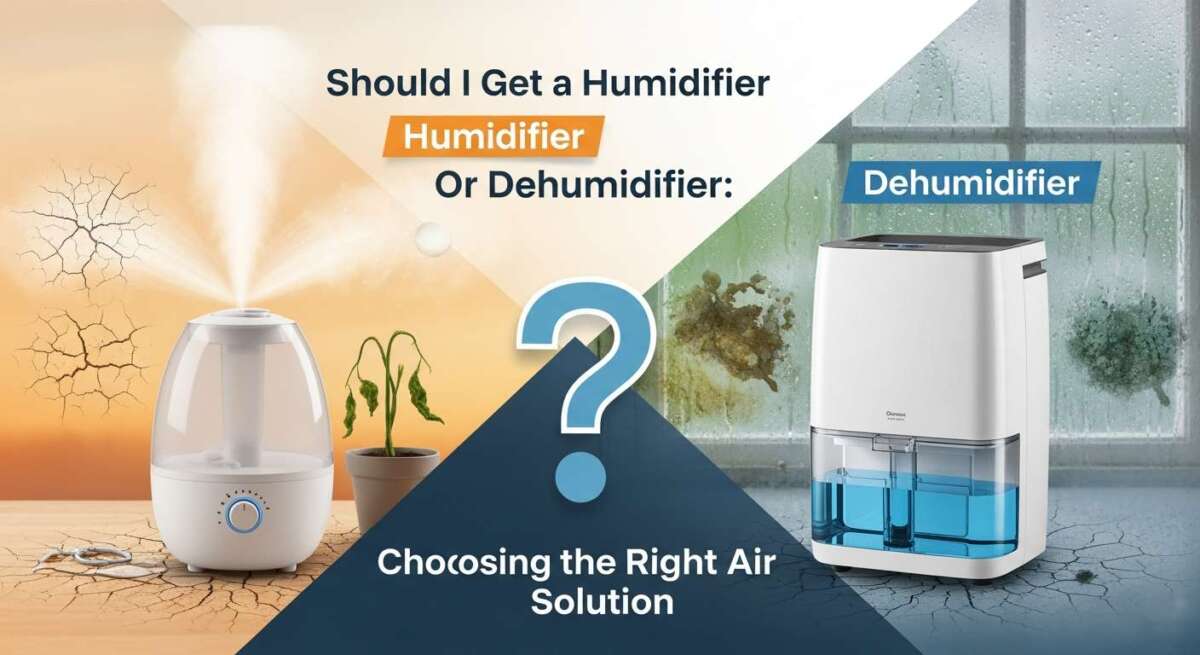
Should I Get a Humidifier Or Dehumidifier: Choosing Air Solution
Are you tired of waking up with a scratchy throat? Or maybe you hate that sticky feeling in your living room? You are not alone. Air quality is tricky.
Many of us struggle to get comfortable in our own homes. We mess with the thermostat. We open windows. We close blinds. But often, the problem isn’t the temperature. It is the water in the air.
This brings up a big question: Should I get a humidifier or dehumidifier?
Choosing the wrong one can make things worse. It can even harm your house or your health. But do not worry. I have been there. I have lived in the swampy heat of the South and the bone-dry cold of the North. I have tested these gadgets in every season.
In this guide, I will walk you through everything. We will keep it simple. We will look at the signs, the costs, and the health facts. By the end, you will know exactly what your home needs.
Let’s dive in.
The Core Difference: What Do These Machines Do?
First, let’s clear up the confusion. These two machines are opposites. They fight different battles.
What is a Humidifier?
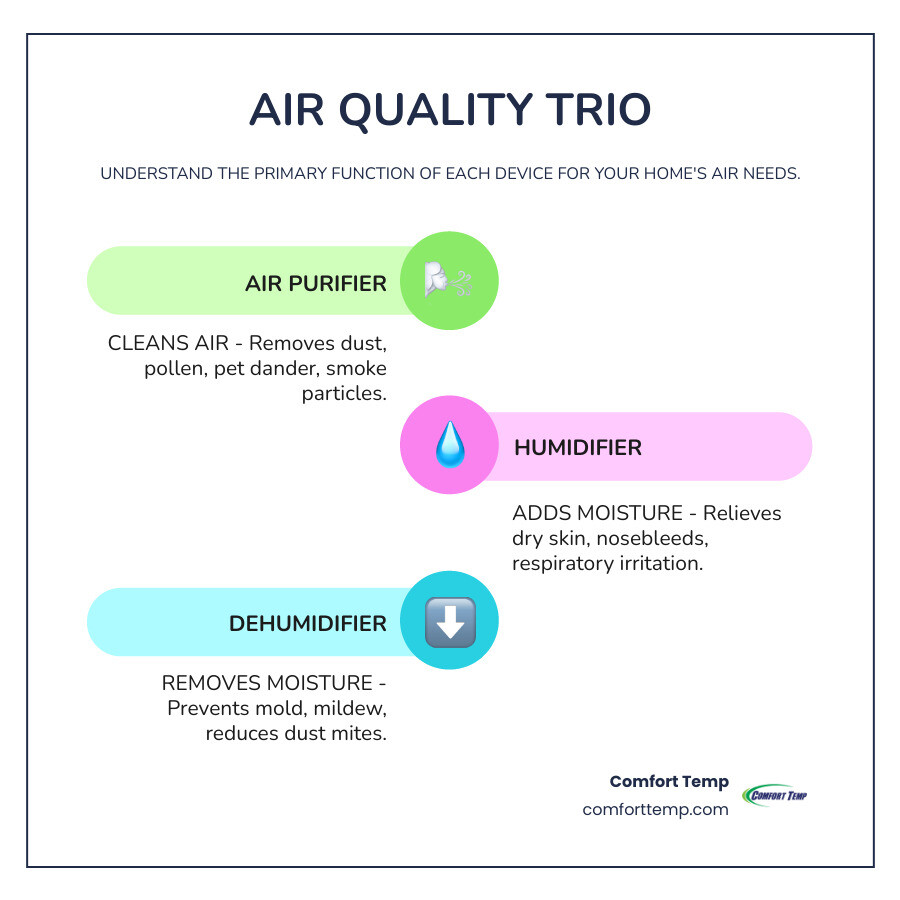
A humidifier adds water to the air. Think of it like a lotion for your room. It takes water from a tank and turns it into mist or steam. This raises the moisture level. You mostly use these in the winter or in dry climates like Arizona.
What is a Dehumidifier?
A dehumidifier removes water from the air. Think of it like a sponge. It sucks in air, pulls out the water, and blows dry air back out. You use these in the summer or in damp places like basements.
The Science of Relative Humidity
You might hear the term “Relative Humidity” or RH. Don’t let the math scare you. It just means how full the air is with water.
- 0% RH: Completely dry air.
- 100% RH: Rain or heavy fog.
The Magic Number: Experts say your home should be between 30% and 50%.
- Below 30%? It is too dry. You need a humidifier.
- Above 50%? It is too wet. You need a dehumidifier.
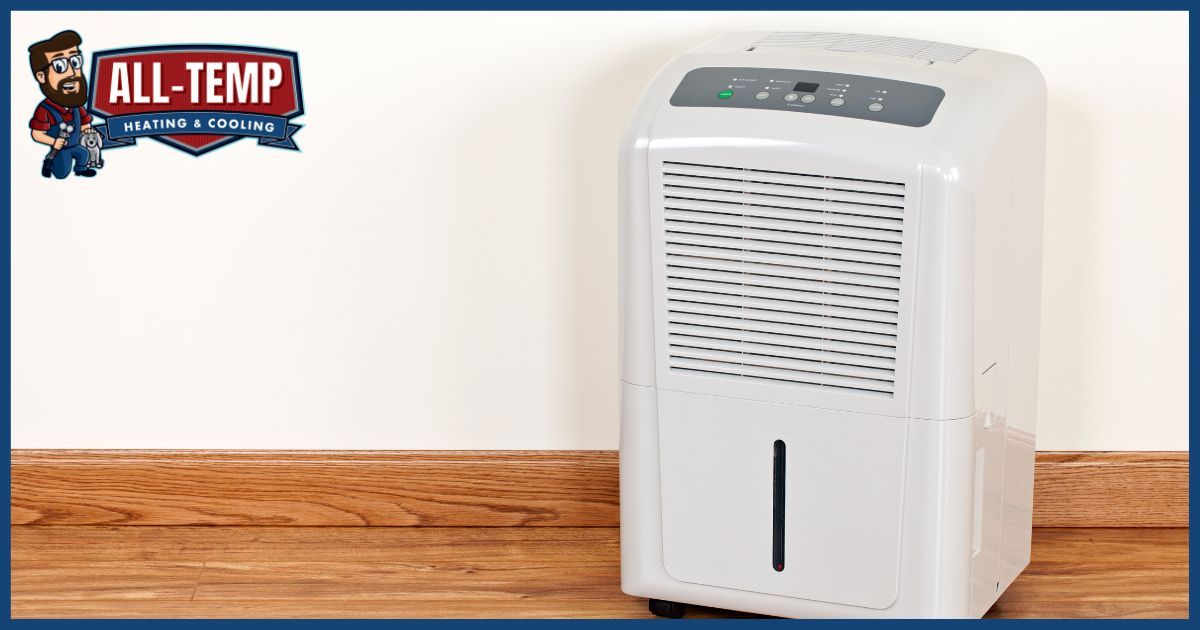
Credit: all-temphvac.com
7 Clear Signs You Need a Humidifier
How do you know if the air is too dry? Your body and your house will give you clues. Here is what to look for.
Your Body is Telling You
1. Dry, Itchy Skin
Have you ever felt like your skin is too tight? Dry air sucks moisture right out of you. You might see flaky skin on your legs or arms. Lotion helps, but it doesn’t fix the root cause.
2. The Morning Sore Throat
I used to wake up every winter morning needing a glass of water instantly. My throat felt like sandpaper. This happens because dry air dries out your vocal cords and throat while you sleep.
3. Frequent Nosebleeds
This is common for kids. The inside of the nose needs to be moist. When it gets dry, it cracks and bleeds.
Your Home is Telling You
4. The Static Shock Test (My Personal Experience)
Let me tell you a quick story. A few years ago, I lived in a high-rise apartment. It was January. The heat was blasting. Every time I walked across the carpet and touched the doorknob—ZAP! It hurt!
I was scared to touch my laptop. My cat ran away when I tried to pet her because I shocked her ears.
That static electricity was a clear sign. The air was parched. I bought a humidifier the next day. The shocks stopped almost instantly.
5. Cracking Wood
Look at your wood floors or furniture. Do you see gaps? Wood shrinks when it dries out. This can ruin expensive tables or musical instruments like guitars.
6. Wilting Plants
Tropical plants love moisture. If their leaves turn brown and crispy at the edges, they are thirsty for humid air.
7. Peeling Wallpaper
believe it or not, dry air can make wallpaper peel away from the wall.
7 Clear Signs You Need a Dehumidifier
Now, let’s look at the other side. What if your home is too wet? This is often a bigger problem because it can cause permanent damage.
Your Body is Telling You
1. Allergies are Worse
Do you sneeze more when you are inside? Dust mites love humidity. They drink the water in the air. If the air is damp, mites breed fast.
2. Hard to Breathe
Heavy, wet air feels thick. If you have asthma, this is bad news. It feels like a weight on your chest.
3. The “Sticky” Feeling
This is gross, but true. If you feel sweaty even when sitting still, the humidity is high. Sweat cannot evaporate off your skin if the air is already full of water.

Credit: comforttemp.com
Your Home is Telling You
4. The “Basement Smell” Test
I once rented a house with a basement. It always smelled… old. Musty. Like wet socks. That is the smell of mildew. Even if you don’t see mold, that smell means moisture is hiding somewhere. A dehumidifier is the only way to get rid of that funk.
5. Condensation on Windows
Wake up on a cold morning and look at your windows. Are there water drops on the inside glass? That is condensation. It means the warm, wet air inside is hitting the cold glass. That water has nowhere to go. It will eventually drip down and rot your window frames.
6. Mold Spots
Look at the corners of your ceiling. Look in the bathroom. Do you see tiny black or green dots? That is mold. Mold needs water to grow. If you see spots, you have a moisture problem.
7. Water Stains
Yellow rings on the ceiling or walls usually mean a leak. But sometimes, they mean the air is just too damp for too long.
Health Check: Humidifier vs. Dehumidifier for Allergies and Asthma
Your health is the most important factor. Let’s look at how these machines help (or hurt) your body.
When Dry Air Hurts (Use a Humidifier)
Viruses, like the flu, stay alive longer in dry air. Also, your nose has tiny hairs and mucus that trap germs. When the air is dry, your nose dries out. It cannot trap germs as well.
- Benefit: Moist air soothes coughing and helps you heal from colds faster.
When Wet Air Hurts (Use a Dehumidifier)
This is vital for allergy sufferers.
- Dust Mites: They die when humidity drops below 50%.
- Mold: It stops growing when the air is dry.
- Cockroaches: Yes, they love water too. Drying out your home keeps pests away.
Expert Tip: If you have asthma, talk to your doctor. Usually, they prefer dehumidifiers because mold and mites are major triggers. But in winter, a little humidity helps the lungs. It is all about balance.
Deep Dive: Types of Humidifiers
Not all humidifiers are the same. Here is a quick breakdown.
Cool Mist
These are the most common. They blow room-temperature water.
- Pros: Safe for kids (no hot water). Uses less energy.
- Cons: Can be noisy.
Warm Mist
These boil the water before releasing steam.
- Pros: Kills bacteria in the water. Warms up the room.
- Cons: Danger of burns. Uses more electricity.
Ultrasonic
These use vibration to make mist.
- Pros: Silent. Great for bedrooms.
- Cons: Can leave “white dust” on furniture if you don’t use distilled water.
Deep Dive: Types of Dehumidifiers
Choosing the right dehumidifier depends on where you live.
Refrigerant (Compressor)
This is likely what you see in stores. It works like a fridge. It cools a metal plate, water condenses on it, and drips into a tank.
- Best for: Warm rooms (living rooms, bedrooms).
Desiccant
This uses a chemical wheel to absorb water. No cooling involved.
- Best for: Cold rooms (unheated garages, basements in winter).
Whole-House Systems
These hook up to your main AC unit.
- Best for: Fixing humidity in every room at once. Expensive, but easy.
Climate and Seasonality: When to Use Which?
Where you live changes everything.
Winter Warriors (Humidifiers)
In winter, the air outside is cold and dry. Then, you turn on your furnace. The heater warms the air, but it makes it even drier.
- Rule of Thumb: If the heat is on, you probably need a humidifier.
Summer Savers (Dehumidifiers)
Hot air holds a lot of water. Summer feels muggy. Your AC unit removes some water, but sometimes it is not enough.
- Rule of Thumb: If it is July and you feel sticky, get a dehumidifier.
Can I Use Both?
Yes! Many people do.
- Scenario: You live in the Midwest.
- Winter: You run a humidifier in the bedroom to sleep better.
- Summer: You run a dehumidifier in the basement to stop mold.
This is a smart way to manage your home.
Maintenance and Care: The Real Work Required
Buying the machine is the easy part. Taking care of it takes work.
Cleaning Your Humidifier
Warning: A dirty humidifier is dangerous. Bacteria love warm, wet tanks. If you don’t clean it, the machine will blow germs into the air. This can cause “Humidifier Lung,” which feels like the flu.
My Cleaning Routine:
- Turn it off and unplug it.
- Fill the tank with water and white vinegar.
- Let it soak for 30 minutes.
- Scrub the sides with a soft brush.
- Rinse it well.
Do this once a week. It keeps the air fresh and safe.
Emptying Your Dehumidifier
These machines collect water. A lot of it. You have two choices:
- The Tank: You pull out a bucket and pour it down the sink. You might do this twice a day in damp weather.
- The Hose: Most units have a hole for a hose. You can run the hose to a floor drain. This is great because you can set it and forget it
Credit: comforttemp.com
Cost Analysis: Buying and Running
Money matters. Let’s look at the price tag.
Upfront Costs
- Humidifiers: Cheap. You can get a good one for $30 to $50. Large ones cost maybe $100.
- Dehumidifiers: Expensive. A decent unit starts at $150 and goes up to $300 or more.
Energy Bills
- Humidifiers: Low cost. They use very little power (especially cool mist ones).
- Dehumidifiers: Higher cost. They have compressors, like an AC unit. Running one all day will add to your electric bill.
Hidden Costs
- Filters: Some machines need new filters every few months.
- Distilled Water: For humidifiers, tap water can cause buildup. Buying jugs of distilled water adds up.
Buying Guide: How to Choose the Right Size
Size matters. If the unit is too small, it won’t work. If it is too big, it wastes energy.
Measuring Your Room
First, know your square footage.
- Small (under 400 sq ft): Bedroom or Office.
- Medium (400-1000 sq ft): Living Room or Apartment.
- Large (1000+ sq ft): Basement or Whole Floor.
Pint Capacity (Dehumidifiers)
They are measured in “pints per day” (how much water they pull out).
- 30 Pints: Small damp rooms.
- 50 Pints: Medium wet rooms.
- 70 Pints: Large, very wet basements.
Must-Have Features
Don’t buy a “dumb” machine. Look for these two things:
- Humidistat: This measures the air. You set it to 45%. The machine turns off when it hits that number. It saves money.
- Auto-Shutoff: If the tank is full (dehumidifier) or empty (humidifier), the machine turns off. This prevents leaks and fires.
Natural Alternatives (DIY Solutions)
Maybe you are not ready to buy a machine. That is okay. Try these tricks first.
How to Naturally Humidify
- Boil Water: Cook pasta or boil water on the stove. The steam helps.
- Shower Door Open: After a hot shower, leave the door open. Let the steam float into the house.
- Houseplants: Plants release water through their leaves. Get a spider plant or peace lily.
- Dry Clothes Inside: Hang your wet laundry on a rack in your room. As it dries, the water goes into the air.
How to Naturally Dehumidify
- Ventilation: Use the fan in your bathroom when you shower. Use the hood fan when you cook.
- Charcoal Bags: Bamboo charcoal absorbs smells and moisture. Put them in closets.
- Rock Salt: It pulls water from the air. But be careful, it can get messy.
- Fix Leaks: Check your gutters and pipes. Stop the water before it gets in.
Frequently Asked Questions (FAQ)
Can a humidifier cause mold?
Yes. If you run it too high and humidity goes over 60%, mold can grow. Always use a monitor (hygrometer) to keep it safe.
Do dehumidifiers cool the room?
Actually, they blow out warm air. The motor gets hot. However, dry air feels cooler on your skin because your sweat evaporates better. So you feel more comfortable, even if the room is slightly warmer.
Is sleeping with a humidifier good for you?
Yes, especially in winter. It keeps your nose and throat moist. This stops snoring and helps you sleep deeper.
What is the ideal indoor humidity level?
Aim for 30% to 50%. This is the safe zone for health and for your home structure.
Can I put essential oils in my humidifier?
Only if the manual says so. Oils can eat through the plastic tank of some machines. Look for a machine with a dedicated “oil tray.”
Do I need a dehumidifier in winter?
Usually, no. Winter air is dry. However, if you have a damp basement or poor ventilation, you might still need one in that specific room.
Conclusion
So, should you get a humidifier or dehumidifier? The answer lies in the air around you.
If your skin is cracking, your nose is bleeding, and you keep shocking the cat—get a humidifier. Your body is craving moisture. It will make your home feel warmer and softer.
If your windows are foggy, your basement smells like old socks, and your allergies are acting up—get a dehumidifier. It is an investment, but it protects your home from rot and mold.
My Advice: Start by buying a cheap hygrometer. It costs less than $10 online. Put it in your living room for a day.
- Read under 30%? Go buy a humidifier.
- Read over 50%? Go buy a dehumidifier.
It is a small step that makes a huge difference. You deserve to feel comfortable in your own home. Take control of your air today. Your lungs (and your wood floors) will thank you.