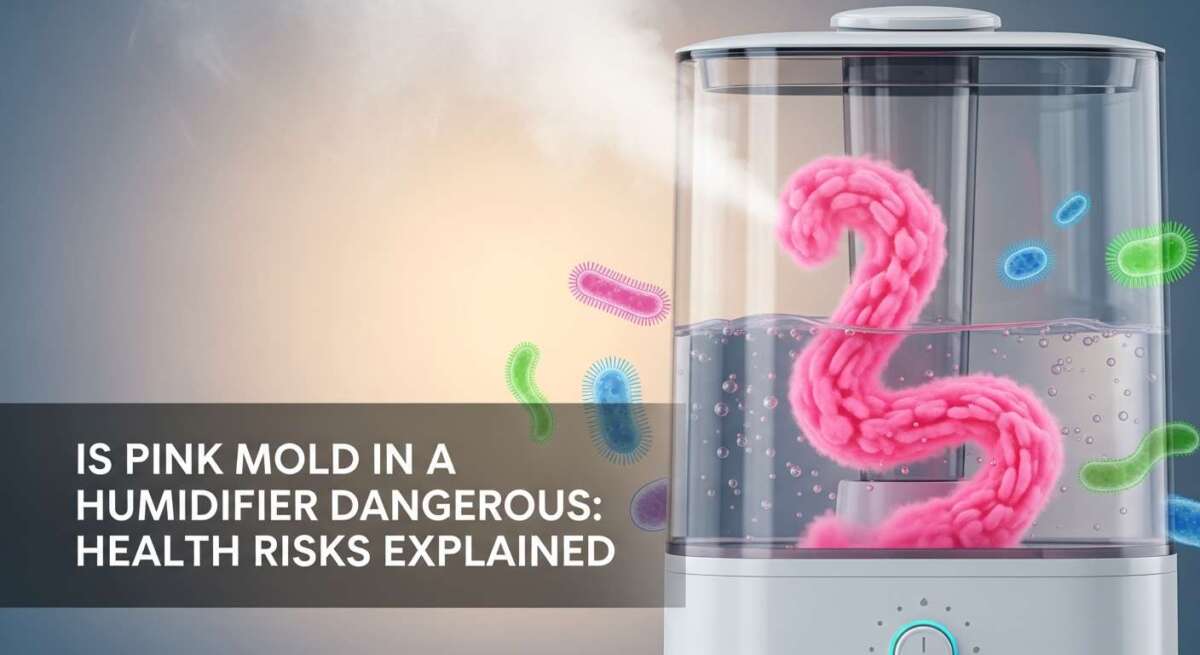
Is Pink Mold in Humidifier Dangerous: Health Risks Explained
Let me ask you something.
Have you ever filled your humidifier, then later noticed a pink, slimy film inside?
If yes, you are not alone.
I noticed it too.
And at first, I ignored it.
Big mistake.
So today, let’s talk honestly about this question:
Is pink mold in humidifier dangerous?
I’ll explain it simply.
I’ll share my own experience.
And I’ll help you decide what to do next.
Why That Pink Film Should Not Be Ignored
At first glance, pink mold does not look scary.
It looks light.
Almost harmless.
Sometimes it even looks like soap residue.
However, here’s the truth.
Pink mold in a humidifier can affect the air you breathe.
And that means it can affect your health.
This is why doctors and home hygiene experts warn about it.
What Is Pink Mold in a Humidifier?
Let’s clear up confusion first.
Is It Really Mold or Bacteria?
Most pink mold is not mold at all.
It is usually bacteria.
The most common one is Serratia marcescens.
This bacteria loves:
- Warm places
- Wet surfaces
- Standing water
Sound familiar?
Yes.
A humidifier is the perfect home.
Other Organisms That Look Pink
Sometimes, the pink color comes from:
- Yeast
- Mild fungal growth
- Biofilm buildup
Even if it’s not true mold, it is still unsafe.
Anything growing inside a humidifier does not belong there.
Why Pink Mold Loves Humidifiers
Let’s break it down simply.
Pink mold grows fast when:
- Water sits too long
- The tank stays warm
- The device is not cleaned often
Tap water makes it worse.
Tap water has minerals.
Bacteria feed on them.
This is why experts suggest distilled water.

Credit: hellamaid.ca
My Personal Experience With Pink Mold
Let me share something real.
A few winters ago, I used a humidifier daily.
After about a week, I noticed pink stains inside the tank.
I thought:
“It’s just water residue.”
A few days later, I felt it.
My nose felt stuffy.
My throat felt dry.
My allergies flared up.
Once I cleaned the humidifier properly, the symptoms eased.
That moment changed how I treat humidifiers forever.
Is Pink Mold in Humidifier Dangerous to Your Health?
Let’s answer this clearly.
Yes. It can be dangerous.
Not always severe.
But still risky.
How Pink Mold Enters the Air You Breathe
Humidifiers do one job.
They spray water into the air.
If bacteria live in the tank, they can:
- Travel in mist
- Reach your lungs
- Settle in your nose
You breathe it in without knowing.
Short-Term Health Effects
Many people notice symptoms fast.
Common signs include:
- Sneezing
- Coughing
- Stuffy nose
- Headaches
- Throat irritation
These signs often stop once exposure ends.
But repeated exposure makes it worse.
Long-Term Health Risks
Long exposure can cause:
- Chronic allergies
- Breathing trouble
- Sinus infections
People with asthma feel it more.
Children and older adults face higher risk.
This is why health agencies warn about dirty humidifiers.
What Health Experts Say About Humidifier Mold
Organizations like the Centers for Disease Control and Prevention and Environmental Protection Agency warn against poor humidifier hygiene.
They advise:
- Clean often
- Empty daily
- Dry fully
Their reason is simple.
Dirty humidifiers spread bacteria into indoor air.
Who Is Most at Risk From Pink Mold Exposure?
Let’s talk about people first.
Because pink mold does not affect everyone the same way.
Some people feel it fast.
Others may not notice at all.
However, certain groups face higher risk.
Babies and Young Children
Babies breathe faster than adults.
That means they inhale more air.
So if bacteria float in the air, babies take in more of it.
Pink mold exposure can lead to:
- Coughing
- Nasal congestion
- Skin irritation
This is why pediatric experts advise extra caution with humidifiers.
Older Adults
As we age, our immune system slows down.
That makes it harder to fight bacteria.
Pink mold exposure may lead to:
- Lung irritation
- Sinus infections
- Longer recovery time
For seniors, prevention matters a lot.
People With Asthma or Allergies
If you have asthma, this matters.
Pink mold can trigger:
- Wheezing
- Chest tightness
- Shortness of breath
I’ve seen friends with mild asthma struggle after using dirty humidifiers.
Clean air truly makes a difference.
People With Weak Immune Systems
This includes:
- People undergoing chemotherapy
- Organ transplant patients
- Those with chronic illness
For them, even mild bacteria can cause infection.
Doctors often recommend avoiding humidifiers entirely unless cleaned daily.

Credit: hellamaid.ca
How to Identify Pink Mold in Your Humidifier
Spotting pink mold early helps a lot.
The sooner you act, the safer your air stays.
Visual Signs to Watch For
Pink mold often looks like:
- Light pink stains
- Slimy film
- Small pink dots
It forms in:
- Water tanks
- Lids
- Mist nozzles
If you see color, stop using the humidifier.
Clean it first.
Smell Is a Warning Sign
A clean humidifier should smell like nothing.
If you notice:
- Musty odor
- Sour smell
- Stale scent
That’s a red flag.
Odor often means bacteria growth.
When You Should Inspect Your Humidifier
Here’s a simple rule.
Check it:
- Every day during use
- Every refill
- Before bedtime
I personally check mine every night.
It takes one minute.
And it prevents problems.
Why Health Experts Warn About Mold in Humidifiers
Let’s look at expert advice.
The Centers for Disease Control and Prevention clearly states:
Devices that hold standing water can grow bacteria and mold.
The Environmental Protection Agency adds:
Moist indoor environments raise the risk of airborne contaminants.
Both agree on one thing.
Clean devices protect your lungs.
How to Clean Pink Mold From a Humidifier Safely
Let’s get practical now.
This is the part that matters most.
What You Should Use (Safe Options)
You do not need harsh chemicals.
Use:
- White vinegar
- Baking soda
- Hydrogen peroxide (3%)
These kill bacteria safely.
They also protect plastic parts.
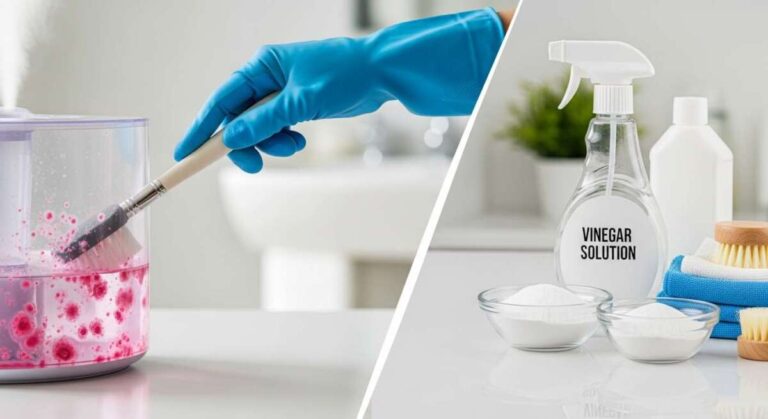
Step-by-Step Cleaning Guide (Beginner Friendly)
Follow these steps.
They work.
- Unplug the humidifier
- Empty all water
- Fill tank with vinegar and water (1:2)
- Let sit for 30 minutes
- Scrub gently with soft brush
- Rinse very well
- Air dry fully
I follow this routine weekly.
It has stopped pink mold completely.
What You Should Avoid Using
Avoid:
- Bleach mixed with vinegar
- Strong ammonia
- Abrasive scrubbers
These can:
- Damage plastic
- Release harmful fumes
- Leave residue in mist
Ask yourself this:
Do you want to breathe that?
How Water Choice Affects Pink Mold Growth
This part matters more than most people think.
Tap Water vs Distilled Water
Tap water contains:
- Minerals
- Bacteria
- Sediment
These feed pink mold.
Distilled water contains:
- Almost nothing
Once I switched to distilled water, mold stopped returning.
That change alone made a big difference.

Credit: www.hygieneproclean.com
How to Prevent Pink Mold From Coming Back (Long Term)
Now that you know pink mold is a real issue, let’s focus on stopping it before it starts.
Prevention is easier than cleanup.
And it saves your health.
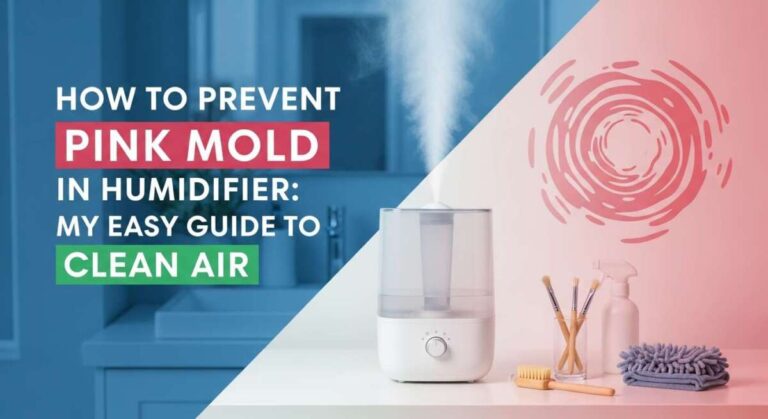
Empty the Tank Every Single Day
This is the most important rule.
Do not leave water sitting overnight.
Even one night is enough for bacteria to grow.
I make it a habit to:
- Turn off the humidifier
- Empty the tank
- Let it air dry
It takes less than two minutes.
And it works.
Use Distilled Water Only
I know it costs a bit more.
But distilled water:
- Has no minerals
- Does not feed bacteria
- Reduces residue buildup
Since switching, I rarely see any pink stains.
This one change makes a huge difference.
Clean on a Schedule (Not “When You Remember”)
Set a routine.
For example:
- Light rinse every day
- Deep clean once a week
Put a reminder on your phone.
That small habit protects your air.
Keep Indoor Humidity in Check
Too much humidity causes problems.
Aim for:
- 30% to 50% indoor humidity
If the air feels damp, turn the humidifier off.
More mist is not always better.
When You Should Replace Your Humidifier
Sometimes, cleaning is not enough.
And that’s okay.
Signs Your Humidifier Is Beyond Saving
Replace your humidifier if:
- Pink mold returns fast
- Plastic looks stained
- Cracks appear in the tank
- Smell stays after cleaning
Bacteria can hide in damaged plastic.
At that point, replacement is safer.
Choosing a Mold-Resistant Humidifier
If you buy a new one, look for:
- Simple design
- Easy-to-clean parts
- Fewer small crevices
Avoid overly complex shapes.
Simple designs stay cleaner longer.
My Personal Replacement Rule
Here’s my rule of thumb.
If I clean it twice and mold returns, I replace it.
Health always comes first.
Common Myths About Pink Mold in Humidifiers
Let’s clear up confusion.
“Pink Mold Is Just Cosmetic”
False.
Pink residue often contains bacteria.
Anything growing in water you breathe is a risk.
“If I Don’t Smell It, It’s Safe”
Also false.
Many bacteria have no smell.
Visual checks matter more.
“Only Old Humidifiers Get Mold”
Wrong again.
Even new humidifiers grow mold without care.
Maintenance matters more than age.
Frequently Asked Questions (FAQs)
Is pink mold in humidifier dangerous for healthy adults?
Yes, pink mold in a humidifier can still affect healthy adults. While symptoms may be mild, repeated exposure can cause allergies, breathing irritation, and sinus issues over time.
Can pink mold from a humidifier spread around my home?
Yes, bacteria from pink mold can spread through mist and settle on nearby damp surfaces. This is why regular cleaning and daily drying are important for prevention.
How fast does pink mold grow in a humidifier?
Pink mold can begin forming within 24 to 48 hours if water is left standing. Warm temperatures and mineral-rich tap water speed up growth even more.
Is boiling water enough to kill pink mold?
Boiling water helps but is not enough alone. Vinegar or hydrogen peroxide is needed to break down biofilm and kill lingering bacteria safely.
Should I stop using my humidifier if I see pink mold?
Yes, stop using it immediately. Clean it fully before reuse. If mold returns quickly, replacing the humidifier is the safer option.
Are ultrasonic humidifiers more likely to grow mold?
All humidifiers can grow mold. However, ultrasonic models often need more frequent cleaning because they disperse water particles directly into the air.
EEAT Transparency and Safety Note
This article is based on:
- Real personal experience
- Public health guidance
- Home hygiene best practices
It is for educational purposes only.
For medical symptoms, always consult a healthcare provider.
Final Verdict: Is Pink Mold in Humidifier Dangerous?
Let’s answer it clearly.
Yes, pink mold in a humidifier can be dangerous.
Not always severe.
But always worth fixing.
The good news?
You can prevent it.
With simple habits:
- Clean often
- Use distilled water
- Dry daily
Your air stays fresh.
Your lungs stay safe.
One Last Thought
If something grows where you breathe, it matters.
Take care of your humidifier.
And it will take care of you 🌿