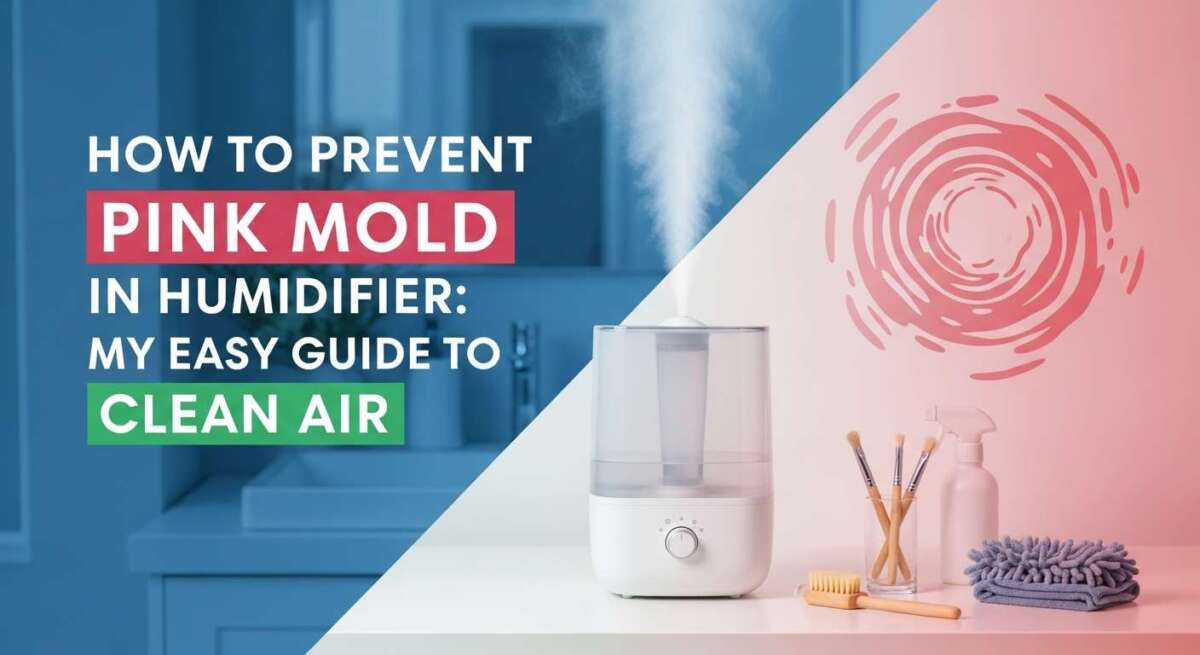
How to Prevent Pink Mold in Humidifier: Easy Tips for Clean Air
Have you ever looked inside your humidifier and gasped?
I have.
You pull off the tank. You look at the base. And there it is. A slimy, pink film. It looks gross. It feels slippery. And sometimes, it smells like dirty socks.
You are not alone. This happens to almost everyone.
We buy humidifiers to help us breathe better. We want to stop dry skin. We want to stop static shock. But if we are not careful, we might be pumping dirty air into our homes.
Are you asking, “How to prevent pink mold in humidifier?” If yes, you are in the right place.
I used to hate cleaning my machine. I would put it off. I would just add more water. That was a mistake.
Today, I want to share what I learned. I will tell you what that pink stuff is. I will tell you how to kill it. And most importantly, I will show you how to stop it from ever coming back.
Let’s clean up your air.
What Is That Pink Stuff?
First, we need to know our enemy.
We call it “pink mold.” But guess what? It is not actually mold.
It is bacteria.
The scientific name is Serratia marcescens. That is a hard name to say. So, we just call it pink mold.
Why does it love your humidifier?
This bacteria loves three things:
- Water: Your humidifier is full of it.
- Dust: This falls into the water. It is food for the bacteria.
- Room Temperature: It loves a warm home.
It is the same pink slime you might see in your shower. It likes wet places. It feeds on fats. In the shower, it eats soap scum. In your humidifier, it eats dust and minerals.
It is airborne. It floats around your house. When it finds a wet spot, it lands. Then, it starts to grow.

Credit: hellamaid.ca
My Personal “Pink Slime” Story
I want to be honest with you. I learned this the hard way.
When I was in college, I had a small humidifier. I lived in a dry dorm room. My throat hurt every morning. So, I ran that machine 24/7.
I was lazy.
I did not wash it. I just kept pouring water in. I did this for a month.
One day, the mist started to smell sour. It smelled like an old wet towel.
I opened the tank. The inside was covered in pink slime. It was thick. It was disgusting.
But the worst part? I had been coughing for a week. I thought it was a cold. But it was likely the bacteria. I was breathing it in every night.
I threw that machine away. I was too grossed out to clean it.
Now, I know better. You do not have to throw yours away. You just need to know how to fix it.
Is Pink Mold Dangerous?
You might be wondering, “Is this stuff going to hurt me?”
For most healthy people, it is just gross. It is not deadly.
However, you should take it seriously. There are real pink mold health risks.
Who needs to worry?
- People with Asthma: The bacteria can trigger an attack.
- People with Allergies: It can cause sneezing and red eyes.
- The Elderly: Their immune systems are weaker.
- Small Children: Their lungs are still growing.
Common Symptoms
If your humidifier is dirty, you might notice:
- A persistent cough.
- Runny nose.
- Trouble breathing.
- Skin infections (if you touch it with a cut).
If you see pink slime, do not panic. But do not ignore it. It is a sign that your air is not clean.
The Golden Rule: Water Quality Matters
This is the biggest secret.
Most people use tap water. It is easy. It is cheap.
But tap water is full of minerals. Calcium. Magnesium.
When you use tap water, two bad things happen:
- White Dust: The humidifier sprays minerals into the air. It looks like white dust on your furniture.
- Bacteria Food: Those minerals settle in the tank. They create a crust. The pink bacteria love to hide in this crust.
My Advice:
Switch to distilled water.
Distilled water is pure. It has no minerals. The bacteria have nothing to eat. Your machine stays clean much longer.
I know it costs money. But think of it this way. You spend money on the machine. You spend money on your health. A few dollars for water is worth it.
If you cannot buy water, use filtered water. It is better than tap water.

Credit: hellamaid.ca
Daily Habits to Stop the Slime
You do not need to scrub for an hour every day.
You just need a routine.
Here is my daily habit. It takes two minutes.
1. Turn it off.
Unplug it first. Safety first!
2. The Dump.
Pour out any water left in the tank. Never top it off.
If you add new water to old water, you are feeding the germs. The old water is stagnant. It is dirty. Dump it out.
3. The Rinse.
Put a little clean water in the tank. Shake it around. Dump it out again. This washes away loose dust.
4. The Dry (Optional but good).
If you are leaving for work, leave the tank cap off. Let it air dry.
Bacteria cannot grow on dry plastic. If you let it dry out during the day, you kill the cycle.
That is it. Dump. Rinse. Dry.
Weekly Deep Cleaning Guide
Once a week, you need to go deeper.
You need to kill the germs. You need to remove the crust.
Here is your humidifier maintenance checklist.
What you need:
- White Vinegar (The hero of cleaning).
- A soft brush (An old toothbrush is perfect).
- Clean water.
- A dry cloth.
Step 1: Take it apart.
Unplug the unit. Take off the tank. Remove the nozzle. Take out any filters (check your manual first).
Step 2: The Vinegar Soak.
Pour one cup of white vinegar into the base. Make sure it covers the messy parts.
Pour another cup into the water tank. Add some warm water.
Let it sit.
Wait for 20 minutes.
Why vinegar? Vinegar is an acid. It eats the mineral crust. It loosens the pink slime. It is safe and non-toxic.
Step 3: The Scrub.
Pour out the vinegar.
Take your toothbrush. Scrub the nooks and crannies.
Look closely at the “nebulizer.” That is the little round part that vibrates. Be gentle.
Scrub the corners of the tank.
Step 4: The Rinse.
Rinse everything with water. Rinse it again.
You do not want your room to smell like a salad.
Rinse until the vinegar smell is gone.
Step 5: Dry it.
Wipe it down. Let it sit on a towel. Ensure it is bone dry before you put it back together.

Credit: hellamaid.ca
The Great Debate: Vinegar vs. Bleach
You will see advice online about cleaning humidifier vinegar vs bleach.
Which one is better?
Vinegar:
- Pros: Removes hard water scale. Safe to breathe. Cheap.
- Cons: Smells strong. Takes time to work.
Bleach:
- Pros: Kills 99.9% of germs instantly.
- Cons: Does not remove scale. Dangerous fumes. Can damage plastic.
My Recommendation:
Use vinegar for weekly cleaning. It handles the minerals and the slime.
Use bleach only if the mold is very bad. If the tank is black or very green, use bleach.
Mix 1 teaspoon of bleach in 1 gallon of water. Let it sit for hour. Rinse very, very well.
CRITICAL SAFETY WARNING:
Never mix vinegar and bleach.
If you mix them, they create Chlorine Gas. This gas is toxic. It can burn your lungs. It can send you to the hospital.
Use one. Or use the other. Never use both at the same time.
Specific Tips for Different Humidifiers
Not all machines are the same.
Ultrasonic Humidifiers (The Cool Mist ones):
These are the most common. They have a little metal plate.
- Tip: Clean the plate gently. If you scratch it, the machine breaks.
- Mold Risk: High. The water stays cool. Bacteria love cool water.
Evaporative Humidifiers (The ones with filters):
These have a paper or fabric wick.
- Tip: Check the wick. If it is pink, throw it away. You cannot wash the wick. Buy a new one.
- Mold Risk: Medium. The moving air helps dry it out.
Warm Mist Humidifiers:
These boil the water.
- Tip: Look for rock-hard crusts on the heater. You will need to soak this in vinegar longer. Maybe an hour.
- Mold Risk: Lower. The boiling water kills some germs. But the tank can still get slimy.
When looking for the best humidifier to prevent mold, look for “Top Fill” models. They are wide open. You can put your whole hand inside to wipe them. If you can’t reach inside, you can’t clean it well.
Controlling Your Room Environment
Sometimes, the problem is not the machine. It is the room.
If your room is a jungle, mold will grow.
Humidity Level:
You want the “Goldilocks” zone.
Not too dry. Not too wet.
Aim for 30% to 50% humidity.
If it goes over 50%, turn the machine off.
How do you know?
Buy a hygrometer. It is a little clock that shows humidity. They cost about $10. It is a great investment.
Location:
Do not put the humidifier on the carpet. The mist falls down. It makes the carpet wet. Mold grows in the carpet.
Put it on a table.
Keep it away from curtains. Damp curtains are a mold factory.
Airflow:
Run a ceiling fan. Or keep the door open.
Stagnant air is bad air. Keep the air moving.
Natural Alternatives to Chemicals
Maybe you hate the smell of vinegar. I get it.
Here are some other options.
Hydrogen Peroxide:
You can buy this at the pharmacy. It comes in a brown bottle.
It kills bacteria. It bubbles up when it works.
- How to use: Pour some in the tank. Swish it around. Let it sit. Rinse.
- It does not smell. It breaks down into water. It is very safe.
Tea Tree Oil:
Some people say tea tree oil kills mold. This is true.
But be careful.
Some humidifiers will melt if you use oils. The oil eats the plastic.
Check your manual. If it says “No Essential Oils,” do not use it.
Storing Your Humidifier Correctly
Spring is coming. The air is getting moist. You do not need the machine anymore.
What do you do?
Do not just put it in the closet.
If you leave one drop of water inside, it will rot.
Next winter, you will open the box. It will be black with mold. It will be ruined.
The End-of-Season Routine:
- Do a deep clean with vinegar.
- Rinse it well.
- Dry it with a towel.
- Leave it out on the counter for 2 days. Yes, 2 days.
- Make sure every part is bone dry.
- Wrap it loosely in a bag.
- Put it away.
If you do this, next winter will be easy. You will just fill it up and go.
Conclusion
Preventing pink mold is not rocket science. It is just habit.
Remember the basics:
- Use distilled water.
- Dump the tank daily.
- Soak in vinegar weekly.
- Keep it dry when not in use.
If you follow these steps, your air will be fresh. Your lungs will be happy. And you will never have to touch that gross pink slime again.
Take a look at your humidifier today. Does it need a bath?
Go ahead. Give it a scrub. You will breathe easier tonight.
Frequently Asked Questions (FAQ)
1. Is pink mold in my humidifier harmful to my baby?
Yes, it can be. Babies have sensitive lungs. Breathing in bacteria can cause coughing, congestion, or infections. Always keep the unit clean for safety.
2. Can I run vinegar through my humidifier while it is on?
No, never run the machine with vinegar inside. It will pump vinegar mist into the air. This can sting your eyes and hurt your lungs. Only soak it while it is off.
3. Why does my humidifier turn pink so fast?
It is likely due to using tap water and leaving water sitting in the tank. The minerals in tap water feed the bacteria. Try switching to distilled water.
4. How do I clean the filter wick in my humidifier?
You usually cannot clean the paper wicks. If it has pink or black spots, throw it away. Buy a new replacement filter. Cloth filters can sometimes be soaked in vinegar.
5. Does hydrogen peroxide kill pink mold?
Yes, hydrogen peroxide is excellent for killing bacteria. It is odorless and safe. Use 3% hydrogen peroxide to rinse the tank if you dislike vinegar.
6. What is the best humidity level to prevent mold?
Keep your room between 30% and 50% humidity. If it gets higher than 50%, mold can start growing on your walls and furniture, not just in the machine.