How to Get Rid of Pink Mold in Humidifier: Easy & Effective Tips
You wake up. Your throat feels dry. You look over at your humidifier. It is supposed to help you. But then, you see it. A gross, pink line is floating in the tank.
It looks like slime. It looks scary.
If you have seen this, do not panic. I have been there too.
Last year, I walked into my son’s nursery. I went to fill his humidifier. I lifted the tank. The bottom was slick with a pink film. My heart sank. I had been pumping that air into his room all night. I felt terrible. I felt like I had failed him.
But here is the good news. You can fix this. You can get rid of it.
I learned everything about this pink slime. I learned how to kill it. I learned how to keep it away. Now, I want to share that with you.
In this guide, I will show you how to get rid of pink mold in humidifier units. We will use simple tools. We will use safe steps. We will make your air clean again.
Stick with me. We will do this together.
What Is Pink Mold? (It Is Not What You Think)
First, we need to know our enemy.
We call it “pink mold.” But that name is a lie. It is not actually mold. It is a bacteria.
The scientific name is Serratia marcescens.
This bacteria is all around us. It is in the soil. It is in the air. It loves wet places. It loves fatty substances. That is why you see it in your shower grout. That is why it loves your dog’s water bowl.
And yes, it loves your humidifier.
What Does It Look Like?
You cannot miss it. It looks like:
- A pinkish slime.
- A reddish film.
- Sometimes it looks orange.
- It feels slippery to the touch.
It builds up on the plastic. It grows near the water line. It hides in the corners of the water tank.
Unlike black mold, which eats into walls, this bacteria sits on top. It feeds on minerals. It feeds on soap scum. In a humidifier, it feeds on the dust in the water.
So, when you search for pink slime in water tank solutions, you are really fighting bacteria.

Credit: hellamaid.ca
Is Pink Mold in Humidifier Dangerous?
You might ask, “Is it safe to ignore?”
The short answer is no. You should not ignore it.
Serratia marcescens health risks are real. For healthy adults, it might not be deadly. But it is not good for you.
Who Is at Risk?
Some people need to be very careful.
- Babies and Kids: Their lungs are small. They are still growing.
- The Elderly: Their immune systems are weaker.
- Asthma Sufferers: This bacteria can trigger attacks.
- Pet Owners: Animals can get sick too.
Potential Health Issues
If you breathe in this bacteria, it can cause problems.
- Breathing Issues: You might cough more. You might feel wheezy.
- Infections: In rare cases, it causes pneumonia. It can infect wounds.
- Eye Irritation: The air might sting your eyes.
- Bladder Infections: Oddly, this bacteria is known for UTIs if you touch it.
I remember my son had a cough that would not go away. I thought it was just a cold. Once I cleaned the pink slime from his machine, the cough stopped. That was my wake-up call.
If you see pink, you must act. Your health is worth it.
Why Does Pink Mold Grow in My Humidifier?
Why did this happen to you? You are not dirty. Your home is clean.
This bacteria is an opportunist. It waits for the right time.
1. Standing Water
Humidifiers hold water. That is their job. But water that sits still gets stale. As the chlorine from tap water evaporates, bacteria start to party. If you leave water in the tank for two days, you are inviting trouble.
2. Warm Temperatures
Your home is warm. The motor in the humidifier gets warm. Bacteria love warmth. It is like a tropical vacation for them.
3. Mineral Buildup (White Dust)
Do you use tap water? Tap water has minerals. Calcium. Magnesium. These minerals leave a white dust. You might see it on your furniture.
Inside the tank, this “white dust” is food. The Serratia marcescens eats it. The more food they have, the faster they grow.
4. Dark Places
Inside the machine, it is dark. Bacteria grow well in the dark.
So, you have water. You have warmth. You have food. You have darkness. It is the perfect storm for pink slime.
Preparation: Supplies You Need to Fight the Mold
We are about to start cleaning. We need the right tools.
You do not need expensive cleaners. You have the best humidifier cleaner for mold in your kitchen right now.
The Safety Gear
First, protect yourself.
- Gloves: Do not touch the slime with bare hands.
- Mask: Do not breathe in the spores while scrubbing.
- Goggles: Avoid splashes in your eyes.
The Cleaning Squad
Gather these items:
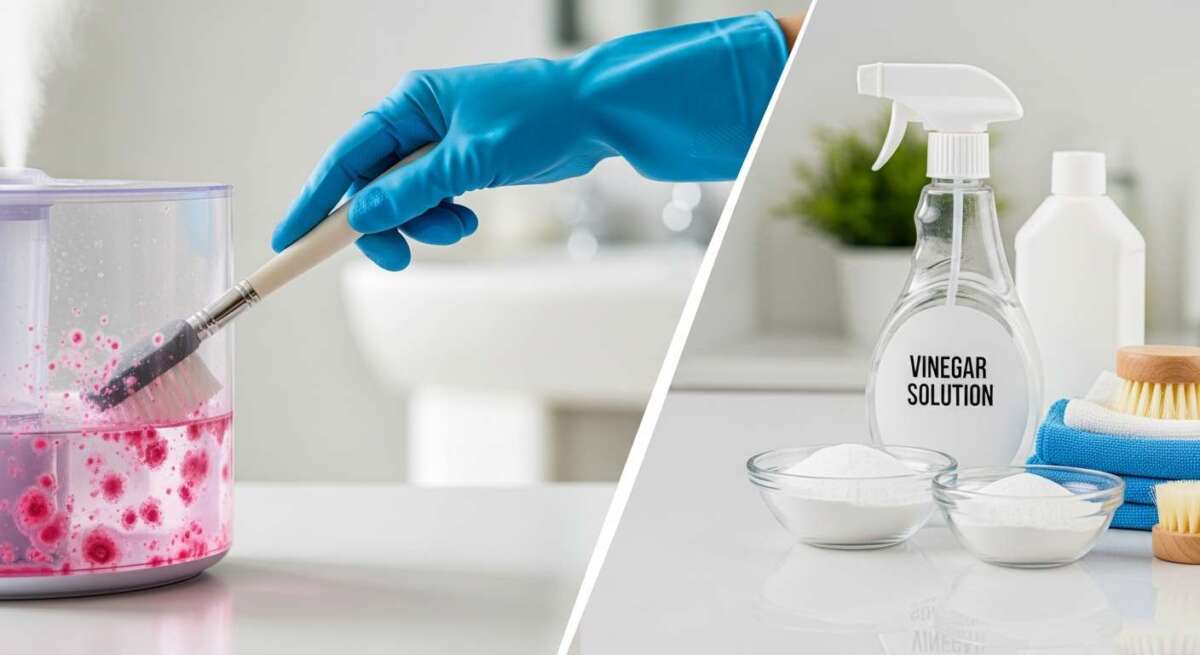
- Distilled White Vinegar: This is acid. It cuts through the grime. It kills many germs. It is safe for plastic.
- Hydrogen Peroxide (3%): This bubbles up. It kills bacteria on contact.
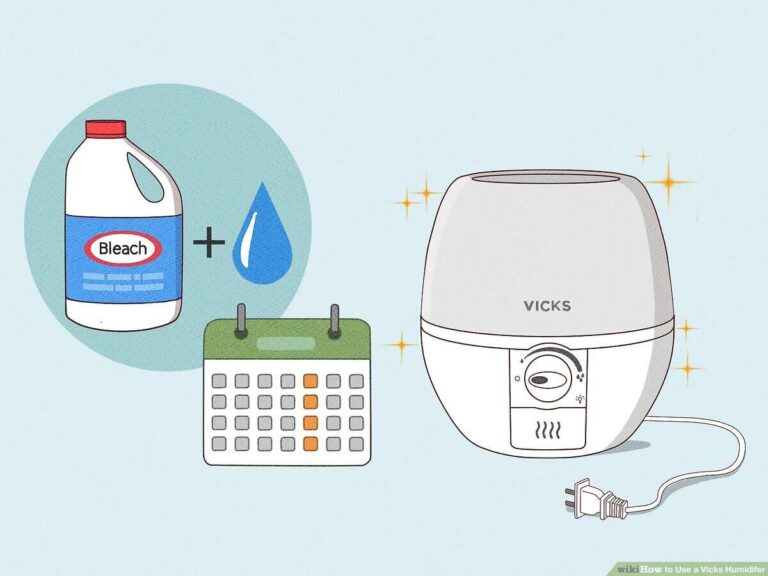
- Bleach (Optional): This is the nuclear option. Use it only if necessary.
- Soft Brush: An old toothbrush is perfect. It reaches small corners.
- Microfiber Cloth: For wiping and drying.
- Q-Tips: For the tiny vents.
Important Warning: Never mix bleach and vinegar. It creates chlorine gas. This gas is toxic. It can hurt your lungs badly. Pick one method. Do not mix them.
Step-by-Step: How to Get Rid of Pink Mold in Humidifier
Now, we clean. Follow these steps exactly. I do this once a week. It works every time.
Step 1: Turn It Off and Move It
Unplug the unit. Safety first. Electricity and water do not mix.
Take the humidifier to a sink. Or take it to the bathtub. You want a place that is easy to wash.
Step 2: Take It Apart
Remove the water tank. Remove the filter if there is one. Remove any small nozzles.
Look at every piece. Check for pink spots. Check for slime.
Step 3: The Initial Rinse
Pour out the old water. Do not save it.
Rinse the tank with warm water. Swish it around. Dump it out. This removes loose slime.
Step 4: The Vinegar Soak
This is the magic step.
- Fill the base with pure white vinegar. Ensure the heating element (if you have one) is covered.
- Fill the water tank with a mix. Use 1 cup of vinegar and 1 cup of water.
- Let it sit.
- Wait for 30 minutes.
Why wait? The acid needs time. It eats the mineral scale. It loosens the pink slime. You might see bubbles. That is good. That means it is working.
Step 5: Scrub the Nooks
After 30 minutes, dump the vinegar. Now, grab your toothbrush.
Scrub the tank. Scrub the base. Look for tight corners.
I always find pink mold hiding near the mist outlet. Scrub there gently.
Dip the brush in fresh vinegar if you need more power.
Use a Q-tip for the smallest holes.
Step 6: The Rinse Cycle
This is vital. You must rinse well.
Rinse the tank with water. Shake it. Dump it.
Do this at least three times.
You want the vinegar smell to go away. You do not want your room to smell like a salad.
Step 7: Dry Everything
Bacteria love wetness. So, we must remove the wetness.
Wipe every part with a clean cloth.
Lay the parts out on a towel.
Let them air dry completely.
Do not put it back together while it is wet. Wait until it is bone dry.
This vinegar method usually works. It is my go-to. But sometimes, the mold is stubborn. Sometimes, you need something stronger.

Credit: hellamaid.ca
Alternative Cleaning Methods for Stubborn Slime
Sometimes, vinegar is not enough.
Maybe you let the tank sit for too long. Maybe the pink slime has turned into a thick, reddish sludge. If vinegar does not do the trick, do not worry. We have other weapons.
We can use stronger stuff. However, we must be careful.
Method A: Hydrogen Peroxide (The Bubbler)
I love hydrogen peroxide. It is safe. It is effective. Plus, watching it work is satisfying.
Why use it?
It kills bacteria instantly. It does not smell like pickles (unlike vinegar).
How to do it:
- Pour it in. Pour 3% hydrogen peroxide into the base. Pour some into the tank.
- Watch the foam. You will see bubbles. That is the chemical reaction. It is attacking the cell walls of the bacteria.
- Wait. Let it sit for 15 to 30 minutes.
- Rinse. Pour it out. Rinse with warm water.
This method is great for the base. The base has many small parts. The foam gets into places your brush cannot reach.
Method B: The Bleach Solution (The Heavy Hitter)
Bleach is strong. It kills everything. But, it is harsh. It can damage plastic. It can hurt your lungs.
When to use it:
Only use bleach if the mold is very bad. Use it if there are black spots mixed with the pink slime.
How to mix it:
You must dilute it.
- Mix 1 teaspoon of bleach.
- Add 1 gallon of cool water.
- Do not use hot water. Hot water makes the bleach fumes stronger.
The Process:
- Pour the solution into the tank.
- Swish it around. Coat every side.
- Let it sit for 20 minutes. No longer.
- Rinse like crazy. You must rinse until the smell is gone. If you smell bleach, rinse again.
Crucial Reminder: I will say it again. Never mix bleach with vinegar. It creates a deadly gas. If you used vinegar first, rinse the tank thoroughly before adding bleach.
When deciding on vinegar vs bleach for humidifier cleaning, always start with vinegar. It is safer. It is gentler. Save the bleach for emergencies.
Cleaning Specific Parts of Your Humidifier
Your humidifier is not just one big bucket. It has parts. Each part needs special love.
If you clean the tank but miss the nozzle, the mold comes back. It comes back fast.
1. The Water Tank
This is the big container. It is usually easy to clean.
- The Challenge: Some tanks have small openings. You cannot fit your hand inside.
- The Fix: Put a little uncooked rice in the tank with vinegar. Shake it hard. The rice acts like a scrubber. It scrapes the slime off the walls.
2. The Base (The Danger Zone)
The base holds the motor. It holds the fan. It holds the electronics.
- The Rule: Never submerge the base in water.
- My Mistake: Once, I dunked my entire base in the sink. I wanted it clean. I ruined the motor. The machine never turned on again. Do not be like me.
- The Fix: Pour cleaner into the tray. Do not put the whole unit under water. Wipe the outside with a damp cloth.
3. The Nozzle (Mist Spout)
This is where the mist comes out. It is often wet. It is often warm.
- The Trap: Mold hides here. You cannot always see it.
- The Fix: Take the nozzle off. Soak it in a bowl of vinegar. Let it swim there for 20 minutes. Then, rinse it off.
4. The Filter or Wick
Does your humidifier have a filter?
- The Hard Truth: You cannot really clean a paper wick. If it has pink mold, throw it away.
- Why? The mold grows deep inside the fibers. You cannot scrub it out. Bleach will destroy the paper.
- Action: Buy a new filter. It is cheaper than getting sick.
How to Prevent Pink Mold in Humidifier (Maintenance Routine)
You just spent an hour cleaning. You scrubbed. You rinsed. It looks new.
Now, you have a goal. You want to keep it this way. You do not want to scrub slime every week.
Prevention is easier than cleaning. It takes less time. It takes less effort.
Here is the routine I use. Since I started this, I rarely see pink slime.
1. The Daily Rinse (The Golden Rule)
This is the most important step.
Every morning:
- Turn off the humidifier.
- Take off the tank.
- Dump the water. Do not let it sit.
- Rinse the tank with warm water.
- Leave the cap off. Let it air dry during the day.
Every night:
- Fill it with fresh water.
If you do this, bacteria cannot grow. They need standing water. If you dump the water, you dump the bacteria.
2. The Weekly Deep Clean
Pick a day. I do it on Sundays.
Once a week:
- Do the vinegar soak.
- Scrub the base.
- This kills any baby spores before they turn into a pink army.
3. Choose the Right Water
This is a big debate. Tap water vs. Distilled water.
Tap Water:
- It is free. It is easy.
- But: It has minerals. It creates “white dust.”
- The Entity Connection: Remember the bacteria Serratia marcescens? It eats minerals. Tap water feeds the bacteria.
Distilled Water:
- It costs money. You have to buy bottles.
- But: It has no minerals. It has no food for bacteria.
- The Result: Your humidifier stays clean much longer.
My Advice: If you can afford it, use distilled water. It makes a huge difference. If you must use tap water, use a demineralization cartridge. It helps filter out the food source.
4. Control the Humidity
Mold loves moisture. That is obvious.
But if your room is too wet, mold grows on your walls. It grows on your curtains.
- Target: Keep humidity between 30% and 50%.
- Tool: Buy a hygrometer. It is a small tool. It tells you the humidity level. It costs about $10.
If the room feels like a swamp, turn the machine down. Open a door. Let the air move.
5. Proper Storage
Summer is coming. You do not need the humidifier.
Do not just put it in the closet with water in it. That is a disaster waiting to happen.
How to store:
- Clean it thoroughly.
- Dry every single part. Use a towel. Let it sit out for 24 hours.
- Ensure there is zero water left.
- Put it in a dry box.
If you store it wet, you will open a science experiment next winter.
So, how to prevent pink mold in humidifier issues? Dryness is your friend. Fresh water is your weapon.
Choosing the Right Humidifier to Avoid Mold
Maybe your humidifier is old. Maybe it is impossible to clean.
Some designs are bad. They have corners you cannot reach. They have tanks you cannot scrub.
If you are tired of fighting mold, maybe you need a new machine.
Cool Mist vs. Warm Mist
Which is better for mold?
Warm Mist:
- It boils the water. Boiling kills bacteria.
- However: The water sits in a warm tank before boiling. That warm tank is a breeding ground.
Cool Mist (Evaporative):
- It uses a fan and a wick.
- The wick catches minerals. It catches bacteria.
- But: You must change the wick often.
Cool Mist (Ultrasonic):
- It vibrates water into mist.
- It is quiet.
- But: It shoots the bacteria into the air if you do not clean it.
Features to Look For
If you buy a new one, look for these things:
- Top-Fill Tank: These are amazing. You can reach your whole hand inside. You can scrub the bottom.
- Dishwasher Safe: Some tanks can go in the dishwasher. The heat kills the germs. It saves you time.
- UV Light: Some expensive models have UV lights. The light kills bacteria in the water. It works well.
- Antimicrobial Plastic: This plastic fights mold growth. It is not perfect, but it helps.
I switched to a top-fill model last year. Cleaning takes five minutes. I do not dread it anymore. It was worth every penny.

Credit: hellamaid.ca
When to Throw Your Humidifier Away
I hate waste. I like to fix things. I like to make them last.
But sometimes, you have to let go.
There comes a point where cleaning does not work. The pink mold wins.
I had a humidifier for five years. I loved it. But one day, I scrubbed it. I soaked it. I dried it. When I turned it on, the smell came back instantly. It smelled like dirty socks.
I realized the mold was deep inside the motor housing. I could not reach it. I was breathing in that smell. I threw it out that day.
Signs of No Return
How do you know it is time? Look for these signs.
1. The Plastic Is Rough
Look at the tank. Is the plastic smooth? Or does it look cloudy? Does it have scratches?
Bacteria hide in scratches. You cannot scrub inside a scratch. If the tank is etched or rough, it will never be truly clean.
2. The Smell Won’t Leave
You used vinegar. You used bleach. You dried it out.
You turn it on. It still smells musty.
This means mold is inside the air intake. It is inside the fan. You cannot clean those parts safely. Replace the unit.
3. Permanent Stains
Sometimes the pink slime turns into black spots. These spots stain the plastic.
If you scrub and the color stays, the mold has eaten into the material. It is time for a new one.
4. It Is Too Old
Humidifiers do not last forever. They last about 3 to 5 years.
If yours is older, the motor might be weak. Weak motors do not push air well. Damp air stays inside. Mold grows faster.
Do not feel guilty. Your health is worth more than a $40 machine.
Frequently Asked Questions
You might still have questions. That is normal. Here are the answers to the most common things people ask me about how to get rid of pink mold in humidifier units.
Is pink mold in a humidifier dangerous to my family?
Yes, it can be harmful. While it is not as toxic as black mold, Serratia marcescens causes health issues. It can lead to urinary tract infections if you touch it. It can cause breathing problems if you inhale it. It is very bad for people with asthma. It is risky for babies and the elderly. You should clean it immediately.
Can I run vinegar through my humidifier while it is on?
No, do not do this. Vinegar is an acid. If you run the machine with vinegar, you pump acid into the air. This can hurt your eyes. It can burn your throat. It can damage your lungs. Only use vinegar to soak the parts. Rinse it out completely before you turn the power back on.
Does bleach kill pink mold better than vinegar?
Bleach kills bacteria faster than vinegar. It is a stronger chemical. However, it is riskier to use. If you do not rinse it well, bleach fumes are toxic. Vinegar is safer for regular cleaning. Bleach is only for deep cleaning when the mold is very bad. Never mix the two.
Why does my humidifier water turn pink?
If the water itself is pink, you have a big problem. This means the bacteria colony is huge. There are millions of bacteria in the tank. The water is contaminated. Stop using it right away. Dump the water. Disinfect the entire unit with bleach solution. If it happens again, buy a new humidifier.
Can pink mold make you sick with “Humidifier Lung”?
Yes, dirty humidifiers cause “Humidifier Lung.” This is a real condition. It is a type of lung inflammation. It feels like the flu. You get a fever. You get a cough. You feel short of breath. It happens when you breathe in mist filled with bacteria or mold. Keeping your machine clean prevents this.
Can I use essential oils to kill the mold?
Some oils, like Tea Tree oil, fight bacteria. But be careful. Many humidifiers break if you use oils. The oil eats the plastic. It can crack the tank. Check your manual first. If your machine is not made for oils, do not use them. It is better to use vinegar for cleaning.
Conclusion
We have covered a lot today.
We learned that the pink slime is actually bacteria. We learned it loves damp, dark places. We learned it can hurt your lungs.
But we also learned how to fight back.
You now know the vinegar trick. You know how to scrub the nooks. You know that drying the tank is the secret weapon.
Here is my challenge to you:
Go check your humidifier right now. Open the tank. Run your finger along the bottom.
Is it slimy? Is it pink?
If it is, do not wait. Grab the vinegar. Soak it. Scrub it.
It takes twenty minutes. But those twenty minutes give you peace of mind. They give you clean air. They keep your family safe.
You can do this. A clean home starts with small steps. This is one of them.
Stay healthy. Breathe easy. And keep that pink slime away for good.