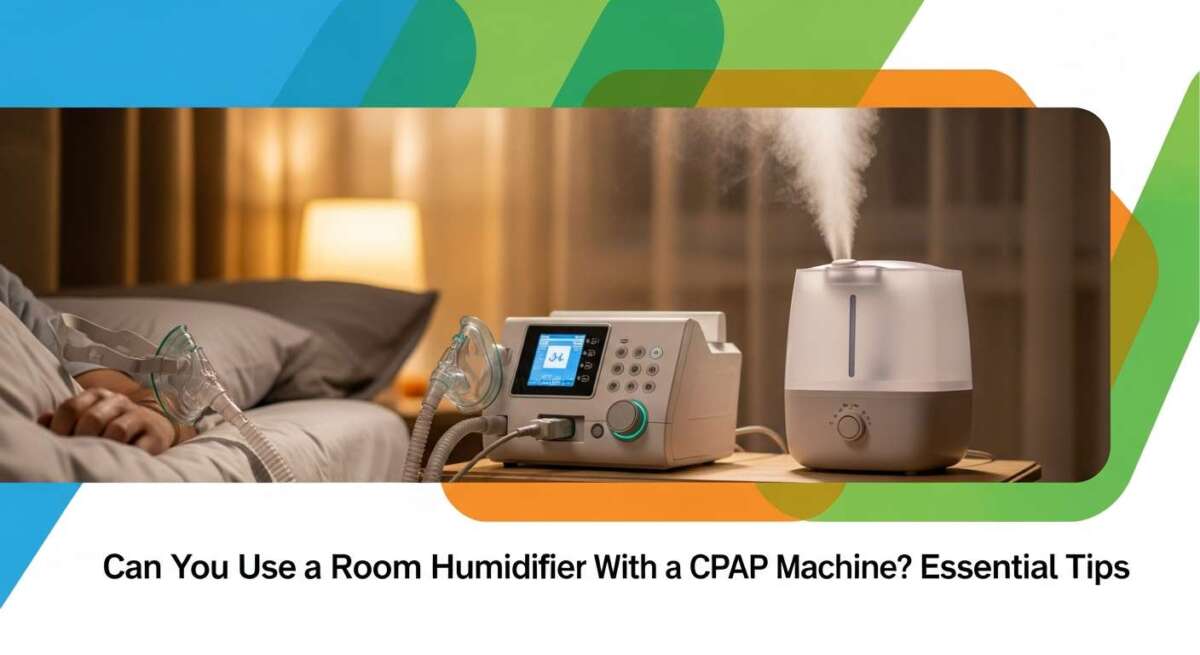
Can You Use a Room Humidifier With a Cpap Machine? Tips
Do you wake up feeling like you swallowed sand?
I know that feeling. I have been there. You start your CPAP therapy hoping for great sleep. Instead, you wake up with a mouth so dry it hurts to speak.
Naturally, you look at your room humidifier. You wonder, “Can I turn this on too?”
It makes sense. If the air is dry, add water. But is it safe? Will it break your expensive CPAP machine?
I am writing this guide because I use a CPAP too. I have tried every trick in the book. I want to help you breathe easier.
The short answer is: Yes, you can use a room humidifier with a CPAP machine.
However, you must be careful. If you do it wrong, you can cause a mess. You might even make your therapy worse.
In this guide, I will share my personal experience. I will explain the science simply. We will look at how to balance both machines. We will ensure you get the deep, restful sleep you deserve.
My “Water in the Nose” Story
Let me tell you a story. It was the winter of 2018. It was freezing outside. My bedroom was cold.
My throat was parched every morning. My CPAP humidifier was set to max. It wasn’t enough.
So, I had a “bright” idea. I pulled out my large room humidifier. I placed it right next to my bed. I turned it to “High.” I turned my CPAP humidity to “High.”
I went to sleep thinking I was smart.
At 3:00 AM, I woke up in a panic. I was choking. Water was shooting up my nose. It felt like I was drowning.
I ripped the mask off. Water poured out of the hose. It was all over my pillow.
I had created a rainstorm in my tube.
This is called “Rainout.” It happens when there is too much moisture. The air could not hold it all. It turned back into liquid water.
I learned a hard lesson that night. More is not always better. Balance is everything.
Today, I will teach you how to avoid my wet, messy mistake.

Credit: www.cpap.co.uk
Understanding the Basics: How CPAP Humidity Works
First, we need to know how your machine works.
Your CPAP machine takes air from the room. It pushes that air through a filter. Then, it pushes it into your mask.
Most modern machines have a humidifier built-in. This is a water tank on the side.
Why Is CPAP Air Dry?
Room air can be dry. But CPAP air moves fast. Fast air dries out moisture quickly. Think of a hair dryer. Even cool air dries things if it moves fast.
Your nose has a job. It warms and wets the air before it hits your lungs. The CPAP pushes so much air that your nose cannot keep up.
That is why we need humidity.
The Goal of Humidification
The goal is not to make the air “wet.” The goal is to make the air “neutral.” We want the air to feel like it is already inside your body.
If the air is too dry, your nose swells. You get congested.
If the air is too wet, water condenses. You get rainout.
The Science of Room Air vs. CPAP Air
This part is important. But I will keep it simple.
Your CPAP machine does not create air. It takes the air in your bedroom.
If your bedroom is very dry (like 20% humidity), the CPAP has to work hard. It has to add a lot of water to make you comfortable.
If your bedroom is moist (like 50% humidity), the CPAP has an easy job.
The Danger of Double Dipping
Here is the catch.
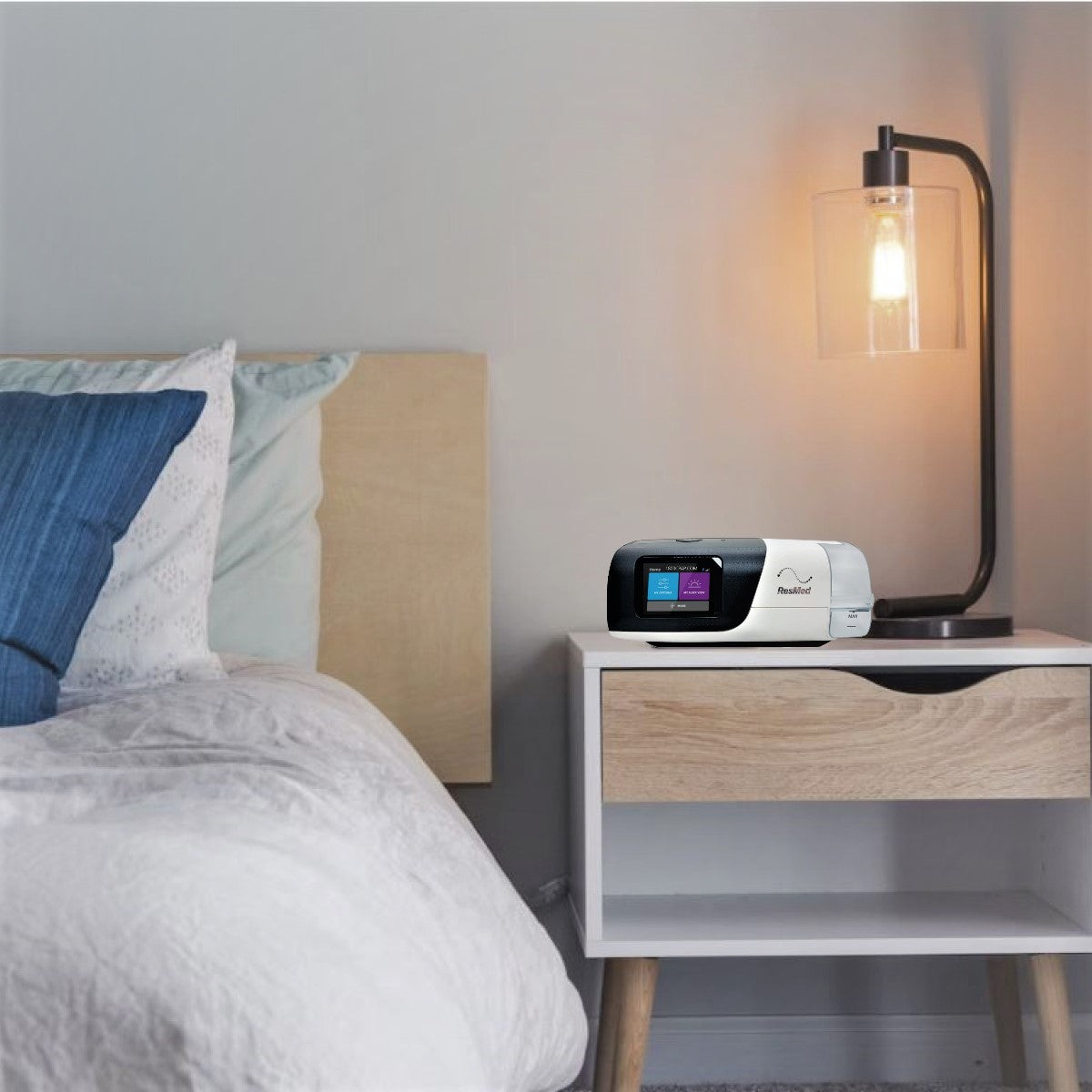
Your CPAP machine usually checks the room air. Smart machines, like the ResMed AirSense, measure room humidity.
However, older machines do not.
If you add a room humidifier, you change the air.
If your CPAP adds water on top of the room water, you reach the tipping point.
This is called the Dew Point. This is the temperature where air drops its water. If the air in your hose is warmer than your room, and it is full of water, it cools down. As it cools, it drops water.
Result? Water in your face.
The Core Conflict: Risk of Rainout
We need to talk about CPAP rainout prevention. This is the biggest issue when combining devices.
Rainout is condensation. It happens inside the long hose.
When you use a room humidifier, the room air becomes heavy with water. Your CPAP sucks this heavy air in. Then, the CPAP heater adds more water.
Now the air is 100% saturated.
As that air travels to your mask, it leaves the heated machine. It enters the cold hose. The cold room air cools the hose plastic.
The air inside the hose cools down. Cold air cannot hold as much water as warm air.
So, the water falls out.
How to Prevent Rainout
To use both machines, you must do two things:
- Lower the CPAP setting: If the room is humid, turn the CPAP humidity down.
- Warm the Hose: Use a hose cover or heated tubing. This keeps the air warm until it hits your nose.
Benefits of Using a Room Humidifier
So, why would you do this? Why risk the rainout?
There are good reasons.
1. It Helps Your Partner
Your partner does not have a CPAP. But they might have dry skin. They might snore. Moist air helps everyone in the room.
2. It Reduces Static
Dry air causes static shocks. It hurts electronics. A room humidifier stops this.
3. It Helps Skin Health
CPAP masks can cause sores. Dry skin cracks easily. Humid air keeps your skin elastic. This helps the mask seal better.
4. It Pre-Conditions the Air
If your CPAP water tank runs dry by 4 AM, a room humidifier helps. It means your CPAP uses less water. The tank might last all night.
Credit: 1800cpap.com
Risks and Downsides
We must be honest about the risks.
1. Mold Growth
Mold loves moisture. If you keep your room above 60% humidity, mold grows. It grows in carpets. It grows on curtains. You breathe this in.
2. Dust Mites
Dust mites are tiny bugs. They live in bedding. They love humidity. If you raise the moisture, you raise the mite population. This is bad for allergies.
3. Clogging Filters
Some humidifiers use ultrasonic waves. They smash water into mist. If you use tap water, this mist has minerals. This turns into white dust.
Your CPAP has a filter. This white dust clogs the filter fast. You might burn out the CPAP motor.
Room Humidifier vs. CPAP Humidifier: The Showdown
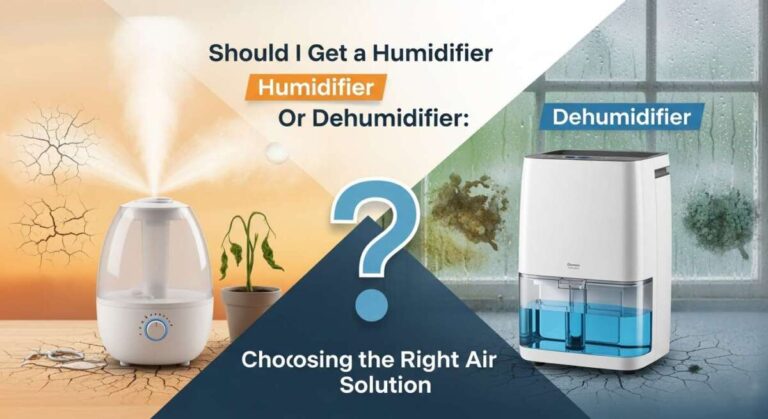
People often ask about Room humidifier vs CPAP humidifier setups. Which is better?
Let’s compare them.
The CPAP Humidifier:
- Pros: Direct delivery. It moisturizes only the air you breathe. Highly efficient. Heated options prevent rainout.
- Cons: Small tank. Can run dry. Hard to clean the tank.
The Room Humidifier:
- Pros: Humidifies the whole room. Large tank. Good for skin.
- Cons: Indirect. Wastes water on the whole room. Can cause mold in the house.
The Verdict:
For CPAP therapy, the built-in humidifier is king. It is designed for the job. Use the room humidifier as a backup or for general room comfort. Do not rely on it for your therapy moisture.
Identifying the Real Problem: Is it Humidity or Leaks?
Many people buy a room humidifier because of dry mouth.
But wait.
We need to look at CPAP dry mouth causes.
Is your mouth dry because the air is dry? Or is it because your mouth is open?
If you wear a nasal mask, and your mouth drops open, air shoots out. The air goes in your nose and out your mouth.
This dries you out instantly. No amount of humidity will fix this.
If you wake up with a desert mouth, check your leak data.
If your leak rate is high, you need a chin strap. You do not need a room humidifier.
Fix the leak first. Then worry about the water.
Best Practices for Combining Both Devices
You have decided to use both. Okay. Let’s do it right.
Here is my expert advice.
1. Distance is Key
Do not put the room humidifier next to the CPAP intake.
Keep it across the room. Let the moisture mix with the room air first.
If the intake sucks in direct mist, you will flood the machine.
2. Buy a Hygrometer
This is a small tool. It measures humidity.
You cannot guess humidity. You need data.
Keep your bedroom between 40% and 50% humidity.
This is the Best humidity for CPAP therapy.
If it goes over 50%, turn the room unit off.
3. Adjust the CPAP Down
If the room is at 45%, turn your CPAP humidity to a low setting (like 1 or 2).
Let the room do the work.
4. Use Heated Tubing
I cannot stress this enough. Heated tubing saves lives. Well, it saves sleep.
It keeps the temperature consistent. It stops the physics of rainout.
Water Quality Matters
What water are you putting in these machines?
You must use Distilled water for CPAP machines.
I know it is annoying to buy. I know tap water is free.
But tap water has stuff in it. Calcium. Magnesium. Chlorine.
When the water evaporates, the stuff stays behind. It forms a hard crust. This is called “scale.”
It ruins the heating plate. It smells bad.
For the room humidifier, it depends.
- Evaporative (Wick) models: Tap water is okay. The wick catches the minerals.
- Ultrasonic models: You must use distilled water. If not, you spray rock dust into the air. Your CPAP sucks in rock dust. Your lungs suck in rock dust.
Types of Room Humidifiers: Which is Safe?
Not all humidifiers are friends with CPAP.
1. Ultrasonic Humidifiers
These are quiet. They have cool mist.
- Risk: They create “White Dust” if used with tap water.
- Verdict: Use only with distilled water.
2. Evaporative Humidifiers
These have a fan and a wick filter. They are loud.
- Benefit: They cannot over-humidify. They stop when the air is full. They trap minerals.
- Verdict: Best for CPAP users. They are safer.
3. Warm Mist Humidifiers
These boil water.
- Risk: They make the room hot. Hot air holds more water. When it cools, it rains.
- Verdict: Avoid these. They increase rainout risk.
Step-by-Step Maintenance Guide
You have two machines now. You have double the cleaning.
You cannot skip this. Cleaning CPAP humidifier parts is vital.
The Daily Routine:
- Empty both tanks every morning.
- Rinse with warm water.
- Let them air dry completely.
- Why? Bacteria dies when dry.
The Weekly Deep Clean:
- Vinegar Soak: Mix 1 part white vinegar with 3 parts water.
- Pour it into the CPAP tank.
- Pour it into the room humidifier base.
- Let it sit for 20 minutes.
- Scrub with a clean brush.
- Rinse until the smell is gone.
The Filter Check:
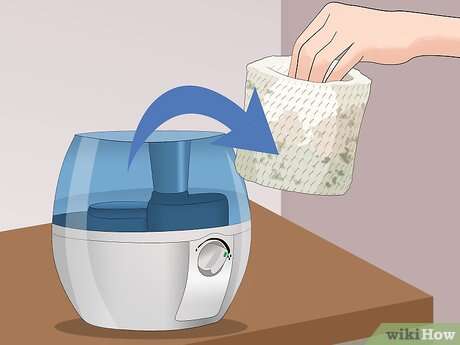
Check your CPAP air filter every week.
If you use a room humidifier, the filter turns gray faster.
Change it more often. A dirty filter suffocates the motor.
Seasonal Adjustments
Your needs change with the weather.
Winter Strategy:
The air is cold and dry.
The heating system dries it more.
- Action: Use both machines. Keep the hose warm.
Summer Strategy:
The air is hot and humid.
- Action: Turn off the room humidifier.
- Action: You might even turn off the CPAP humidifier. Just use “Passover” mode (water in tank, heat off).
The AC Factor:
Air conditioning dries the air.
If you blast the AC, you might need humidity again. Monitor with your hygrometer.
Expert Tips for “Hard” Cases
Some of you have specific medical issues.
Sjogren’s Syndrome:
This causes extreme dryness.
You need maximum humidity.
Use a room humidifier + CPAP humidifier + Heated Hose + XyliMelts (lozenges).
Deviated Septum:
One nostril is blocked. Air moves fast through the other. It dries out fast.
You need high humidity. Watch for rainout carefully.
Post-Nasal Drip:
Too much humidity makes mucus runny.
If you cough up slime, lower the humidity.
Alternatives to Room Humidifiers
Maybe this sounds like too much work. Are there other ways?
1. Heat and Moisture Exchangers (HME)
This is a tiny disc. It goes between your mask and hose.
It captures your breath’s moisture. It recycles it.
It uses no water. It is great for travel.
2. Chin Straps
As mentioned, keeps the mouth shut. Stops the leak. Keeps the moisture in.
3. Room Sealing
Close the bedroom door.
Stop the dry house air from entering.
You create a “micro-climate” in your room.
Frequently Asked Questions (FAQs)
1. Can I put essential oils in my room humidifier while using CPAP?
Technically, yes, but be careful. The CPAP concentrates smells. A light scent in the room becomes a strong scent in the mask. Never put oils in the CPAP machine. It ruins the plastic.
2. Why is there water in my CPAP hose when I use a room humidifier?
This is rainout. The room air is too moist, or the hose is too cold. Turn down the CPAP humidity level or buy a heated hose cover to keep the air warm.
3. What is the ideal humidity level for a bedroom with a CPAP?
Aim for 40% to 50% relative humidity. Use a digital hygrometer to check. Above 60% encourages mold. Below 30% causes dry throat and nose bleeds.
4. Can a room humidifier damage my CPAP machine?
Indirectly, yes. If you use tap water in an ultrasonic humidifier, the white mineral dust can clog the CPAP air intake filter. This strains the motor.
5. Should I use cool mist or warm mist with my CPAP?
Cool mist is generally better. It does not heat the room up. Warm mist can mess with the temperature regulation of the CPAP heated tubing.
6. I still have dry mouth with both humidifiers. What is wrong?
You are likely leaking air through your mouth. If your jaw drops open during sleep, the air bypasses your nose. Try a chin strap or a full-face mask.
Conclusion
So, can you use a room humidifier with a CPAP machine?
Absolutely. In fact, for many people, it is the secret to a great night’s sleep. It soothes your skin. It helps your partner. It reduces the burden on your CPAP water tank.
But remember my story. Remember the water in the nose.
You must respect the science of air.
- Measure the humidity.
- Clean your tanks.
- Balance the settings.
- Use distilled water.
Sleep apnea therapy is a journey. It takes time to get it right. Do not be afraid to experiment. But always prioritize hygiene and safety.
If you follow these tips, you will wake up refreshed. No dry throat. No rainstorm. Just good, healthy sleep.
Now, go check your filters. Sweet dreams!