
Can You Put Filtered Water in Humidifier? A Complete Guide
Hi there. Welcome.
You are probably here because you care about your air. You want to breathe easy. Maybe your skin feels dry. Maybe your throat hurts in the morning. So, you bought a humidifier. It is a great machine. It adds moisture to the air. It makes your home feel cozy.
But now, you have a question. You are holding a pitcher of filtered water. You wonder, “Can I put this in my humidifier?”
It is a smart question. The answer is not just a simple yes or no.
I want to help you. I have used many humidifiers. I have made mistakes. I have learned the hard way. In this guide, I will share everything I know. We will look at facts. We will look at science. We will keep it simple.
So, let’s dive in.
Introduction: The Water Quality Dilemma
Can you put filtered water in a humidifier?
The short answer is yes. You can. It is better than plain tap water. But, it is not always the best choice. It depends on your filter. It depends on your machine.
Most people grab tap water. It is easy. It is free. But tap water has secrets. It is full of invisible things. These things are minerals. Like calcium. Like magnesium. When you drink them, they are fine. Your body likes them.
But your humidifier? It does not like them.
My “White Dust” Disaster
Let me tell you a story.
A few years ago, I moved into a new place. The air was very dry. My nose felt like sandpaper every morning. So, I bought a cool, ultrasonic humidifier. It looked sleek. It was quiet.
I filled it with tap water every night. I thought I was doing a good thing.
Three days later, I walked into my living room. I looked at my TV stand. It is black glass. Or, it was black. Now, it looked like someone dusted it with flour. There was a fine, white layer everywhere.
I wiped it. It came back the next day.
I was breathing that dust. My plants were breathing it.
That was my lesson. The water you use matters. It matters a lot. If you use the wrong water, you get dust. You get a dirty machine. You might even cough more.
Since then, I have tested different waters. I have used pitcher filters. I have used fridge water. I have used distilled water. I know what works. I want to share that with you.

Credit: www.dreo.com
Understanding Humidifiers and Water Science
To pick the right water, you must know your machine.
Not all humidifiers are the same. They work in different ways.
Ultrasonic Humidifiers
These are very popular. They are quiet. They create a cool mist. inside, a small metal plate vibrates. It moves very fast. This vibration breaks water into tiny droplets. Then, a fan blows the mist out.
Here is the catch.
The vibration breaks everything apart. It takes the water molecules. It also takes the minerals. If your water has calcium, the machine throws calcium into the air.
This is why water quality is huge for these units.
Evaporative Humidifiers
These are older tech. They are simple. They have a wick or a filter inside. The filter soaks up water. A fan blows air through the wet filter. The water evaporates.
These are more forgiving. The minerals stay on the filter. They do not go into the air. But, the filter gets crusty. It gets hard. You have to replace it often.
Warm Mist Humidifiers
These boil the water. They make steam. The boiling leaves minerals behind in the tank. The steam is pure water. But, the tank gets very dirty. You have to scrub the heating element.
What is TDS?
We need to talk about TDS.
TDS stands for Total Dissolved Solids. This means minerals, salts, and metals.
- Tap Water: High TDS. Lots of minerals.
- Filtered Water: Lower TDS. Fewer minerals.
- Distilled Water: Zero TDS. No minerals.
The lower the TDS, the better for your humidifier.
What Do We Mean by “Filtered Water”?
You asked about filtered water. But what kind of filter?
This is where people get confused. Not all filters do the same job.
The Pitcher Filter Trap
Most of us have a water pitcher in the fridge. We use it for drinking. It makes water taste better. It removes chlorine. It removes some heavy metals.
But here is a secret.
Standard pitcher filters do not remove minerals.
They leave the calcium. They leave the magnesium. Why? because humans like the taste of minerals. So, the filter leaves them in.
If you put this water in your ultrasonic humidifier, you might still get white dust. It helps a little. But it does not solve the problem.
Reverse Osmosis (RO)
This is the big gun.
Do you have an under-sink system? Does it have a big tank? That is likely Reverse Osmosis.
This system pushes water through a tight membrane. It stops almost everything. It stops minerals. It stops bacteria. It stops salts.
RO water is great for humidifiers.
It acts almost like distilled water. It has very low TDS. It will not cause dust. It keeps your machine clean.
Refrigerator Filters
These are like pitcher filters. They focus on taste. They remove chlorine. They remove lead. But they usually leave the minerals.
So, using fridge water is better than the tap. But it is not perfect. You may still see some dust.
Whole House Filtration
Some homes have a filter for the whole house.
If you have a water softener, be careful. Softeners add sodium to the water. They take out calcium. They add salt.
Salt in a humidifier is bad. It can cause a lot of dust. It can damage the metal parts. Do not use softened water in your machine.
The Risks of Using the Wrong Water
Why should you care? What happens if you use bad water?
There are three main risks.
1. The White Dust Phenomenon
We talked about this. It is the most common sign.
When white dust from humidifier settles, it lands on furniture. It lands on electronics. It can ruin your TV. It gets inside your computer fans.
But it also lands in your lungs.
If you are healthy, it might not hurt. But if you have asthma, watch out. If you have allergies, be careful. The dust can irritate your throat. It can make you cough.
I have a friend with asthma. She used tap water for a week. Her cough got worse. She switched to distilled water. Her cough stopped. It makes a real difference.
2. Bacterial Growth
Tap water is not sterile. It has low levels of bugs. Your stomach can handle them. Your lungs cannot.
A humidifier is warm and wet. It is a dark place. Bacteria love it. They grow fast. They make a slime. It can be pink. It can be black.
When the machine runs, it throws these bugs into the air. You breathe them in. This can cause “Humidifier Fever.” It feels like the flu. You get body aches. You get a fever.
Filtered water has fewer bugs. Distilled water has none.
3. Mineral Scale and Crust
Have you seen a tea kettle? The bottom gets white and crunchy. That is scale.
This happens in your humidifier too.
The minerals stick to the parts. They stick to the sensor. They stick to the vibrating plate.
Over time, this crust gets hard. It is like cement. You cannot scrub it off. It stops the machine from working. The mist gets weak. The motor burns out.
I once ruined a nice humidifier. I let the scale build up. The plate stopped vibrating. I had to throw it away. It was a waste of money.
Distilled Water vs. Filtered Water: The Showdown
Now we compare. You want to know the best choice.
People often search for distilled water vs filtered water for humidifier. Here is the breakdown.
Distilled Water: The Winner
Distilled water is steam. They boil water. They catch the steam. They turn it back into water.
It has nothing in it. No minerals. No bacteria. No dust.
Pros:
- Zero white dust.
- Keeps machine clean.
- Safe for lungs.
- Machine lasts longer.
Cons:
- You have to buy it.
- It costs money (about $1 per gallon).
- Plastic bottles are waste.
Filtered Water: The Runner-Up
This is water run through a carbon or membrane filter.
Pros:
- Cheap (if you have a filter).
- Convenient at home.
- Better than tap water.
Cons:
- May still have minerals.
- May still cause white dust.
- Filter quality varies.
My Recommendation
If you can afford it, use distilled water. It is the safest. It saves you cleaning time.
If you have a Reverse Osmosis (RO) system, use that. It is free (after installation) and very good.
If you only have a pitcher filter, try it. Monitor the dust. If you see dust, stop. If you don’t, you are lucky. Your water might be soft enough.

Credit: www.dreo.com
How Different Humidifiers React to Water Types
Not all humidifiers are built the same. Some are tough. Some are sensitive. You need to match your water to your machine.
The Ultrasonic Humidifier
This is the most common type today. You probably have one. It is cool and quiet. It has no filter inside.
Verdict: This machine needs the best water.
Because it has no filter, it has no defense. Whatever is in the water goes into the air.
- Tap Water: Bad idea. Creates lots of dust.
- Filtered Water: Okay, if the filter is strong (like RO).
- Distilled Water: Perfect.
If you use tap water here, you will see tap water in humidifier symptoms. This includes the white dust we talked about. It also includes a white fog in the room.
The Evaporative Humidifier
This machine uses a fan. It blows air through a wet wick. The wick is a filter.
Verdict: This machine is flexible.
The wick catches the minerals. The water evaporates pure. The minerals stay behind on the wick.
- Tap Water: You can use it. But the wick will get crusty fast. You will buy new wicks often.
- Filtered Water: Better. The wick lasts longer.
- Distilled Water: Best. The wick lasts a very long time.
I use an evaporative model in my kids’ room. I use filtered water. It saves money on wicks. I don’t see any dust.
The Warm Mist Humidifier
This boils the water. It makes steam.
Verdict: Water quality affects cleaning time.
The steam is pure. Minerals do not go into the air. They stay in the heating chamber.
- Tap Water: The heating element gets covered in rock-hard scale. You must clean it often.
- Filtered Water: Less scale. Easier to clean.
- Distilled Water: Almost no cleaning needed.
The Impeller Humidifier
This spins a disc. It throws water at a diffuser. It breaks water into mist.
Verdict: Similar to Ultrasonic.
It throws everything into the air. If you use hard water, you get dust. You should use distilled or high-quality filtered water.
A Deep Dive into “White Dust”
We keep mentioning white dust from humidifier. Let’s really understand it. It is a big deal.
What is it?
It is calcium carbonate. It is magnesium. It is the stuff that makes water “hard.” When the water dries, the rock dust remains.
Is it Dangerous?
This is the big question. Is it poison? No. It is not toxic like bleach. But it is an irritant.
Think about dust in a wood shop. It is just wood. But if you breathe it all day, you cough. Your lungs get tired.
The EPA (Environmental Protection Agency) warns about this. They say minerals can be irritants.
For babies, it is worse. Their lungs are tiny. They are growing. You do not want them breathing rock dust.
Personal Insight: The Black Shirt Test
Here is a trick I use.
I wear a black shirt. I hold it near the humidifier mist for a minute. Then I look at the shirt.
If I see white specks, the water is bad. If the shirt is just wet, the water is good.
Try this at home. It is a simple test. It tells you if your filter is working.
Step-by-Step: How to Choose the Best Water
You are ready to decide. You want to pick the best water for ultrasonic humidifier. Or any humidifier. Follow these steps.
Step 1: Check Your Manual
Read the book that came with your machine. Seriously.
Manufacturers know their product.
- Does it say “Distilled Water Only”? If yes, obey it. If you don’t, you void the warranty.
- Does it say “Tap Water Okay”? Then you have a choice.
Step 2: Know Your Tap Water
Do you live in a hard water area?
- Look at your shower head. Is there white crust on it?
- Look at your glass dishes. Do they have spots?
If yes, you have hard water. Do not put this in your humidifier. It will kill the machine. It will make dust.
If you have soft water, you might be okay. But natural soft water is rare.
Step 3: Test with a TDS Meter
I love gadgets. A TDS meter costs about $15 online. It looks like a thermometer.
- Dip it in your tap water.
- Dip it in your filtered water.
The Scores:
- 0-50: Great. Use it.
- 50-100: Okay. Slight dust risk.
- 100+: Do not use. Too many minerals.
When I tested my tap water, it was 300. Terrible.
My pitcher filter brought it to 250. Still bad.
My ZeroWater pitcher brought it to 0. That worked!
Step 4: Make the Switch
If your tap water is hard, switch.
Start with distilled water. Buy one gallon. Run it for a week.
Notice the difference.
Is the air cleaner? Is the tank cleaner?
Then decide if the cost is worth it.
Maintaining Your Humidifier with Filtered Water
You switched to filtered water. Great. But you are not done.
You still have to clean the machine.
Some people think, “I use clean water, so I never have to clean the tank.”
This is wrong.
This is a dangerous myth.
The “Pink Mold” Warning
Even in filtered water, bacteria can grow. Dust from the room falls into the tank.
Have you ever seen a pink slime line? That is bacteria. It is Serratia marcescens. It is common. It likes wet places.
If you see pink, you are breathing germs. You must clean it.
My Weekly Cleaning Ritual
I do this every Sunday. It takes 10 minutes. It keeps my air safe.
What you need:
- White Vinegar.
- A soft brush (an old toothbrush is perfect).
- Clean water.
- A dry towel.
The Steps:
- Unplug: Always unplug first. Safety first.
- Empty: Pour out old water. Never leave water sitting for days.
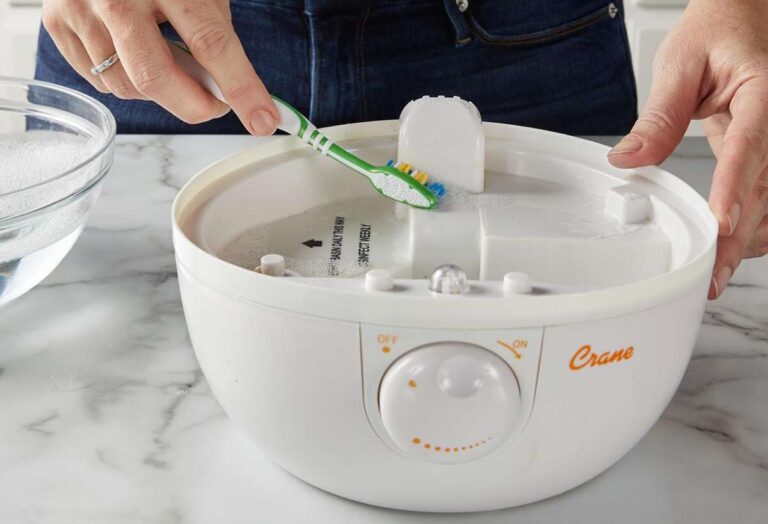
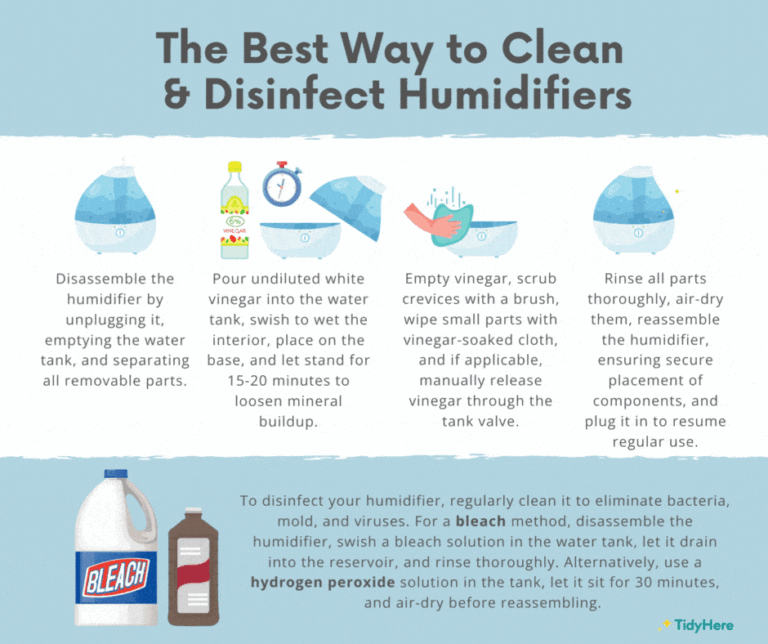
- Vinegar Soak: Pour 1 cup of vinegar into the base. Pour 1 cup into the tank. Swish it around.
- Wait: Let it sit for 20 minutes. The vinegar eats the minerals. It kills some germs.
- Scrub: Use the toothbrush. Scrub the nooks. Scrub the metal plate. The scale should flake off easily.
- Rinse: Rinse with water. Rinse again. Rinse until the vinegar smell is gone.
- Dry: Wipe it down. Let it air dry if you are storing it.
Actionable Tip:
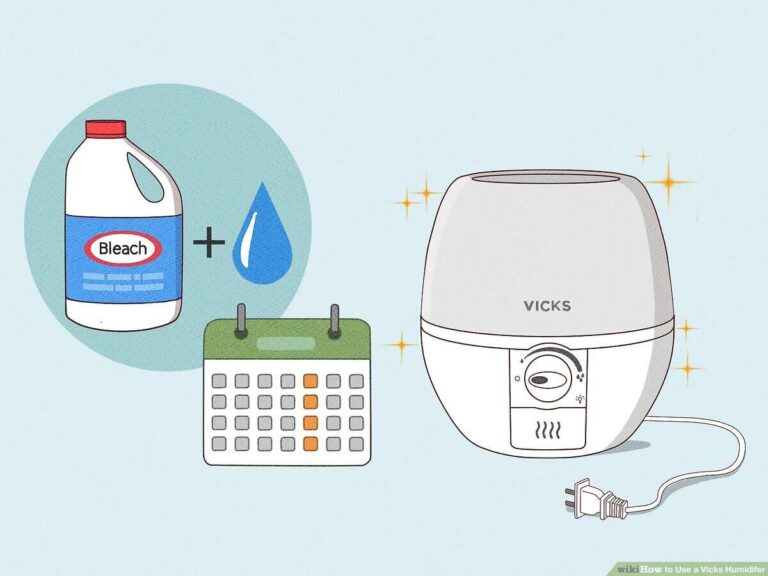
Do not use bleach unless the manual says so. Bleach can damage some plastics. Vinegar is safer. It works well on minerals.
Does Filtered Water Help with Cleaning?
Yes. Absolutely.
When I used tap water, I had to scrub hard. I had to scrape off the crust.
With distilled or RO water, there is no crust. I just rinse and wipe. It is much faster.
This is a huge benefit. If you hate scrubbing, use better water.

Credit: www.dreo.com
Alternative Solutions and Hacks
You want clean air. You don’t want to spend a fortune. I get it. Here are some other options.
Demineralization Cartridges
Some humidifiers come with a special cartridge. It looks like a small plastic capsule. You drop it in the tank. Or you screw it into the cap.
Do they work?
Sort of.
They contain beads. These beads trap minerals. They are like a mini filter inside the tank.
- Pros: Easy to use. Helps reduce dust.
- Cons: You have to buy new ones often. If your water is very hard, they wear out in a week.
If you have slightly hard water, these are great. If you have liquid rock coming out of your tap, they won’t be enough.
Boiled Water
I hear this myth a lot.
“Just boil the water first. It kills the germs.”
The Truth:
Boiling kills bacteria. That is true.
But boiling concentrates minerals.
When water boils, steam leaves. The minerals stay. The water that is left is harder than before.
So, if you boil tap water and put it in your humidifier, you might get more white dust.
Don’t do this. It is a waste of time and energy.
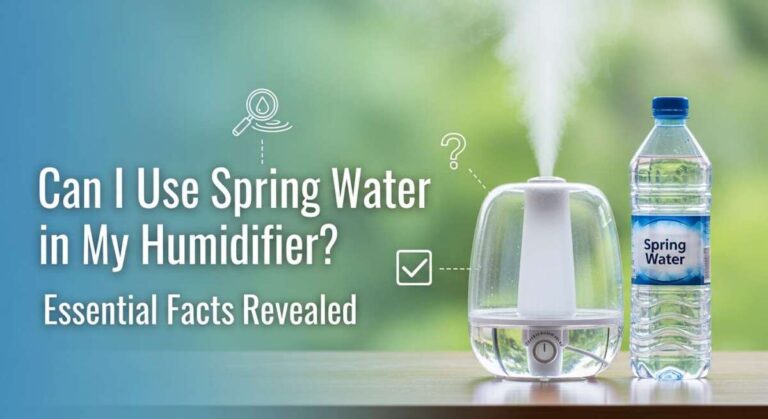
Bottled Spring Water
You grab a bottle of “Mountain Spring Water” from the store. Is it safe?
The Truth:
Read the label. Spring water has minerals. It comes from the ground. It has calcium. It has flavor.
It is better than tap water usually. But it is not distilled.
It might still cause dust. And it is expensive.
Stick to jugs labeled “Distilled” or “Purified.”
Bacteriostatic Treatments
You can buy drops. You put them in the water. They stop bacteria from growing.
These are good for evaporative humidifiers. They stop the wick from smelling bad.
But be careful with ultrasonic machines. You are breathing those chemicals. Only use products made for humidifiers. Do not use random cleaners.
Frequently Asked Questions (FAQ)
I want to make sure I answer everything. Here are the questions people ask me the most.
Can I use boiled tap water in my humidifier?
No, you should not. Boiling water kills bacteria, but it does not remove minerals. In fact, it can make the mineral concentration higher as water evaporates. You will still get white dust. You will still get scale buildup. It does not solve the mineral problem.
Is bottled water better than tap water for humidifiers?
Yes, generally it is better. But you must check the type. “Spring water” or “Mineral water” still contains minerals that cause buildup. You should look for “Distilled water” or “Purified water” produced by reverse osmosis. These have the lowest mineral content and are best for your machine.
Does filtered water prevent white dust completely?
It depends on the filter. A standard pitcher filter (like Brita) does not remove all minerals. You might still see some dust. A Reverse Osmosis (RO) filter removes almost all minerals. RO water will prevent white dust just like distilled water. You need a high-quality filter to stop the dust.
Can I put essential oils in filtered water?
Only if your humidifier has a special tray for oils. Do not put oils directly into the water tank. Oils can eat the plastic. They can clog the filter. They can damage the ultrasonic plate. Always check your manual. If it says no oils, believe it.
How often should I change the water?
You should change the water every single day. Even if you use filtered water. Even if the tank is not empty. Pour out the old water. Rinse the tank. Fill with fresh water. This stops bacteria from growing. Stagnant water is a playground for germs. Keep it fresh.
What is the best water for ultrasonic humidifier?
The absolute best water is distilled water. It has zero minerals and zero bacteria. The second best is Reverse Osmosis water. The third best is demineralized water. Avoid tap water and spring water to protect the ultrasonic plate and prevent white dust.
Conclusion: Making the Right Choice for Your Home
We have covered a lot of ground.
We started with a simple question: Can you put filtered water in a humidifier?
We learned that the answer is yes, but quality matters.
- Tap Water is the enemy of ultrasonic machines. It causes dust. It grows germs. It kills the machine.
- Pitcher Filters help a little, but they aren’t perfect.
- RO Water is a fantastic choice.
- Distilled Water is the king of clean air.
My Final Advice
I want you to be comfortable. I want your home to be safe.
If you have an ultrasonic humidifier (the mist kind), please try to use distilled water. If that is too expensive, invest in a ZeroWater pitcher or an under-sink RO system. Your lungs will thank you. Your black furniture will stay black.
If you have an evaporative humidifier (the fan kind), you have more freedom. Filtered water is great here. It helps the filters last longer.
Take a moment today. Look inside your humidifier. Is it slimy? Is it crunchy?
If it is, give it a good vinegar soak. Then, switch your water.
You breathe that air all night long. Make sure it is the best air possible.
Stay healthy. Breathe easy.