

Can I Use Ro Water in Humidifier: Essential Tips & Benefits
You just bought a new humidifier. It looks sleek. It promises to fix your dry skin and help you sleep. But then you pause. You are standing at the sink. You wonder, “Can I put this water in my machine?”
Maybe you have a Reverse Osmosis (RO) tap in your kitchen. It tastes great. It seems pure. But is it safe for your new device?
I have been there. I have stared at that tank, confused. I have made mistakes. I have dealt with the messy consequences.
So, can I use RO water in humidifier tanks?
The short answer is yes. You absolutely can. In fact, it is often much better than standard tap water. But it is not perfect. There are things you must know to keep your air safe.
In this guide, I will share what I learned. I will tell you about the science. I will share my personal battles with “white dust.” And I will help you decide what is best for your home.
Let’s dive in.
What is RO Water? (And Why It Matters)
First, we need to know what RO water is. RO stands for Reverse Osmosis. It sounds fancy. But it is just a strong filter.
An RO system pushes water through a membrane. This membrane is very tight. It blocks big particles. It stops most minerals. It removes salts and metals.
Think of it like a very fine net. Water molecules are tiny. They slip through the net. But calcium and magnesium are like big rocks. They get stuck. They get washed away.
So, the water that comes out is very pure. It has very few dissolved solids.
Why does this matter for a humidifier?
Humidifiers turn water into mist. If there are rocks (minerals) in the water, those rocks go into the air too.
When I use my RO tap, I know the water is soft. It lacks the hard stuff that ruins machines. This is a good thing. But, as we will see, it changes how you must care for the machine.
The “White Dust” Problem: My Personal Nightmare
Let me tell you a story. It happened three years ago.
I bought a fancy ultrasonic humidifier. It was quiet. It made a cool mist. I loved it. I filled it with tap water from my bathroom sink. I did this every night for a week.
One morning, I woke up. The sun was shining. I looked at my dresser. My beautiful, dark wood dresser looked old. It looked gray.
I swiped my finger across the wood. It came up white. It looked like chalk.
This was white dust.
What is white dust?
White dust is just minerals. Tap water is full of calcium and magnesium. When the water turns to mist, the minerals float. Then, they land on your furniture. They land on your electronics. They land in your lungs.
It was a mess. I had to wipe down the whole room. I felt bad breathing it in.
That was the day I stopped using tap water. I switched to purified water.
If you use RO water, you fix this. RO systems take out those minerals. No minerals means no white dust. Your furniture stays clean. Your air stays clear.
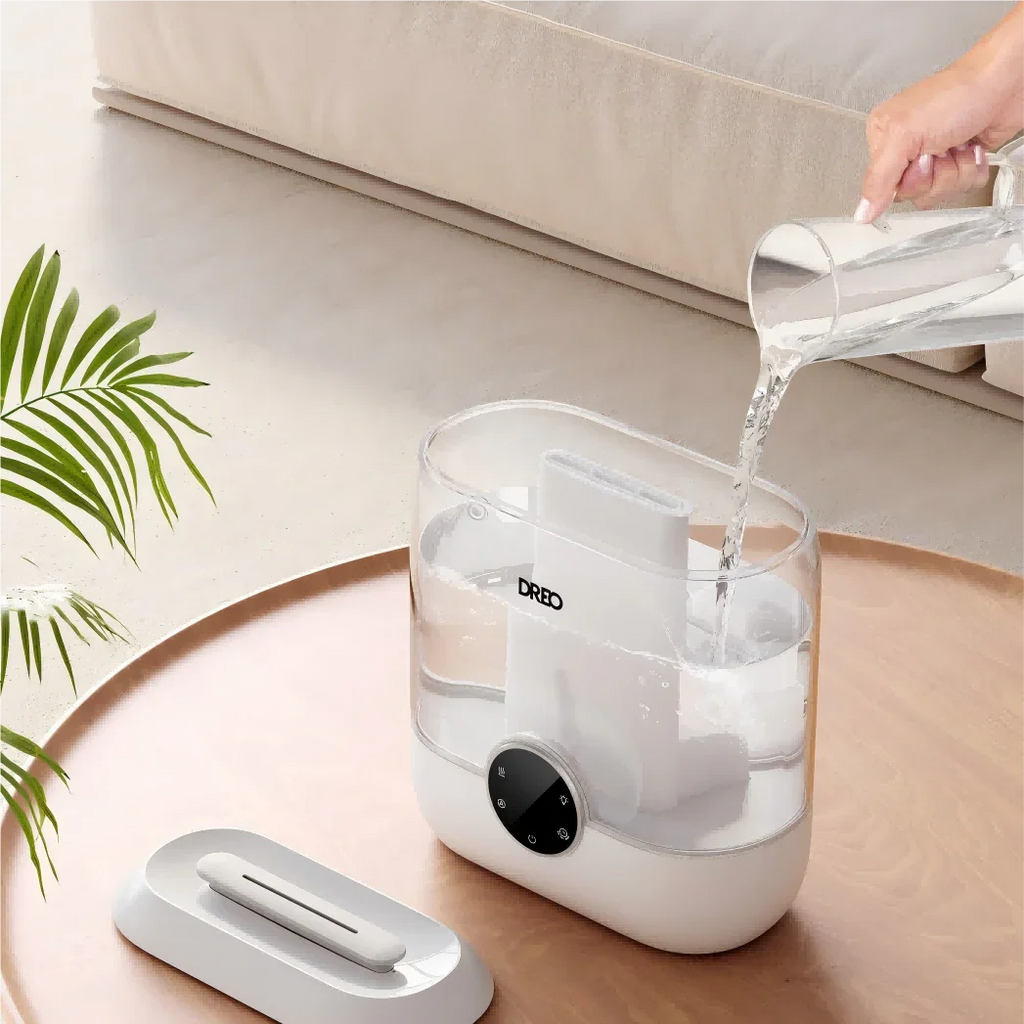
Credit: www.dreo.com
RO Water vs. Tap Water vs. Distilled Water
You have choices. Let’s compare them. We need to see which one wins.
Tap Water: The Convenient Risk
Tap water is easy. It is free. But it is “hard.”
- Pros: Cheap and fast. It has chlorine, which kills germs.
- Cons: Full of minerals. Causes white dust. Creates hard scale inside the tank.
Using tap water is a gamble. If you have an evaporative humidifier (with a wick), it might be okay. The wick catches the dust. But for ultrasonic machines? It is a bad idea.
Distilled Water: The Gold Standard
Distilled water is boiled steam that is caught and cooled.
- Pros: 99.9% pure. No minerals. No bacteria. No dust.
- Cons: You have to buy it. It costs money. Plastic bottles are bad for the earth.
Manufacturers often say, “Use distilled water.” They say this to protect the machine. It is the safest bet.
RO Water: The Middle Ground
This is where Can I Use Ro Water in Humidifier gets interesting.
- Pros: Very low minerals. No white dust. Cheaper than buying bottles if you have a system.
- Cons: It has no chlorine. Bacteria can grow fast if you wait too long.
Verdict: RO water is the best water for ultrasonic humidifier use if you want to save money and avoid plastic waste. It is almost as good as distilled, but much easier to get.
How Humidifier Types Change the Rules
Not all humidifiers are the same. Your machine type matters.
Ultrasonic Humidifiers (The Sensitive Ones)
These are popular. They are quiet. They vibrate water into a fine mist.
They have no filter. They have no wick.
Whatever is in the water goes into your lungs.
If you use tap water here, you get dust. You get scale. The little vibrating plate gets crusted over. The machine breaks.
My advice: Only use RO or distilled water here. It protects the machine. It protects your health.
Evaporative Humidifiers (The Tough Ones)
These have a fan. They have a wick or filter. The air blows through the wet wick.
The wick traps the minerals. The mist is pure water vapor.
You can use tap water here. But the wick will get hard. It will turn to stone. You will have to buy new wicks often.
Using RO water helps here too. Your wicks will last longer. You save money on parts.

Credit: www.dreo.com
The Hidden Danger: Bacteria and RO Water
We need to be serious for a moment. We need to talk about safety.
RO water is clean. But it is not sterile.
Tap water has chlorine. Cities add chlorine to kill bugs. It stops slime from growing.
When you use an RO filter, it removes the chlorine. This is good for drinking. It tastes better.
But in a humidifier, it can be a risk. Without chlorine, bacteria can grow. If you leave RO water in the tank for days, it turns bad. It becomes a warm pool for germs.
If the machine sprays these germs, you can get sick. People call this “humidifier fever.” You might get flu-like symptoms. You might cough.
The Fix: You must be clean. You cannot be lazy. If you use RO water, you must change it often. Do not let it sit.
Step-by-Step Guide: How to Use RO Water Safely
I want you to be safe. I want your air to be fresh. Follow this routine. It is simple. It works.
Daily Maintenance Routine
- Turn it off. Unplug the machine.
- Empty the tank. Do not top it off. Pour out the old water.
- Rinse it. Swish some fresh water around.
- Dry it. If you are not using it right away, let it dry. Germs hate dry surfaces.
- Refill. Use fresh RO water right before you turn it on.
Weekly Deep Clean (My Method)
Every Sunday, I clean my machine. It takes ten minutes.
- Take it apart. Remove the tank and the base.
- Use Vinegar. Pour white vinegar into the base. Let it sit for 20 minutes. Vinegar eats mineral buildup. Even with RO water, you might get a tiny bit.
- Scrub. Use a soft brush. Scrub the corners.
- Rinse well. Rinse it until the vinegar smell is gone.
- Disinfect (Optional). Once a month, use a mix of water and a teaspoon of bleach. Rinse very well.
This prevents humidifier lung symptoms. It keeps the mist smelling sweet.
Cost and Convenience: Is It Worth It?
Let’s talk money.
Buying distilled water adds up.
A gallon costs about $1.50. If you use a gallon a day, that is $45 a month. That is over $500 a year!
Plus, you have to carry heavy jugs from the store.
An RO system costs money upfront. Maybe $200. But the water is almost free after that. You just change filters once a year.
If you already have an RO tap, use it. It is free. It is there.
If you do not have one, think about the savings. It might pay for itself in six months.
Essential Tips to Extend Your Humidifier’s Life
I want your machine to last for years. Here are my top tips.
- Check the Hygrostat. Do not make the room a swamp. Aim for 40% to 60% humidity. Too much dampness brings mold.
- Watch for Pink Slime. If you see pink spots, that is bacteria. Clean it right away.
- Change RO Filters. Make sure your home RO system is working. If the filters are old, they let minerals through. Then you get dust again.
- Do not use Essential Oils. Unless your machine has a special tray, oils can melt the plastic. They can ruin the tank.
Frequently Asked Questions (FAQ)
Does RO water smell?
No. RO water should have no smell. If your mist smells bad, the tank is dirty. It means bacteria are growing. Clean it with vinegar.
Can I add salt to RO water?
Some vaporizers (warm steam) need salt to boil. But most cool mist humidifiers do NOT need salt. Salt causes dust. Do not add it unless the manual says so.
Is boiled water the same as RO?
No. Boiling kills germs. But it leaves minerals behind. In fact, boiling concentrates minerals. It will still cause white dust. RO removes the minerals physically.
Is RO water bad for my lungs?
No. Clean RO mist is safe. The lack of minerals is fine for breathing. The only risk is dirty water. Keep the tank clean, and your lungs will be happy.
Will RO water corrode the humidifier?
Some people say pure water eats plastic. This is mostly a myth for home humidifiers. High-grade industrial water is corrosive. But home RO water is safe for your device components.
Conclusion
So, let’s wrap this up. Can I use RO water in humidifier tanks?
Yes. It is a smart choice.
I use it every day. It saved my dresser from white dust. It saves me money on bottled water. It keeps my machine running smoothly.
But remember my warning. RO water has no chlorine. It has no guard against germs. You have to be the guard.
Clean your tank.
Change the water daily.
Do not let it sit.
If you do these simple things, you will enjoy fresh, moist air. Your skin will feel better. You will sleep better. And you will never have to wipe white dust off your furniture again.
Go ahead. Fill up that tank. Breathe easy.