Do Diffusers Humidify the Air: Facts You Need to Know
Have you ever woken up with a dry throat? Or maybe your skin feels tight and itchy in the winter? I know I have. Last year, the air in my home felt so dry. I kept getting shocked by static electricity every time I touched a doorknob. It was annoying!
I looked at the little machine puffing white mist on my desk. It was my essential oil diffuser. I watched the stream of water vapor float up. I thought, “This uses water. It makes mist. So, it must be fixing the dry air, right?”
You might be thinking the same thing. It looks like a humidifier. It acts like a humidifier. But does it actually work like one?
I decided to find out. I didn’t just read about it. I tested it. I dug into the science. And I want to share the truth with you.
In this guide, we will clear up the confusion. We will talk about what diffusers really do. We will look at facts, not just guesses. By the end, you will know exactly how to fix your dry air.
The Short Answer: Do Diffusers Humidify the Air?
Let’s start with the big question. Do diffusers humidify the air?
The answer is yes, but only a tiny bit.
It is technically true. Most diffusers use water. They turn that water into a fine mist. That mist goes into your room. So, yes, they add water to the air.
However, there is a catch.
The amount of water they hold is very small. Most diffusers hold about 100ml to 500ml of water. That is like half a cup to two cups. A real humidifier holds gallons.
Think of it like this. Imagine you are trying to water a big garden. A humidifier is like a hose. A diffuser is like a spray bottle. Both spray water. But only one will soak the ground.
So, while the answer to “Does a diffuser add moisture to the air?” is yes, it is likely not enough to cure your dry skin.

Credit: shiora.com.sg
My Real-World Test: The Hygrometer Experiment
I like to see proof. I didn’t want to just guess. So, I ran a test in my own home. I want to share this experience with you so you can see the real numbers.
The Tools:
- My Bedroom: It is a standard size room. About 12 feet by 12 feet.
- A Hygrometer: This is a tool that measures humidity.
- An Ultrasonic Diffuser: A standard 300ml model.
The Process:
It was a Tuesday in January. The air was dry. My hygrometer read 32% humidity. That is on the low side. I wanted it to be at least 40%.
I filled the diffuser to the top line. I added drops of peppermint oil. I turned it on “High Mist” mode. Then, I closed the door. I let it run for four hours.
The Results:
I came back to check the numbers.
- Start Humidity: 32%
- End Humidity: 33%
It went up by 1%.
I was surprised. I saw so much mist coming out! But the sensor told the truth. In a whole room, that small cup of water barely made a dent.
This taught me a valuable lesson. If you need to fix dry air, a diffuser is not the right tool. It makes the room smell great. But it does not change the “weather” in your room.
How Do Diffusers Actually Work?
To understand why they are weak humidifiers, we need to look at how they work. There are different types. Each one works differently.
1. Ultrasonic Diffusers
This is the most common type. It is the one I used in my test.
- How it works: Inside, there is a small metal disc. It sits at the bottom of the water tank. This disc vibrates very fast. It moves at an ultrasonic speed. This means it is too fast to hear.
- The Mist: The vibration shakes the water. It breaks water and oil into tiny micro-particles. This creates a cool mist.
- Humidity Factor: This type adds the most moisture of all diffusers. But as my test showed, it is still very little.
2. Nebulizing Diffusers
These are for the serious scent lovers.
- How it works: They use an air pump. They blow air through a tube. This pulls the oil up and sprays it.
- Water Use: None. They use zero water.
- Humidity Factor: Zero. If you use this, you get no moisture at all.
3. Evaporative Diffusers
These are simple devices.
- How it works: A fan blows air over a wet pad. The pad has oil on it. The air picks up the scent.
- Humidity Factor: Very low. The water evaporates slowly.
4. Heat Diffusers
These work like a candle warmer.
- How it works: A heat source warms the oil. The oil turns to gas and rises.
- Humidity Factor: None. In fact, heat can sometimes dry the air more!
If you are looking for the benefits of ultrasonic diffusers, focus on the scent. They are quiet. They are safe. They are great for mood. But they are not heavy lifters for moisture.
Diffusers vs. Humidifiers: The Big Showdown
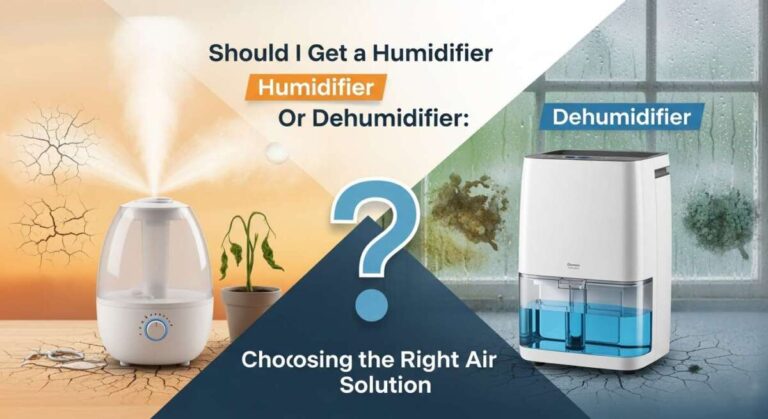
Many people get these two mixed up. Let’s break it down. We will compare the essential oil diffuser vs humidifier.
| Feature | Diffuser | Humidifier |
| Main Goal | Make the room smell good | Make the air wet (hydrate) |
| Tank Size | Small (100ml – 500ml) | Large (1 Gallon – 5 Gallons) |
| Run Time | 4 to 8 hours | 12 to 24 hours |
| Coverage | Small area (Personal space) | Whole room or whole house |
| Health Goal | Mood, Stress, Focus | Dry skin, Colds, Asthma |

Credit: shiora.com.sg
The Water Volume Difference
This is the key. A humidifier puts liters of water into the air. A diffuser puts milliliters.
Imagine a bucket of water. Pour it on the floor. That is a humidifier. Now, take a teaspoon of water. Flick it on the floor. That is a diffuser.
Can you use a diffuser as a humidifier?
Technically, yes. But it is like using a candle to heat your house. It gives off heat, but you will still be cold. A diffuser gives off moisture, but you will still be dry.
When to Use a Diffuser
So, when should you use a diffuser? They are wonderful devices. I use mine every day. But I use it for the right reasons.
1. For Aromatherapy
This is the best use. Scent is powerful. Lavender can help you sleep. Lemon can wake you up. If you want to change how a room feels, use a diffuser.
2. For Masking Odors
Did you cook fish? Is the dog wet? A diffuser clears bad smells fast. It covers them with fresh scent.
3. For Focus and Mood
I put mine on my desk. The smell of eucalyptus keeps me sharp. It helps me focus on work.
4. For Light Moisture (Personal Space)
If you sit right next to it, the mist might help a little. If the mist hits your face, you might feel fresher. This is okay for a small desk area.
When to Choose a Humidifier
You should switch to a humidifier if you have physical symptoms.
1. Dry Skin and Lips
If your lips crack in winter, you need water. A humidifier soaks the air. Your skin drinks it up.
2. Sinus Problems
Do you wake up with a stuffy nose? Dry air dries out your nose. This creates hard crusts. It hurts. A humidifier keeps your nose moist. This helps you breathe.
3. Static Electricity
If your hair stands up, the air is too dry. Water in the air stops static shocks.
4. Protecting Furniture
Wood needs moisture. If the air is too dry, wood cracks. Pianos go out of tune. A humidifier protects your home.
Understanding Relative Humidity
We have used the word “humidity” a lot. But what does it mean?
It is the amount of water vapor in the air. We measure it in percent.
- 0%: Bone dry.
- 100%: Raining or fog.
The Sweet Spot
Experts like the EPA say the best range is 30% to 50%.
- Below 30%: This is too dry. Viruses spread faster. Skin cracks.
- Above 60%: This is too wet. Mold can grow. Dust mites love it.
How to Check Your Home
Buy a digital hygrometer. They are cheap. Put one in your room. If it reads less than 30%, you need a humidifier. A diffuser will not push that number up enough.

Credit: www.carpetcleaningforce.co.nz
The Hidden Benefits of Diffusers
Even if they don’t hydrate the room, diffusers are great tools.
Emotional Health
Scent goes straight to the brain. It hits the limbic system. This is where we feel emotion. A good smell can calm anxiety instantly.
Safe Scent
Candles can be dangerous. They have fire. They make smoke. Diffusers are flameless. They are safer for kids and pets.
Best Diffuser for Large Rooms
If you have a big room, size matters. A tiny diffuser won’t smell up a big hall. Look for one with a large tank (500ml+). Or, get a nebulizing diffuser. They push scent further.
Can You Use a Diffuser as a Humidifier for Baby?
New parents often ask this. “Can I just use the diffuser for the baby’s cold?”
My Advice: No.
When a baby has a cold, they need moist air. It loosens mucus. It helps them cough it out. A diffuser does not make enough moisture to help with congestion.
Also, be careful with oils.
Some oils are not safe for babies. Peppermint and Eucalyptus can slow down breathing in young kids. Always ask a doctor before using oils around babies.
For a nursery, buy a “Cool Mist Humidifier.” Use plain water. It is safer and works better for health.
How to Maintain Your Device for Safe Air
Since diffusers use water, they can get dirty. Mold loves dark, wet places. If you don’t clean it, you might spray mold spores into the air. Yuck!
My Simple Cleaning Routine:
- Empty It: Never leave water sitting for days. Dump it out after use.
- Wipe It: Use a soft cloth or paper towel. Wipe the inside dry.
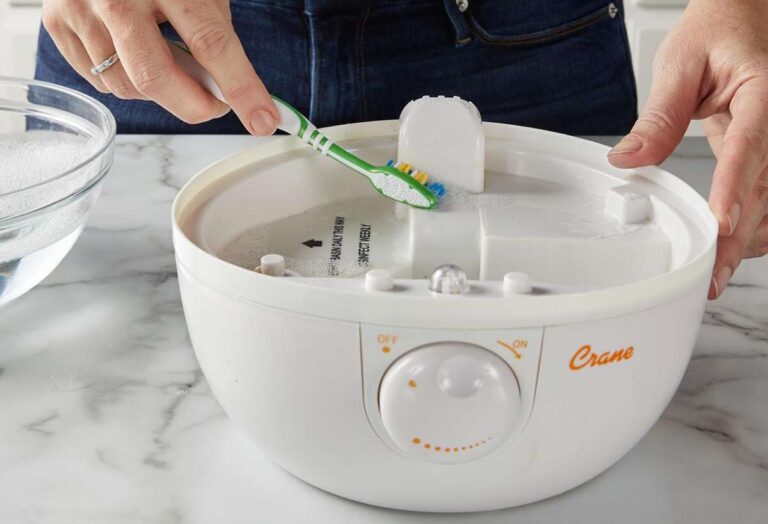
- The Vinegar Bath: Once a week, do a deep clean.
- Fill halfway with water.
- Add a teaspoon of white vinegar.
- Run it for 5 minutes.
- Dump it out and rinse.
- Clean the Disc: Take a Q-tip. Dip it in vinegar. Gently wipe the little round disc at the bottom. Be gentle!
Water Choice Matters
Tap water has minerals. You know that white dust you see on furniture? That is calcium from tap water.
I recommend using distilled water. It is pure. It keeps your machine clean. It stops the white dust.
Troubleshooting Your Air Quality
You are now the master of your indoor air. But problems can happen. Here is how to fix them.
Problem: I see white dust everywhere.
- Cause: You are using tap water in an ultrasonic device.
- Fix: Switch to distilled water.
Problem: The floor is wet around the device.
- Cause: The mist is falling too fast. The air is already wet, or the device is too low.
- Fix: Put the device on a higher shelf. Or turn down the power.
Problem: I can’t smell the oil anymore.
- Cause: You have “nose blindness.” You got used to the smell.
- Fix: Leave the room for 10 minutes. Or switch to a new scent.
Frequently Asked Questions
I get asked these questions a lot. Let’s answer them simply.
Can I put essential oils in my humidifier?
Usually, no. Oils can eat plastic. They can crack the tank of a standard humidifier. Only do this if the manual says it is “Essential Oil Safe.” Some have a special tray for oils.
Do diffusers clean the air?
Some people say oils kill germs. While some oils have anti-bacterial properties in a petri dish, spraying them in a room does not “sterilize” the air. It is not a replacement for an air purifier.
Is it safe to sleep with a diffuser on?
Yes, it is generally safe. Most have an auto-shutoff. When the water runs out, they turn off. Just make sure the light doesn’t keep you awake.
Does the mist damage furniture?
It can. If the mist lands on wood, it can warp it. Keep the diffuser away from expensive wood or electronics. Put it on a coaster or a placemat.
Which oils are best for dry seasons?
While oils don’t hydrate, some feel “fresh.” Try Eucalyptus, Tea Tree, or Peppermint. They open up the nose. This makes you feel like you are breathing better.
Conclusion
Let’s wrap this up. We started with a question: Do diffusers humidify the air?
We learned that technically, yes, they add a tiny bit of water. But practically, no, they do not replace a humidifier.
- Use a Diffuser: When you want your home to smell amazing, relax, or focus.
- Use a Humidifier: When you have dry skin, a scratchy throat, or static shock.
I hope this helps you understand your home better. Don’t rely on that little mist stream to save your dry skin. Get the right tool for the job.
If you are suffering from dry air right now, go check your humidity. If it is low, grab a real humidifier. Your nose will thank you!
Keep breathing easy, friends.