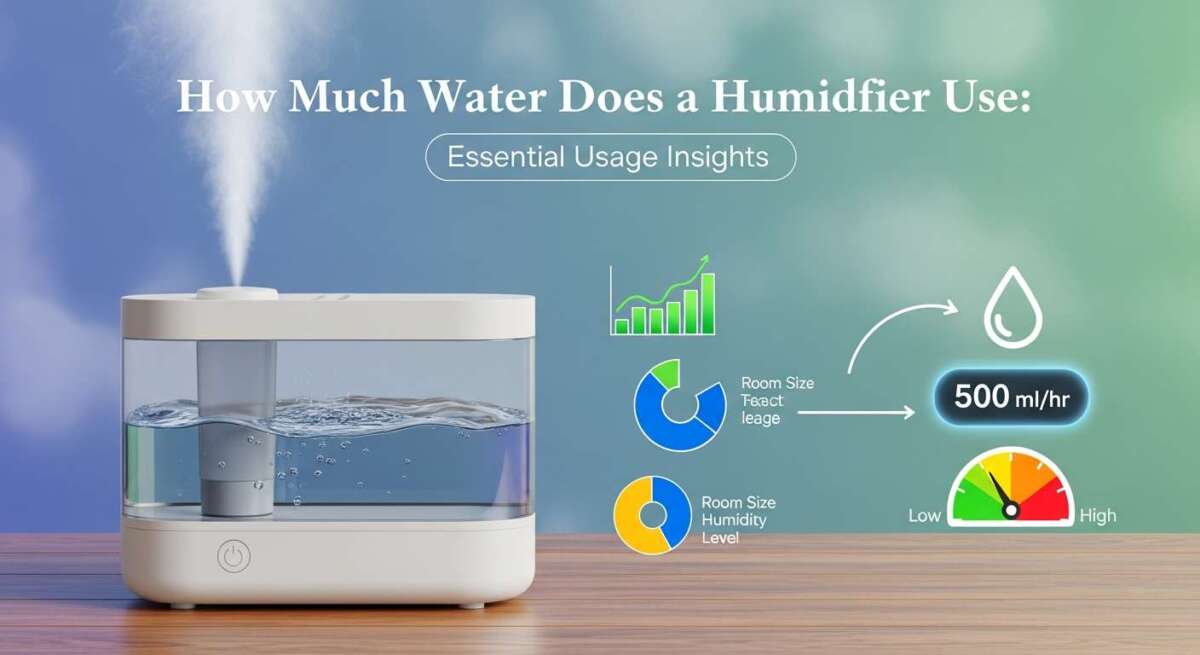
How Much Water Does a Humidifier Use: Essential Usage Insights
Have you ever woken up with a scratchy throat? Or maybe your skin feels dry and itchy in the winter? I know that feeling well. It is not fun. A humidifier can save the day. But, you might wonder, how much water does a humidifier use?
It is a great question. You do not want to fill a heavy tank ten times a day. You also do not want a huge water bill.
Here is the short answer. Most home humidifiers use between 1.5 to 3 gallons of water every 24 hours. However, this depends on the size of your machine and how dry your home is.
I remember my first humidifier. It was a cute, small drop-shaped unit. I placed it on my nightstand. I thought it would last all night. I was wrong. By 3 AM, it was dry. The red light was blinking. I woke up thirsty and annoyed.
That experience taught me a lot. Now, I want to share what I know with you. In this guide, we will look at water usage, costs, and how to pick the right size. We will keep it simple. Let’s dive in.
The Basics of Humidifier Water Consumption
To understand water use, we must look at how these machines are rated. When you buy a humidifier, look at the box. You will see a number. It usually says “Gallon Output Per Day” or GPD.
This number tells you the max amount of water the unit can push into the air in 24 hours.
For example, a small unit might have a 0.5-gallon tank. But, it might have a 1-gallon output rating. This means you must fill it twice a day to hit that max output.
So, size matters.
A humidifier water tank capacity of 1 gallon is standard for a bedroom. If you run it on high, it will likely run out in 12 to 16 hours. If you run it on low, it might last 24 hours.
It is like a car gas tank. The faster you drive, the more gas you use. The higher you set the mist, the more water you use.
Credit: www.greenwashingindex.com
Real-World Testing: My 24-Hour Experiment
I wanted to give you real data. So, I did a test. I used my own humidifier to see exactly what happens.
The Setup
I live in a place with cold winters. On the day of the test, the air was dry. My indoor humidity was only 30%. That is very low.
- The Room: My bedroom (about 150 square feet).
- The Device: A 6-liter (1.5 gallon) ultrasonic humidifier.
- The Setting: Medium mist.
The Results
I filled the tank to the top line. I turned it on at 8:00 PM.
- By 8:00 AM (12 hours later): The tank was half empty. It used about 0.75 gallons.
- By 8:00 PM (24 hours later): The tank was almost dry. It had just a sip left.
So, in my test, my humidifier daily water intake was about 1.5 gallons. This kept my room at a comfortable 45% humidity. This test shows that for a standard room, you should plan to use at least one gallon a day.
How Different Types Use Water
Not all humidifiers are the same. Some drink water fast. Others sip it slowly. Let’s look at the three main types.
Ultrasonic Humidifiers
These are very popular. They use a metal plate that vibrates fast. This creates a cool mist.
Ultrasonic humidifier water usage is very efficient. They force water into the air steadily. Because they don’t use heat, they don’t evaporate water inside the tank. All the water goes into your room.
- Typical usage: 1 to 2 gallons per day.
- Best for: Bedrooms and living rooms.
Evaporative Humidifiers
These use a fan and a wick filter. The filter soaks up water. The fan blows air through it.
These are smart. When the air is dry, they use a lot of water. But, as the air gets wet, they slow down. The water doesn’t evaporate as fast in humid air.
- Typical usage: varies. High usage in dry air, low usage in moist air.
- Best for: Large spaces where you don’t want to over-humidify.
Warm Mist (Steam) Vaporizers
These boil the water. They make steam.
These units tend to use water very fast. Boiling forces water into the air quickly. They also use more electricity. However, the steam is pure and bacteria-free.
- Typical usage: 2 to 4 gallons per day (on high settings).
- Best for: Someone who is sick and needs heavy steam.
Credit: www.vevor.ca
Key Factors That Change Water Use
You might ask, “Will mine use exactly 1.5 gallons?” Maybe not. Several things change how much water you need.
Room Size and Open Doors
Think of your room like a bucket. If the bucket is small, it fills fast. If the bucket is huge, it takes more water.
If you put a small humidifier in a huge living room, it will run constantly. It will never feel humid enough. It will use water as fast as possible.
Also, shut the door. If the door is open, the moisture escapes. You end up trying to humidify the whole house. That uses a lot of water.
Current Humidity Levels
Dry air acts like a dry sponge. It soaks up moisture fast.
If your home is at 20% humidity, your machine works hard. It uses water fast. Once your home hits 50% humidity, the air is “full.” The water usage will slow down, especially with evaporative models.
Your Fan Speed Settings
This is the easiest control you have.
- High Setting: Uses maximum water. Good for starting the day.
- Low Setting: Sips water. Good for sleeping.
I usually run mine on high for an hour before bed. Then, I turn it to low for the night. This saves water.
The Climate Outside
If it is raining outside, you might not need the humidifier at all. If it is 10 degrees and snowing, your heater is running. Heaters dry out the air. In winter, expect to use double the water you use in spring.
Calculating Your Needs: How Often to Refill Humidifier?
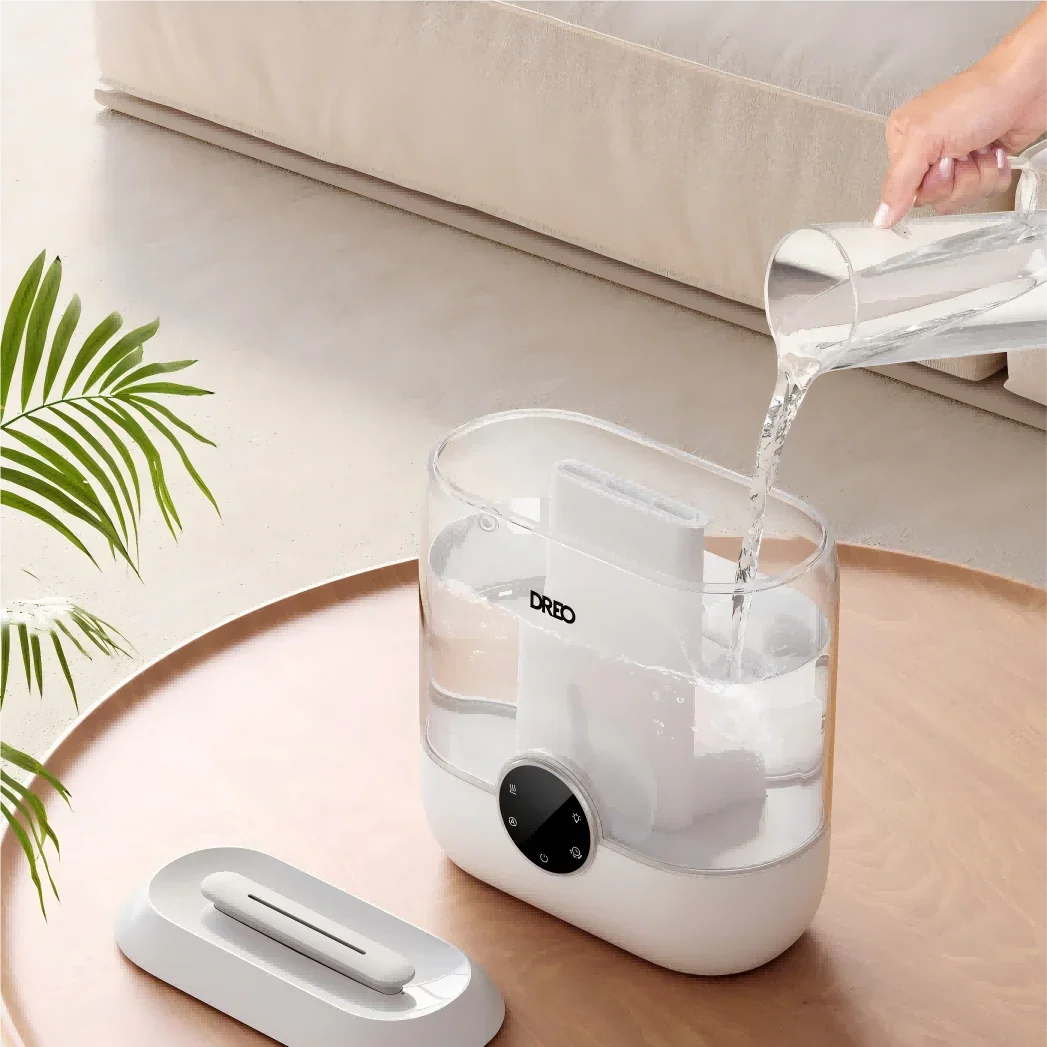
Knowing how often to refill humidifier tanks helps you plan. You do not want it to run dry in the middle of the night.
Here is a simple way to guess.
The Math:
Take the Tank Capacity (Gallons) and divide it by the Output Rate (Gallons per Hour).
Let’s say your tank holds 1 gallon.
Your machine uses 0.1 gallons per hour on low.
1 gallon ÷ 0.1 = 10 hours.
This means you must refill it twice a day to run it 24/7.
- Small Tabletop Units (1 liter): Refill every 4 to 6 hours.
- Medium Units (1 gallon): Refill every 12 to 24 hours.
- Large Console Units (3+ gallons): Refill every 2 to 3 days.
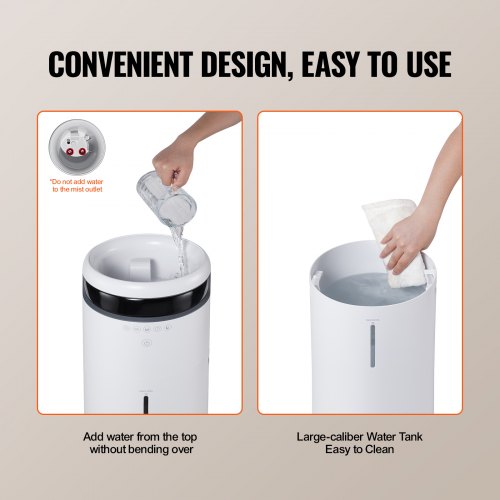
If you hate carrying heavy tanks, get a bigger unit. You refill it less often.
Credit: www.dreo.com
The Hidden Costs: Water and Power
Using a humidifier is not free. You pay for water and power. Let’s break it down.
Cost of Tap Water vs. Distilled
Tap water is cheap. But, it has minerals. These minerals turn into “white dust.” This dust covers your furniture. It is annoying to clean.
Also, minerals build up in the machine. This is called “scale.” It gets hard and crusty.
I once used tap water for a month. My black TV stand turned white with dust. It looked terrible. I also had to scrub the tank with vinegar every week.
Now, I use distilled water. It has no minerals.
However, distilled water costs money. It is about $1 per gallon at the store. If you use 1 gallon a day, that is $30 a month.
So, you must decide. Best water for humidifiers is distilled for the machine, but tap water is better for your wallet.
Electricity Usage
Water is not the only cost. You also pay for power.
- Ultrasonic/Evaporative: Use very little power. Maybe a few cents a month.
- Warm Mist: These boil water. They use a lot of power. This can add $10 to $20 to your monthly bill.
So, when considering the cost to run a humidifier, think about the type you buy.
Signs You Are Using Too Much Water
More is not always better. You can have too much water in the air.
If you use 3 gallons a day in a small room, look out for these signs:
- Wet Windows: If water drips down your window glass, stop. It is too humid.
- Damp Carpets: Touch the floor near the unit. Is it wet? Turn it down.
- Mold Smells: If the room smells musty, you have too much moisture.
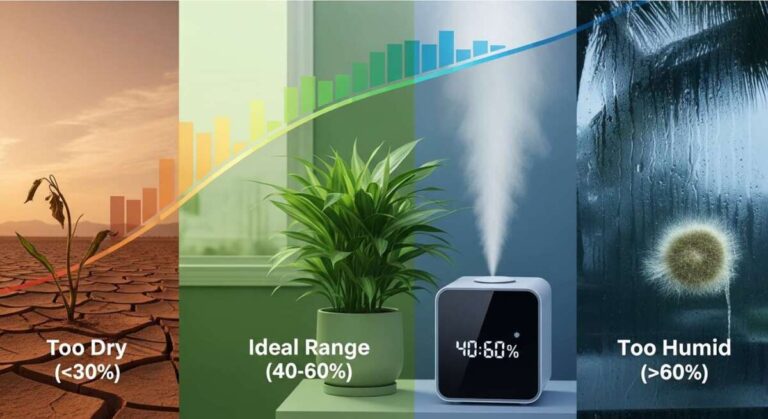
Mold loves wet spots. Do not let your room become a jungle. Aim for 40% to 50% humidity. Use a cheap hygrometer to check.
Practical Tips to Save Water and Money
I have learned a few tricks over the years. These help me use less water and keep my home comfortable.
1. Use a Hygrometer
This is a small tool. It tells you the humidity level. It costs about $10. If it says 45%, turn the humidifier off. You save water immediately.
2. Close the Door
I mentioned this before, but it is vital. Keep the moisture in the room you are using.
3. Clean the Filter
If you have an evaporative model, clean the wick. A crusty wick cannot absorb water. The fan will run, but no water goes into the air. You waste electricity, not water, but it is still wasteful.
4. Place it Correctly
Put the unit in the center of the room. Keep it off the floor. If it is on a table, the mist mixes better with the air. If it is on the floor, the water just soaks the carpet.
Frequently Asked Questions
Does a humidifier use a lot of electricity?
No, most do not. Cool mist models use very little energy, like a lightbulb. However, warm mist models that boil water use much more.
Can I leave my humidifier on 24/7?
Yes, you can. But, monitor the humidity. If the room gets too wet, turn it off. It is better to use a model with an auto-shutoff sensor.
How many gallons does a 12×12 room need?
A standard bedroom (12×12) usually needs about 1 to 1.5 gallons of water per day to stay comfortable in winter.
Why is my humidifier emptying so fast?
The air is likely very dry. Or, you have the setting on “High.” Also, check for leaks. If the floor is wet, you have a leak, not high usage.
Conclusion
So, how much water does a humidifier use? For most of us, it is about 1 to 2 gallons a day.
Knowing this helps you plan. You can pick the right size tank. You can decide if you want to pay for distilled water.
I hope my personal stories and tips help you. A humidifier is a great tool. It keeps you healthy and comfortable. Just remember to check the water level, keep it clean, and don’t let the room get too swampy.
Stay comfortable and breathe easy!