
Can You Use a Humidifier As an Oil Diffuser? Expert Insights
Have you ever walked into a spa and felt instant peace? The air feels soft. The smell of lavender floats around you. It feels amazing. Naturally, we want that same feeling in our own homes.
You might look at the humidifier sitting in your bedroom. You use it to keep your skin soft in winter. You might also have a bottle of peppermint oil on your shelf. A thought pops into your head. “Can I just mix these two? Can you use a humidifier as an oil diffuser?”
It seems like a great idea. It saves space. It saves money. Why buy two machines when one might do the job?
I have been there. Years ago, I tried this exact trick. I wanted my room to smell like a lemon grove. So, I grabbed my expensive cool-mist humidifier. I dropped in ten drops of pure lemon oil. I turned it on and went to sleep.
The next morning, the room smelled great. But when I went to refill the tank, I saw the problem. The plastic tank looked cloudy. It felt sticky. Worst of all, there was a small crack at the bottom. Water was leaking onto my nightstand.
I learned a hard lesson that day.
The short answer to your question is no. In most cases, you cannot use a humidifier as an oil diffuser. It can break your machine. It can also hurt your health.
However, there are exceptions. There are also better ways to get that fresh scent. In this guide, I will share my experience. We will look at why this happens. We will also look at how to do it right.
Let’s dive in.
The Core Question: Can You Use a Humidifier As an Oil Diffuser?
We need to understand the basics first. Both machines spray mist. So, why can’t they share the job?
The problem is the mix. Water and oil do not mix. We learned this in school. If you pour oil into water, it floats on top.
Inside a humidifier, this separation causes chaos.
Most humidifiers are made of plastic. They use a specific type of plastic. It is usually clear and hard. It is designed to hold water. It is not designed to hold chemicals.
Essential oils are natural, but they are strong. They are powerful chemicals. In the science world, we call them “volatile organic compounds.”
Here is what happens when you try putting essential oils in a humidifier. The oil sits on top of the water. It touches the plastic walls of the tank. The oil acts like a solvent. A solvent is something that dissolves other things.
Think of paint thinner. Essential oils act like weak paint thinner on plastic.
Over time, the oil eats the plastic. It makes the plastic weak. It can cause:
- Cracks.
- Pitting (tiny holes).
- Discoloration.
- Leaks.
So, while the machine might run for a night or two, damage is happening. It is slow, but it is real.

Credit: www.svaorganics.com
Humidifier vs. Diffuser: What is the Difference?
To understand the risk, we must look at the machines. They look similar. But inside, they are very different. Let’s break down the humidifier vs diffuser difference.
How Humidifiers Work
Humidifiers have one job. They add water to the air. They want to raise the humidity. They pump out a lot of moisture. A standard unit might hold a gallon of water. It is meant to run for hours.
There are a few main types:
- Evaporative Humidifiers: These use a fan. The fan blows air through a wet filter. The water evaporates into the air. If you add oil here, the oil gets stuck in the filter. It smells bad quickly. It can also grow mold.
- Ultrasonic Humidifiers: These are very popular. They use a small plate. The plate vibrates very fast. This shakes the water into a mist. If you add oil, the oil coats the plate. The plate cannot vibrate well. The machine stops working.
- Warm Mist Humidifiers: These boil water. They make steam. Putting oil in boiling water is dangerous. It changes the scent of the oil. It can also leave a burnt residue on the heater.
How Oil Diffusers Work
Diffusers are different. They are small. They usually hold only a cup of water. Their job is not to hydrate the air. Their job is to scent the air.
They are built for oil. The plastic is different. It is made of “polypropylene.” This plastic can handle the oil. It does not melt or crack.
- Ultrasonic Diffusers: These look like humidifiers. But the vibrating plate is stronger. It is coated to resist oil. It breaks the oil into tiny micro-particles.
- Nebulizing Diffusers: These use air pressure. They do not use water at all. They spray pure oil into the air. These are very strong.
- Heat Diffusers: These use a candle or small heater. They warm the oil gently.
The Particle Size Matter
This is a key expert insight.
Humidifiers make big water droplets. They are heavy. They fall to the ground quickly. If you add oil, the oil drops fall on your floor. They fall on your bed. This makes your furniture sticky.
Diffusers make tiny mist particles. They are light. They float in the air for a long time. This is why you can smell a diffuser across the room. The scent travels better.
If you use a humidifier, the scent stays near the machine. It does not spread well. You waste your expensive oil.
The Risks: Why You Should Not Put Essential Oils in a Standard Humidifier
You might think, “I will just try it once.” Please, think again. I want to save you money. I want to save you from a mess.
Is it safe to put essential oils in a humidifier? Let’s look at the specific risks.
Risk 1: Tank Corrosion and Cracks
We touched on this. But let’s go deeper.
Most water tanks are made of “Polystyrene” or “ABS” plastic. Essential oils love to attack these.
Citrus oils are the worst offenders. Lemon, orange, and grapefruit oils are acidic. They are very tough on plastic.
I have seen tanks turn white overnight. The clear plastic becomes foggy. This is the plastic breaking down. Once it starts, you cannot stop it. The tank will eventually crack. A cracked tank means water on your floor. Water on the floor can ruin wood or carpet.
Risk 2: The Clogging Factor
Humidifiers have small parts. They have pumps. They have wicks. They have mist tubes.
Oil is thick. It is viscous.
When the water runs out, the oil stays behind. It forms a sludge. This sludge clogs the tubes. It coats the sensors.
If you have an evaporative model, you have a wick filter. This is like a sponge. If you add oil, the sponge soaks it up. The oil does not evaporate. It stays in the sponge. It attracts dust. It attracts bacteria. The filter becomes useless very fast. You will have to buy new filters constantly.
Risk 3: Sensor Failure
Many modern machines are smart. They have an “Auto-Shutoff” feature. This turns the machine off when the water is low. It stops the motor from burning out.
This works using a small float or sensor.
Oil residue can make the float stick. It might get stuck at the “Full” position. The tank runs dry. The machine thinks it still has water. It keeps running. The motor gets hot. It can burn out. In rare cases, it could be a fire risk.
Risk 4: Voiding Your Warranty
Look at your user manual. I bet there is a warning section.
Most major brands like Honeywell, Vicks, or Dyson have a line about additives. They will say: “Do not add essential oils, perfumes, or medication to the tank.”
If you do this, you break the rules. If the machine breaks, they will not fix it. They can tell if you used oil. The smell stays in the plastic forever. You cannot wash it away.
Health & Safety: It’s Not Just About the Machine
We have talked about the device. Now, let’s talk about you. Let’s talk about your family.
Using ultrasonic humidifier essential oils incorrectly can affect your health.
Air Quality Issues
Humidifiers pump out volume. They put a lot of stuff in the air.
If you add oil, you are pumping a lot of oil into the air. It might be too much.
Essential oils are concentrated. A diffuser releases a tiny amount. A humidifier could release a huge cloud of oil. Breathing in too much oil can cause:
- Headaches.
- Nausea.
- Dizziness.
- Eye irritation.
The Mold Connection
Mold loves three things:
- Water.
- Food.
- Darkness.
Inside a humidifier, you have water and darkness. When you add oil, you add “food.” Organic compounds in oil can feed bacteria and mold.
If you do not clean the tank perfectly, scum builds up. Then, the machine sprays this mold into the air. You breathe it in. This is very bad for your lungs. It is much harder to clean oil residue than just water scale.
Pet Safety Alert
This is vital. Do you have a dog or a cat?
Some oils are poison to pets. Their bodies cannot process them.
- Tea Tree Oil: Very toxic to dogs and cats.
- Peppermint Oil: Can hurt cats.
- Citrus Oil: Can cause skin issues for pets.
When you use a humidifier, the oil droplets are heavy. They fall on your dog’s fur. Your dog licks its fur. It eats the oil. This can make them very sick.
A diffuser is safer because the mist is finer. It disperses more. But you still need to be careful with pets.
Respiratory Risks
Do you have asthma? Do you have allergies?
Humidifiers help these conditions. They keep nasal passages moist.
But adding oil can trigger an attack. Strong scents can tighten the chest. If the machine sprays large oil droplets, they can irritate the throat.
It is better to keep the air pure. Use the humidifier for water. Use a separate device for scent.

Credit: everlastingcomfort.com
The Exception: 2-in-1 Humidifiers with Essential Oil Trays
So, is the door completely closed? Not exactly. The market has listened to us. Manufacturers know we want the best of both worlds.
This brings us to the best humidifier for essential oils. These are hybrid machines.
They are primarily humidifiers. But they have a secret weapon: an “Aroma Tray” or “Essential Oil Box.”
How They Work
These machines have a small drawer. It is usually near the bottom or the air outlet.
Inside the drawer, there is a small pad. It looks like a piece of felt or foam.
You do not put oil in the water tank. Instead, you put a few drops of oil on this pad.
Here is the genius part:
- The machine makes mist from pure water.
- The fan blows air to push the mist out.
- The air passes over the oil pad first.
- The air picks up the scent.
- The scented air mixes with the mist.
This protects the tank. The oil never touches the plastic tank. It never touches the motor. It stays on the pad.
Are They as Good as Dedicated Diffusers?
They are good, but not perfect.
- Pros:
- Convenience: You only plug in one machine.
- Safety: The machine is safe from damage.
- Subtle Scent: The smell is usually lighter. It is not overpowering.
- Cons:
- Weaker Scent: The fan is often weak. The scent might not fill a large room.
- Maintenance: You have to change the pads. If you switch from peppermint to lavender, you need a new pad. Otherwise, the smells mix weirdly.
- Cost: These units can be slightly more expensive.
If you are shopping, look for brands like Levoit, Geniani, or Everlasting Comfort. They often include these trays. Always check the box for “Aroma Tray” or “Essential Oil Compatible.”
Expert Guide: Safe Alternatives for Home Fragrance
If you have a standard humidifier, do not risk it. There are so many better ways to make your home smell great. These are my top diffuser alternatives.
1. Using a Dedicated Diffuser (The Best Choice)
This is the obvious winner. A real essential oil diffuser is cheap. You can get a good one for $20 to $30.
It gives you full control. You can set a timer. You can change the light color. You can control the mist strength.
Plus, you can place it anywhere. Put the humidifier near your bed for your health. Put the diffuser on your dresser for the scent. This creates a perfect “zone” in your room.
2. Reed Diffusers
I love these for bathrooms and hallways. They use no electricity.
They are glass bottles with oil. You put wooden sticks (reeds) in them. The oil travels up the stick. It releases scent slowly.
They are safe. They are silent. They last for months. You just flip the sticks every week to refresh the smell.
3. DIY Room Sprays
This is a fun project. You can make your own spray. It is natural and cheap.
Simple Recipe:
- Get a small spray bottle (glass is best).
- Fill it almost to the top with distilled water.
- Add 1 tablespoon of Witch Hazel or Vodka (this helps the oil mix).
- Add 10-20 drops of your favorite essential oil.
- Shake well before every spray.
You can spray this on curtains. You can spray it on rugs. It freshens the room instantly without damaging anything.
4. Potpourri and Stove Simmers
Do you want your kitchen to smell like the holidays? Try a stove simmer.
Fill a pot with water. Add orange slices, cinnamon sticks, and cloves. Let it simmer on low heat.
The steam carries the scent through the whole house. It adds a little humidity too! It is natural and cozy. Just do not let the pot boil dry.
Maintenance: Cleaning Up the Mess
Okay, let’s say you made a mistake. You already put oil in your humidifier. Is it ruined?
Maybe not. If you catch it early, you can save it.
Here is my Emergency Cleaning Guide.
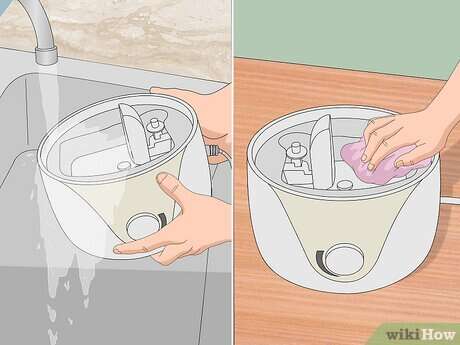
Step 1: Unplug and Empty
Stop using it immediately. Unplug it. Pour out all the water.
Step 2: The Vinegar Soak
White vinegar is your best friend. It cuts through oil. It kills mold.
- Fill the base with undiluted white vinegar.
- Let it sit for 30 to 60 minutes.
- The vinegar will break down the oil residue.
Step 3: Scrub Gently
Use a soft brush. An old toothbrush works great. Scrub the corners of the tank. Scrub the ultrasonic plate (be very gentle!).
Get all the slimy film off. If you feel slime, that is oil or bacteria. It must go.
Step 4: Rinse, Rinse, Rinse
Pour out the vinegar. Rinse with warm water. Do this at least three times. You want to remove the vinegar smell.
Step 5: Air Dry
Let it dry completely. Leave the tank cap off. Let air flow through it. This helps remove any lingering odors.
Warning: If the plastic is already cracked or pitted, stop. Do not use it. It is not safe. A cracked tank can leak water into the electrical parts. This is a fire hazard. Throw it away and buy a new one.
Buying Guide: Choosing the Right Device for Your Needs
It can be confusing. There are so many boxes on the shelf. Which one do you need?
Here is a simple breakdown to help you decide.
When to Buy a Humidifier
- Your goal: You want to fix dry air.
- Your symptoms: Dry skin, chapped lips, nosebleeds, static shock.
- The season: It is winter, or you live in a desert.
- The device: Look for “Cool Mist Humidifier” with a large tank (1 gallon+).
When to Buy a Diffuser
- Your goal: You want your room to smell nice.
- Your needs: Relaxation, focus, better sleep atmosphere.
- The context: You want to use essential oils safely.
- The device: Look for “Ultrasonic Oil Diffuser” (100ml – 500ml tank).
When to Buy a Combo Unit
- Your goal: You have limited space. You want a little bit of both.
- The trade-off: You accept that it might not be the most powerful humidifier or the strongest diffuser.
- The device: Look for “Humidifier with Essential Oil Tray.”
My personal advice? Buy both.
Get a strong humidifier for the floor. Get a nice diffuser for the table. They work best as a team, not as one machine.

Credit: www.amazon.ca
Frequently Asked Questions (FAQ)
I know you still have questions. These are the most common things people ask me about mixing scents and machines.
Can I put vanilla extract in my humidifier?
Please do not do this. Vanilla extract contains sugar and alcohol. The sugar will burn on the heating element or clog the ultrasonic plate. It creates a sticky mess that bacteria love. It will ruin your machine faster than essential oils. If you want a vanilla scent, buy vanilla essential oil and use a proper diffuser.
Can I use perfume in a humidifier?
No, absolutely not. Perfumes are full of synthetic chemicals, alcohol, and dyes. These chemicals can react with the plastic tank, causing it to melt or crack. More importantly, inhaling heated or misted perfume chemicals is bad for your lungs. It can cause coughing and headaches. Keep perfume on your skin, not in your air.
Will lemon juice clean my humidifier water?
Adding lemon juice to the water tank is a bad idea. While lemon is a cleaner, the pulp and acid in the juice will damage the machine’s pump and filter. It does not effectively kill bacteria in the water. To keep your water clean, follow the manufacturer’s instructions, which usually involve weekly cleaning with white vinegar.
Do water-soluble oils work safely?
This is a tricky one. Some companies sell “water-soluble” scents that claim to be safe for humidifiers. They might be safer than pure oils, but check your manual first. Even these additives can leave a residue over time. If your humidifier warranty says “no additives,” stick to plain water to be safe.
Is it okay to put essential oils in a Vicks humidifier?
It depends on the model. Some Vicks humidifiers, like the “Vicks Warm Mist,” have a special “medicine cup” near the steam outlet. You can put VapoSteam or essential oils in that cup. Do not put oil in the main water tank. Always look for the specific cup or tray. If you don’t see one, don’t use oil.
Conclusion
We started with a simple wish: a home that feels good and smells good.
We asked, “Can you use a humidifier as an oil diffuser?”
By now, you know the answer is no, unless you have a machine built for it.
The risk of breaking your device is too high. The risk of breathing in too much oil is real. The mess it makes is just not worth it. I ruined a good machine so you don’t have to.
Here is your action plan:
- Check your current humidifier. Does it have an oil tray? If yes, great! Use that.
- If no tray, keep it pure. Use only distilled water in the tank.
- Get a diffuser. Treat yourself to a small, dedicated oil diffuser. They are cheap and effective.
- Enjoy both. Run your humidifier for health. Run your diffuser for happiness.
Your home should be your sanctuary. Keep the air fresh, keep your devices working, and breathe easy.
Disclaimer: I am a content writer sharing personal experience and research. I am not a doctor or an HVAC technician. Always read your device manual and consult a medical professional if you have respiratory concerns.