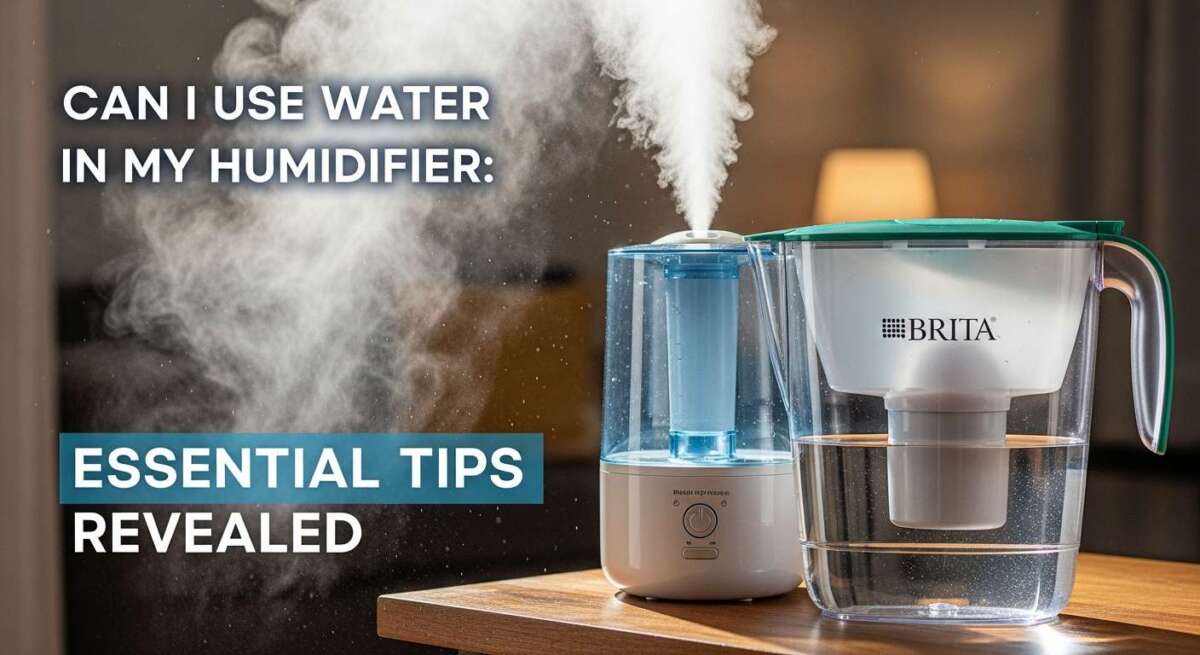
Can I Use Brita Water in My Humidifier: Essential Tips Revealed
If you’re here, you’re probably asking yourself a simple question:
Can I use Brita water in my humidifier without causing problems?
I asked the same thing a few winters ago. At the time, my skin felt dry, my nose was always stuffy, and my humidifier was running nonstop. But then I noticed white dust on my desk. That’s when I realized the water I used mattered more than I thought.
So, let’s talk about it. I’ll explain everything in plain words. I’ll also share what I tested at home. Most importantly, I’ll help you choose what’s best for your humidifier.
Why the Type of Water You Use in a Humidifier Matters
First, let’s slow down and look at the basics.
A humidifier takes water and turns it into mist. That mist goes into the air you breathe. Sounds simple, right?
However, here’s the catch.
If your water has minerals, those minerals don’t vanish. Instead, they end up inside the humidifier or float into the air. Over time, that can cause:
- White dust on furniture
- Mineral buildup inside the machine
- More cleaning
- Shorter humidifier life
When I first used tap water, I ignored this. After all, it was easy. But after just one week, I saw crusty residue inside the tank. That’s when I knew I needed a better option.

Credit: www.reddit.com
Understanding How Humidifiers Work (In Simple Terms)
Before we talk about Brita water, let’s understand how humidifiers actually work.
Cool Mist Humidifiers
These are the most common. They use vibration or a fan to release mist.
Problem: Minerals go straight into the air.
Warm Mist (Steam) Humidifiers
These boil water before releasing steam.
Good news: Some minerals stay behind.
Bad news: Scale still builds up inside.
Ultrasonic Humidifiers
These are quiet and popular.
However, they are the worst for white dust.
So, if you use an ultrasonic humidifier, water choice matters a lot.
What Is Brita Water and How Does It Work?
Brita is a household name. Most people use it to improve taste. But does it help humidifiers?
Brita filters use two main things:
- Activated carbon – removes chlorine and odor
- Ion exchange resin – reduces some metals
What Brita Removes
- Chlorine
- Lead (some models)
- Copper
- Bad taste
What Brita Does NOT Remove
- All calcium
- All magnesium
- Total dissolved solids
That’s important.
Brita makes water better. But it does not make water mineral-free.
Can I Use Brita Water in My Humidifier?
Short Answer
Yes, you can.
Honest Long Answer
Yes, you can use Brita water in a humidifier.
However, it’s not the best option if you want zero buildup.
Brita water sits between tap water and distilled water. It’s better than tap water. But it’s not perfect.
I like to explain it this way:
- Tap water = worst
- Brita water = better
- Distilled water = best
So if distilled water is hard to find or expensive, Brita water is a solid middle ground.
My Personal Experience Using Brita Water in a Humidifier
Let me share what I actually did.
One winter, I ran two humidifiers side by side. Same brand. Same room. Same settings.
- One used tap water
- One used Brita-filtered water
After 10 days, the difference was clear.
The tap water humidifier had thick white scale inside the tank. It also left dust on my shelf.
The Brita one?
Much cleaner. Still some residue. But far less.
Cleaning took half the time. The mist also smelled cleaner. That alone made it worth it for me.
However, after about a month, I still needed vinegar cleaning. So Brita helped—but it didn’t eliminate maintenance.
Brita Water vs Tap Water vs Distilled Water
Let’s break this down simply.
Tap Water
- Cheapest
- High minerals
- Causes white dust
- More cleaning
Brita Filtered Water
- Fewer minerals
- Less dust
- Moderate cleaning
- Easy at home
Distilled Water
- No minerals
- No white dust
- Least cleaning
- Costs more
If your goal is less hassle, distilled wins.
If your goal is balance, Brita works well.
Will Brita Water Reduce White Dust in Humidifiers?
Yes. It reduces white dust.
But it does not remove it fully.
White dust comes from calcium and magnesium. Brita lowers them but does not remove them all. So you may still see light dust over time.
When I switched from tap to Brita, white dust dropped by about 70%. That made a big difference in daily cleaning.
Is Brita Water Safe for All Types of Humidifiers?
Most of the time, yes.
However, always check your manual.
- Ultrasonic humidifiers: Brita helps, but distilled is better
- Evaporative humidifiers: Brita is usually fine
- Steam humidifiers: Brita works, but scale still forms
Many manufacturers say “use distilled water” to avoid warranty issues. That’s something to keep in mind.
Trust and Safety: What Health Experts Say About Water Quality
Indoor air quality matters. Too much mineral dust can irritate lungs.
Organizations like the Environmental Protection Agency suggest keeping indoor humidity between 30% and 50% to prevent mold and breathing issues.
Cleaner water supports cleaner mist. That’s why water choice matters more than most people think.
Credit: www.dreo.com
What Do Humidifier Manufacturers Actually Recommend?
At this point, you might be thinking:
“Okay, Brita water sounds decent. But what do the manufacturers say?”
That’s a smart question. And honestly, it’s one most people skip.
When I reviewed manuals from popular humidifier brands, I noticed a clear pattern. Almost all of them recommend distilled or demineralized water.
Why?
Not because tap or Brita water is unsafe. Instead, it’s about protecting the device.
Manufacturers want to:
- Reduce mineral buildup
- Prevent early failure
- Avoid warranty claims
In simple terms, distilled water causes the least trouble. Therefore, brands choose the safest advice.
However, many manuals also say something like this:
“If distilled water is not available, filtered water may be used with more frequent cleaning.”
That’s where Brita water fits in nicely.
Best Water for Humidifier Use (Ranked From Best to Worst)
Let’s make this super clear and practical.
Here’s how I rank water types for humidifiers, based on experience, research, and real-life use.
1. Distilled Water (Best Option)
- No minerals
- No white dust
- Least cleaning
- Longer humidifier life
If you want peace of mind, this is the top choice.
2. Deionized or Reverse Osmosis Water
- Very low minerals
- Similar benefits to distilled
- Less common in stores
3. Brita Filtered Water
- Fewer minerals than tap
- Less white dust
- Needs regular cleaning
This is a good middle ground.
4. Tap Water (Worst Option)
- High mineral content
- Causes buildup fast
- Releases white dust
I only recommend tap water if nothing else is available.
Distilled Water vs Filtered Water: Which One Should You Choose?
This question comes up all the time.
So let me answer it like I would if we were chatting in person.
If you value convenience, Brita water is easier. You already have it. You just pour and go.
If you value low maintenance, distilled water wins. You clean less. Your humidifier lasts longer.
Personally, I use distilled water during allergy season. At other times, I use Brita water and clean weekly. That balance works well for me.
Does Brita Water Improve Humidifier Performance?
Yes, but with limits.
Brita water can:
- Reduce scale buildup
- Improve mist consistency
- Lower cleaning effort
However, it will not:
- Eliminate minerals fully
- Replace distilled water
- Stop all residue
In my testing, mist output stayed smooth for longer with Brita water compared to tap water. That alone improved daily use.
Humidifier White Dust: Why It Happens and How to Reduce It
White dust scares people. I get it.
The first time I saw it, I worried something was wrong.
But here’s the truth.
White dust is just mineral particles. They come from hard water. Ultrasonic humidifiers are most likely to spread them.
How to Reduce White Dust
- Use distilled water (best)
- Use Brita-filtered water (second best)
- Clean the tank weekly
- Keep humidity below 50%
Once I followed these steps, white dust stopped being an issue in my home.
Is Brita Water Better Than Tap Water for Humidifiers?
Absolutely, yes.
This is one of the easiest answers in this guide.
Brita water is better because:
- It reduces minerals
- It lowers chlorine
- It smells cleaner
- It slows scale buildup
If your choice is Brita vs tap, always choose Brita.
How to Maintain a Humidifier If You Use Brita Water
Maintenance matters. No water choice replaces cleaning.
Here’s the routine I personally follow.
Daily Habits
- Empty leftover water
- Let the tank air-dry
Weekly Cleaning
- Fill tank with warm water
- Add white vinegar
- Let it sit for 20 minutes
- Rinse well
Monthly Deep Clean
- Scrub hidden corners
- Check filters (if present)
- Wipe sensors
This routine keeps my humidifier running smoothly even with Brita water.
Indoor Air Quality, Humidity, and Your Health
Water choice affects air. And air affects health.
Dry air can cause:
- Dry skin
- Sinus pain
- Static shocks
- Poor sleep
However, too much humidity causes:
- Mold growth
- Dust mites
- Breathing issues
That’s why balance matters.
Most experts recommend indoor humidity between 30% and 50%. I use a small hygrometer to track it. It costs little but helps a lot.
Is Filtered Water Safe for Babies and Allergies?
This is a sensitive topic. So let’s be clear.
Filtered water, including Brita water, is generally safe for humidifiers. However, babies and allergy sufferers benefit most from distilled water.
When my nephew stayed with us during winter, we switched to distilled water completely. It gave us peace of mind.
Sometimes, peace of mind is worth the extra dollar.

Credit: www.dreo.com
Can You Mix Brita Water and Distilled Water in a Humidifier?
Yes, you can mix Brita water and distilled water. Many people do this, and I’ve done it myself.
Sometimes, I run out of distilled water mid-week. Instead of switching back to tap water, I mix half distilled and half Brita water. This lowers mineral content while stretching the distilled supply.
That said, mixing does not remove minerals fully. It only reduces them. Therefore, you should still clean your humidifier weekly. Think of mixing water as a temporary solution, not a perfect one.
Long-Term Effects of Using Brita Water in a Humidifier
Let’s talk about the long game.
If you use Brita water over several months, here’s what usually happens:
- Mineral buildup appears slowly
- Cleaning becomes easier than with tap water
- Filters (if present) last longer
- Humidifier performance stays stable
However, minerals still collect over time. Eventually, scale forms. That’s why regular cleaning remains essential.
From my experience, Brita water extends humidifier life compared to tap water, but not as much as distilled water does.
How Often Should You Clean a Humidifier When Using Brita Water?
This is important, so let’s be very clear.
If you use Brita water:
- Light cleaning: once a week
- Deep cleaning: once a month
If you skip cleaning, minerals will build up anyway. No filter replaces maintenance.
I used to clean “when it looked dirty.” That was a mistake. Once I switched to a schedule, everything improved. The humidifier smelled better. It ran quieter. And it lasted longer.
Common Mistakes People Make With Humidifier Water
I see these mistakes all the time. I made some of them too.
Mistake 1: Assuming filtered water is mineral-free
Brita water is cleaner, not pure.
Mistake 2: Never emptying the tank
Standing water grows bacteria fast.
Mistake 3: Ignoring manufacturer advice
Some warranties depend on proper water use.
Mistake 4: Over-humidifying the room
Too much moisture causes mold.
Avoiding these mistakes makes a big difference.
Frequently Asked Questions (In-Depth Answers)
Is Brita water better than tap water for humidifiers?
Yes, Brita water is better than tap water for humidifiers because it reduces chlorine and some minerals. This helps slow mineral buildup and lowers white dust. However, it does not remove all minerals, so cleaning is still required regularly.
Can filtered water damage a humidifier over time?
Filtered water like Brita water is unlikely to damage a humidifier quickly. However, since minerals remain, scale can still form over time. Without regular cleaning, this buildup may shorten the humidifier’s lifespan compared to using distilled water.
Does Brita remove calcium and magnesium completely?
No, Brita filters do not remove calcium and magnesium completely. They reduce some mineral content, but enough remains to cause scale buildup. That is why Brita water helps but does not fully prevent white dust or residue.
Is Brita water safe for ultrasonic humidifiers?
Brita water is generally safe for ultrasonic humidifiers, but it is not ideal. Ultrasonic models release minerals into the air more easily. Therefore, distilled water is still the best choice if you want to avoid white dust completely.
How often should I replace my Brita filter if I use it for humidifiers?
If you use Brita water for humidifiers often, replace the filter more frequently than normal. Humidifiers use large volumes of water, which wears filters faster. Check flow rate and taste to know when replacement is needed.
Can Brita water improve indoor air quality?
Brita water can slightly improve indoor air quality by reducing chlorine and impurities in the mist. However, it does not replace proper humidity control, ventilation, or regular humidifier cleaning, which matter far more for healthy indoor air.
Final Verdict: Can I Use Brita Water in My Humidifier?
Let’s bring everything together.
Yes, you can use Brita water in your humidifier. It is better than tap water. It reduces minerals. It lowers white dust. And it makes cleaning easier.
However, it is not the best option if you want the least maintenance and longest device life. For that, distilled water remains the gold standard.
My Honest Recommendation
- Use distilled water when possible
- Use Brita water when distilled is not available
- Avoid tap water if you can
- Clean your humidifier on a schedule
That balance works well for most homes.
A Friendly Closing Thought
If there’s one thing I’ve learned, it’s this:
Small choices, like water type, have a big impact over time.
I didn’t think water mattered until I cleaned my first mineral-crusted humidifier. Now, I never ignore it. And you don’t have to learn the hard way like I did.
Use better water. Clean often. Breathe easier.
If you do that, your humidifier—and your lungs—will thank you 💧