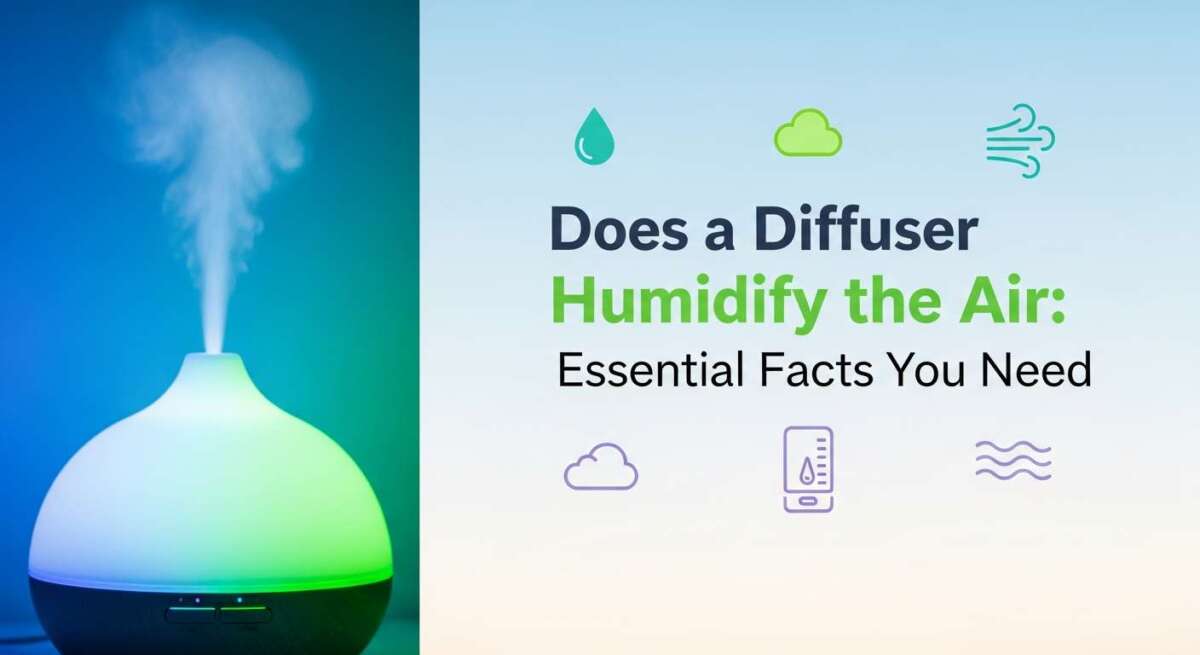
Does a Diffuser Humidify the Air: Essential Facts
Have you ever woken up with a scratchy throat? Maybe your skin feels tight and dry. I know that feeling well. It usually hits me right when winter starts. The air gets cold, the heater goes on, and suddenly, my house feels like a desert.
You might look at that sleek little device on your nightstand. It is puffing out a cool, white mist. It smells like lavender or eucalyptus. You think, “Is this helping?”
You are asking a great question. Does a diffuser humidify the air?
I have asked this myself. I love my essential oils. But I also hate dry air. So, I decided to find out the truth. I did not just read about it. I tested it.
In this guide, I will share what I found. We will look at facts. We will look at science. And, I will tell you about my own little experiment at home.
The short answer is: Yes, but only a tiny bit.
It is not that simple, though. There are many types of diffusers. Some use water. Some do not. Also, the size of your room matters.
If you want to know if you can toss your big, ugly humidifier and keep the cute diffuser, keep reading. We need to talk about ultrasonic diffuser humidity and what it really does for your health.
Let’s dive in.
What is a Diffuser? The Basics
First, let us get on the same page. What is this device?
A diffuser is a small machine. Its main job is to put scent into the air. It takes essential oils and breaks them down. It turns them into a fine mist or vapor. Then, it spreads them around your room.
People use them for aromatherapy. Maybe you want to relax with chamomile. Maybe you want energy from peppermint. That is the main goal.
But, many diffusers use water to do this. This is where the confusion starts. If it uses water, it must be a humidifier, right?
Well, sort of.
Most popular diffusers are ultrasonic. They have a small tank. You fill it with water. You add a few drops of oil. Then, a small plate inside vibrates. It vibrates very fast. This turns the water and oil into mist.
Because water is going into the air, technically, it is humidifying. But is it enough to matter? That is the real question.

Credit: www.amazon.com
My Personal Experiment: The Hygiene Test
I believe in testing things. I did not want to just guess. So, I ran a test in my own bedroom.
I wanted to see the benefits of using a diffuser for moisture.
Here is what I used:
- My Bedroom: It is a standard size. About 12 feet by 12 feet.
- A Hygrometer: This is a tool that measures humidity.
- My Favorite Ultrasonic Diffuser: It has a 300ml water tank.
The Setup
It was a Tuesday night. The air was dry. My hygrometer read 32% humidity. That is low. Comfortable humidity is usually between 40% and 60%. My skin felt itchy. My nose felt dry.
I closed the bedroom door. I filled the diffuser to the top line. I set it to “High Mist.” Then, I waited.
The Results
I let it run for four hours. I came back to check the meter.
Did the number jump up? Did it hit 50%?
No.
The reading was 34%.
It went up by 2%.
The Verdict
The diffuser did add moisture. The number went up. But it was a very small change. I could not feel the difference on my skin. The air still felt dry.
So, from my experience, a diffuser adds water. But it is like using a water pistol to put out a campfire. It helps, but not much.
How Do Diffusers Work? (The Science)
Why was the change so small? To understand this, we must look at how they work.
We need to talk about ultrasonic diffuser humidity.
An ultrasonic diffuser uses sound waves. You cannot hear them. They are too high for human ears. These waves vibrate a metal disc. The disc sits under the water.
When it vibrates, it agitates the water. It breaks water particles apart. They turn into a cool mist. A small fan blows this mist out.
The mist is lovely. It looks like smoke. But it is just water and oil.
The Volume Problem
The issue is the amount of water.
Look at your diffuser cup. It likely holds about 100ml to 500ml of water. That is about the size of a soda can.
Now, look at a real humidifier. It holds liters of water. Sometimes gallons.
To change the humidity in a room, you need to put a lot of water into the air. You need to evaporate liters, not milliliters.
A diffuser releases water slowly. It creates a fine mist. This mist evaporates quickly. But the volume is low.
Also, the mist is cool. Cool air holds less moisture than warm air.
So, the science supports my test. The mechanism works. It does create humidity. But the volume is too low to change the room climate.

Credit: everlastingcomfort.com
Diffuser vs. Humidifier: The Big Showdown
This is the main battle. Diffuser vs Humidifier. Which one wins?
It depends on your goal.
Are you trying to smell nice? Or are you trying to breathe better?
Let’s compare them side-by-side.
1. The Tank Size
- Diffuser: Small. Usually 1 cup of water.
- Humidifier: Large. Usually 1 gallon or more.
2. The Purpose
- Diffuser: Aromatherapy. It is for scent and mood.
- Humidifier: Moisture. It is for health and comfort.
3. The Run Time
- Diffuser: 3 to 6 hours usually. Then it runs dry.
- Humidifier: 12 to 24 hours. It works all night.
4. The Output
- Diffuser: Fine, light mist.
- Humidifier: Heavy, dense vapor.
Think of it this way:
Imagine you are thirsty.
A diffuser is like a single sip of water.
A humidifier is a full glass of water.
If you are just a little thirsty, the sip helps. If you are dehydrated, you need the glass.
If your room is very dry, a diffuser cannot fix it. You need a humidifier.
Types of Diffusers and Their Moisture Output
Not all diffusers are the same. Some add zero water. Some add a little.
It is important to know the difference. If you buy the wrong one, you get no moisture at all.
1. Ultrasonic Diffusers
This is the most common type. This is what I used in my test.
- How it works: Vibrating plate and water.
- Moisture Level: Low.
- Best for: Scent and a tiny bit of humidity.
2. Nebulizing Diffusers
These are for the pros. They are strong.
- How it works: Air pressure. It blows oil through a tube.
- Moisture Level: Zero.
- Note: These do not use water. You screw the oil bottle directly in. If you want humidity, do not buy this.
3. Evaporative Diffusers
These are simple.
- How it works: A fan blows over a wet pad.
- Moisture Level: Low to Medium.
- Note: The water evaporates naturally. It adds some moisture. But still, the tank is usually small.
4. Heat Diffusers
These are like warmers.
- How it works: A candle or plate heats the oil.
- Moisture Level: Very Low.
- Note: Heat can change the oil chemistry. I do not recommend these for health benefits.
My Advice:
If you want any moisture at all, stick with the Ultrasonic type. It is the only one that sprays visible water mist.
Can I Use a Diffuser as a Humidifier for Baby?
Parents ask this often. Can I use a diffuser as a humidifier for baby?
You want the best for your child. Dry air causes stuffy noses. It makes babies cough.
Here is my honest take.
No, it is not enough.
If your baby has a cold, they need real moisture. A diffuser is too weak. It will not loosen the mucus. It will not soothe the throat effectively.
Safety First
Also, be careful with oils. Babies have sensitive lungs. Some oils are strong. Peppermint or Eucalyptus can be dangerous for infants.
If you use a diffuser in a nursery, use plain water. Or, check with your doctor about safe oils.
But for congestion? Go buy a cool-mist humidifier. It is the safer, better choice for health.
Do Diffusers Help with Dry Skin?
Winter skin is the worst. My hands crack. My lips peel.
People search for: Do diffusers help with dry skin?
I wish I could say yes. But remember my test? 2% humidity gain.
That is not enough to save your skin.
Dry skin happens when the air sucks moisture out of you. To stop this, the room humidity needs to be above 40%. A diffuser struggles to reach that.
However, there is a trick.
If you sit right next to it, it helps.
Sometimes, I put my diffuser right on my desk. The mist hits my face. In that direct path, my skin feels better. It feels fresh.
But if the diffuser is across the room? It won’t help your dry elbows.
For dry skin, you need:
- A real humidifier.
- Good lotion.
- To drink more water.
Don’t rely on the little mist machine alone.

Credit: www.amazon.com
The Benefits of Using a Diffuser (Beyond Moisture)
I don’t want to sound negative. I love my diffuser. I use it every day.
Why? Because moisture isn’t the only benefit.
There are many benefits of using a diffuser.
1. Mood Boosting
Scent is powerful. Lavender really does help me sleep. Lemon makes me feel awake. This is real. It changes how your room feels.
2. Better Sleep
I run mine at night. The gentle hum is like white noise. The soft light is relaxing. It creates a routine. My brain knows: “Smell lavender = Time to sleep.”
3. Air Freshness
It masks odors. If you have a dog (like I do), this is huge. It makes the home smell clean without harsh chemicals.
So, while it fails as a heavy-duty humidifier, it wins as a wellness tool.
Best Essential Oil Diffuser for Large Rooms
Maybe you think, “I just need a bigger one!”
You are looking for the best essential oil diffuser for large rooms.
Do they exist? Yes.
Standard diffusers hold 300ml. Large room diffusers hold 700ml or even 1000ml.
If you have a big living room, you need power.
What to look for:
- Tank Size: Look for 500ml or more.
- Mist Output: Look for “high output” settings.
- Run Time: You want it to last 10 hours.
Does a big diffuser act like a humidifier?
It gets closer. A 1000ml diffuser is almost a small humidifier. It puts out more water.
If you use a large diffuser in a small room, you will see the humidity rise.
But for a large open living room? It will still struggle to raise the humidity level. The air volume is just too big.
Placement Matters
To get the most out of it:
- Put it in the center of the room.
- Keep it away from windows (drafts steal the mist).
- Elevate it. Mist falls. Put it on a high shelf.
Actionable Tips for Maximizing Moisture
So, you have a diffuser. You want more moisture. You don’t want to buy a humidifier yet.
Here are my personal tips to squeeze every drop of humidity out of it.
1. Close the Door
This is physics. Smaller space = higher humidity. If you leave the door open, the moisture escapes. Trap it in your room.
2. Use Warm Water
Most instructions say cold water. But if you use lukewarm water, it creates mist easier. The mist comes out slightly warmer. It mixes better. (Check your manual first!).
3. Group Your Plants
Do you have house plants? Put them near the diffuser. Plants release moisture too. Together, they create a little humidity bubble.
4. Keep it Clean
A clogged diffuser makes less mist. If the little metal plate has oil gunk on it, it won’t vibrate well. Clean it. You will see a bigger cloud of mist immediately.
Maintenance and Safety
We need to talk about trust and safety. These devices hold standing water. Standing water can be gross.
The Mold Risk
If you leave water in the tank for days, mold grows. Bacteria grows.
Then, you turn it on.
The machine blasts that mold into the air. You breathe it in. This is bad.
My Cleaning Routine:
I do this once a week.
- Unplug it.
- Pour out old water.
- Take a wet cloth with a little white vinegar.
- Wipe the inside.
- Wipe the little metal disc gently with a cotton swab.
- Rinse and dry.
It takes 2 minutes. It keeps the air healthy.
A Note on Pets
I mentioned my dog earlier. Be careful.
Some oils are toxic to dogs and cats. Tea Tree oil is very bad for them. Always research the oil before you diffuse it around your furry friends.
Conclusion
Let’s wrap this up.
Does a diffuser humidify the air?
Technically, yes. It adds water vapor.
Practically, no. It is not enough to fix dry air problems.
If you have a scratchy throat, bloody nose, or very dry skin, do not rely on a diffuser. Go get a humidifier. Use the right tool for the job.
But, if you want your room to smell like a spa? If you want a tiny boost of freshness? If you want to relax?
Then the diffuser is perfect.
I will keep using mine. I love the smell. I love the ritual. But when the deep winter hits and my skin cracks, I pull out the big humidifier from the closet.
Use them both. They make a great team.
Frequently Asked Questions (FAQ)
1. Can I put essential oils in my humidifier?
Usually, no. Essential oils can eat away at the plastic of a standard humidifier. They can melt the tank. Only do this if the humidifier has a special “oil tray” or is made for it.
2. How much humidity does a diffuser add?
It is very small. In a standard room, it might add 1% to 3% humidity over a few hours. A humidifier can add 30% or more.
3. Is it safe to sleep with a diffuser on?
Yes, it is generally safe. Most ultrasonic diffusers have an auto-shutoff feature. When the water runs out, they turn off. Just make sure the light doesn’t keep you awake.
4. Why is my diffuser making the floor wet?
This happens if the mist is too heavy or the room is cold. The mist condenses before it evaporates. Move it higher up. Put it on a shelf, not the floor.
5. Does a diffuser clean the air?
Not really. Some oils have antibacterial properties. But a diffuser does not filter dust or pollen. For clean air, you need an air purifier with a HEPA filter.
6. Can I use tap water in my diffuser?
It is better to use distilled water. Tap water has minerals. These minerals turn into white dust. You will find this dust on your furniture. Distilled water is clean and keeps the machine running longer.