How Much Electric Does a Humidifier Use: Surprising Energy Facts
Have you ever opened your electric bill in the middle of January and gasped? I have.
A few years ago, my winter bill spiked. I was confused. I hadn’t changed my habits. I hadn’t bought a new TV. But I had bought one thing: a humidifier for my dry bedroom.
It made me wonder. How much electric does a humidifier use? Was this small plastic box the villain of my bank account?
I decided to find out. I didn’t just look at the manual. I tested it.
If you are worried about your bill, you are in the right place. I am going to share what I learned. I will break down the costs. I will show you which types save money. And I will share my simple tips to stay cozy without spending a fortune.
Let’s dive in.
The Short Answer: Is It Expensive?
Let’s start with the basics. Does a humidifier cost a lot to run?
Usually, the answer is no.
Most humidifiers use very little power. They are like a small lamp.
However, there is a catch. It depends on the type of humidifier you own.
Here is a quick look at the numbers:
- Cool Mist (Ultrasonic): Uses 20 to 50 watts. This is very low.
- Evaporative: Uses 40 to 60 watts. This is still low.
- Warm Mist: Uses 200 to 500 watts. This is high.
Think about a standard light bulb. An old-style bulb uses 60 watts. A cool mist humidifier uses less than that light bulb.
But a warm mist unit? That is different. It boils water. That takes a lot of energy. It can use as much power as a small desktop computer.
So, do humidifiers use a lot of electricity? Only if you choose the wrong one or run it too much.

Credit: levoit.com
Deep Dive: How Different Humidifiers Use Power
To save money, you need to know how your machine works.
I used to think they were all the same. I was wrong. The technology inside changes the wattage of humidifier models significantly.
Let’s break them down.
1. Ultrasonic Humidifiers (The Energy Savers)
These are the most common today. I have one on my desk right now.
How they work:
They have a small metal plate inside. This plate vibrates very fast. It moves at an ultrasonic speed. This vibration turns water into a fine mist.
Why they are efficient:
They do not use heat. They do not use a big fan. The vibration takes very little power.
- Average Use: 30 Watts.
- Cost Estimate: Pennies per month.
If you want energy efficient humidifiers, this is your best choice.
2. Evaporative Humidifiers (The Middle Ground)
These are older but reliable. They are great for large rooms.
How they work:
Inside, there is a wet filter (called a wick). A fan blows air through the wet filter. The water evaporates into the air.
Why they use more power:
The fan needs electricity. It uses more power than the vibrating plate. But it is still quite cheap to run.
- Average Use: 50 Watts.
- Cost Estimate: A slight increase, but manageable.
3. Warm Mist Humidifiers (The Power Hogs)
I love these when I have a cold. But my wallet hates them.
How they work:
They have a heating element. It boils the water. The steam rises into the room.
Why they cost so much:
Heating water takes a lot of energy. Think about your kettle or stove. It takes work to make water hot. This machine does that constantly.
- Average Use: 300+ Watts.
- Cost Estimate: Can add $10 to $20 to your monthly bill if used 24/7.
Key Takeaway: If you want to compare ultrasonic vs evaporative humidifier energy, ultrasonic almost always wins. But warm mist is in a category of its own.
My Personal Experiment: The Smart Plug Test
I wanted to be sure. I didn’t want to just guess.
So, I bought a “Smart Plug” with an energy monitor. This is a small device. You plug it into the wall. Then, you plug your appliance into it. It tells you exactly how much power is being used.
Here is what I did.
The Setup:
- Device: A standard 1-gallon Ultrasonic Humidifier (generic brand).
- Room: My master bedroom (approx. 150 sq. ft.).
- Duration: I ran it for 8 hours (a typical night’s sleep).
- Setting: High mist output.
The Results:
When I woke up, I checked the app on my phone.
- Total Energy Used: 0.32 kWh (Kilowatt-hours).
- My Electricity Rate: $0.15 per kWh.
- Total Cost for One Night: $0.05 (5 cents).
I was surprised. It only cost a nickel to run all night!
The Second Test:
The next night, I tried a Warm Mist unit I borrowed from my sister.
- Total Energy Used: 2.8 kWh.
- Total Cost for One Night: $0.42 (42 cents).
My Reaction:
That is a huge difference.
- Cool Mist cost: $1.50 per month.
- Warm Mist cost: $12.60 per month.
This experience taught me a lesson. The type of machine matters more than anything else. If you are asking, “How much electric does a humidifier use?“, you must look at the label first.

Credit: www.amazon.com
The Math: Humidifier Running Cost Calculator
You do not need a smart plug to figure this out. You can do the math yourself. It is easy.
Here is my simple humidifier running cost calculator method.
Step 1: Find the Wattage
Look at the bottom of your humidifier. There is a sticker. Look for a number with a “W” next to it (e.g., 40W).
Step 2: Estimate Your Hours
How long do you leave it on? Let’s say you run it for 10 hours a day.
Step 3: The Formula
Multiply Watts by Hours. Then divide by 1,000.
(Watts × Hours) ÷ 1,000 = Daily kWh
Example:
- Your humidifier is 50 Watts.
- You run it for 10 hours.
- 50 × 10 = 500.
- 500 ÷ 1,000 = 0.5 kWh per day.
Step 4: Find Your Cost
Look at your electric bill. It will tell you your “Rate per kWh.” The US average is about 15 cents ($0.15).
0.5 kWh ×
0.15=∗∗0.15=∗∗0.07 per day.**
So, for this example, it costs 7 cents a day.
If you run it every day for a month:
0.07×30days=∗∗0.07×30days=∗∗2.10 per month.**
It really is that simple.
What Increases the Cost? (Variables to Watch)
Not everyone will have the same bill. Several things can change your cost to run humidifier 24/7.
1. The Setting Knob
Most units have a knob. Low, Medium, High.
I found that “Low” uses significantly less power than “High.” On my ultrasonic unit, “Low” used 18 watts. “High” used 35 watts.
Using “Low” cuts your cost in half.
2. The Size of the Unit
A tiny desktop humidifier uses less power than a big console unit.
Whole-house humidifiers are powerful. They have big fans. They can use 100 watts or more. But, they humidify the whole house at once. This might be cheaper than running 5 small units in different rooms.
3. Humidity Level (The Hygrostat)
Some smart humidifiers have a sensor. This is called a hygrostat.
You set a target, like 45%.
When the room hits 45%, the machine turns off.
If your machine runs non-stop, you are wasting money.
4. Your Home’s Insulation
If your windows are old, dry air comes in. The moist air escapes.
Your humidifier has to work harder. It never reaches the target. It runs all day.
Fixing drafty windows helps your humidifier (and your heater) work less.

Credit: www.amazon.com
Energy Efficient Humidifiers: What to Look For
Are you shopping for a new one? Do not just buy the cheapest one. Look for efficiency features.
I learned this when I upgraded my old unit.
Look for “Auto-Shutoff”
This is vital. When the tank is empty, it turns off.
My old one would keep the fan running even when dry. That is 100% wasted energy.
Look for a Built-in Timer
I like to set mine for 8 hours. It turns off automatically when I wake up. I don’t have to remember.
Check for Energy Star
Currently, the EPA does not rate humidifiers with the “Energy Star” label.
However, you can look for UL Certified or ETL Listed marks. These ensure safety and better build quality.
Choose Ultrasonic for Savings
If saving money is your #1 goal, always pick ultrasonic. They are the champions of low power.
Maintenance: A Dirty Unit Costs More
Here is a secret most people miss. A dirty humidifier uses more electricity.
The Filter Problem
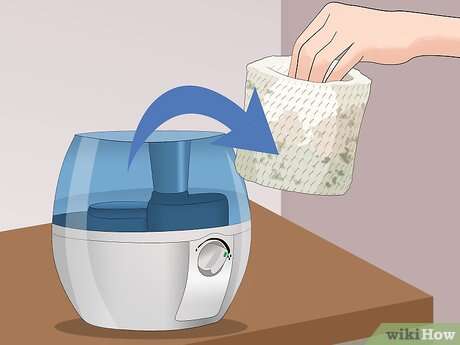
In evaporative models, the wick gets clogged. Minerals from water turn it hard.
The fan has to push harder to get air through the crusty filter.
A harder working fan = more electricity used.
The Scale Problem
In warm mist models, minerals coat the heater. This is called scale.
The heater has to get hotter to boil the water through the scale. It takes longer to steam.
This wastes power.
My Cleaning Routine
To keep my costs low, I clean my unit weekly.
- Vinegar Soak: I soak the base in white vinegar for 20 minutes.
- Rinse: I rinse it well.
- Dry: I let it air dry.
This keeps the parts clean. It runs smoothly. It uses less power. Plus, the air is healthier.
Comparing Humidifiers to Other Appliances
Sometimes it helps to compare. How does a humidifier stack up against other things in your house?
Let’s look at the wattage of humidifier units vs. other gadgets.
| Appliance | Average Wattage | Cost per Hour (Est.) |
| Cool Mist Humidifier | 30 W | $0.005 |
| Laptop Computer | 50 W | $0.007 |
| Ceiling Fan | 75 W | $0.01 |
| Warm Mist Humidifier | 300 W | $0.045 |
| Desktop PC | 400 W | $0.06 |
| Space Heater | 1,500 W | $0.22 |
| Central AC | 3,500 W | $0.52 |
The Reality Check:
A space heater costs 50 times more to run than a cool mist humidifier.
If you use a humidifier to make the air feel warmer (moist air holds heat better), you might turn your heater down.
This could actually save you money overall.
Money-Saving Tips for Power Users
I have used humidifiers for years. Here are my best actionable tips to keep your bills low.
1. Use a separate Hygrometer
Humidifiers often have bad sensors. They measure the air right next to the wet mist.
Buy a cheap digital hygrometer ($10). Place it across the room.
Only run the humidifier when the room is actually dry (below 30%).
2. Use Warm Water in Warm Mist Units
If you must use a warm mist unit, fill it with warm water from your tap.
Your water heater is usually gas (cheaper) or more efficient than the tiny heater in the humidifier.
The unit won’t have to work as hard to boil it.
3. Close the Door
If you are humidifying your bedroom, shut the door.
Don’t try to humidify the hallway too. Keep the moisture where you sleep.
4. Don’t Over-Humidify
More is not better. Anything over 50% humidity is bad. It can cause mold.
It also wastes electricity. Aim for 30% to 50%.
Environmental Impact: Is It Green?
We should also think about the planet.
Every watt we use has a carbon footprint.
If you run a warm mist humidifier all winter, you are using a lot of fossil fuels (depending on your power grid).
My Green Advice:
- Stick to ultrasonic models. They are very eco-friendly.
- Use plants. Plants like Boston Ferns release moisture naturally. They use zero electricity.
- Place a bowl of water near your heating vent. It evaporates naturally.
Small changes make a big difference.
Conclusion
So, how much electric does a humidifier use?
Ideally, very little.
If you choose a cool mist ultrasonic model, it is one of the cheapest appliances in your home. It costs pennies a night. It improves your sleep. It helps your skin. It is worth every cent.
But, be careful with warm mist units. They are comfortable, but they are energy hungry.
My final advice:
Check your model today. If it uses heat, use it sparingly. If it is cool mist, enjoy the comfort without the guilt.
Stay comfortable, and keep those bills low!
Frequently Asked Questions (FAQ)
1. Do humidifiers use a lot of electricity?
Generally, no. Cool mist humidifiers use very little electricity, similar to a small light bulb. However, warm mist humidifiers that boil water use significantly more power and can increase your bill.
2. How much does it cost to run a humidifier 24/7?
For a standard cool mist unit, running it 24 hours a day might cost between $1.50 and $3.00 per month. A warm mist unit could cost between $15.00 and $30.00 per month if run continuously.
3. Which type of humidifier is the most energy efficient?
Ultrasonic humidifiers are the most energy-efficient. They use high-frequency vibrations to create mist, which requires very little power compared to boiling water or running powerful fans.
4. Does a dirty filter increase electricity usage?
Yes, it does. In evaporative humidifiers, a clogged or dirty filter restricts airflow. This forces the fan to work harder and run longer to reach the desired humidity, using more energy.
5. Can a humidifier help lower my heating bill?
Yes, it can. Moist air feels warmer to the human body than dry air. By keeping humidity levels up, you may feel comfortable setting your thermostat a few degrees lower, saving on heating costs.
6. What is the wattage of a typical humidifier?
A typical ultrasonic cool mist humidifier is about 30 to 50 watts. A warm mist humidifier typically ranges from 250 to 500 watts. Always check the label on the bottom of your specific device.