
Should You Use a Humidifier in the Summer: Benefits Explained
It is the middle of July. The sun is hot. The air outside is thick and heavy. You are sweating.
The last thing you want is more water in the air. Right?
Well, maybe not.
You walk inside your house. You take a deep breath. Your throat feels scratchy. Your nose feels dry. Your skin feels tight.
You wake up in the morning. You are thirsty. You have a dry cough.
This is confusing. It is humid outside. So, why are you so dry inside?
I have been there. I used to think humidifiers were only for winter. I packed mine away every spring. I put it in the closet. I forgot about it until the snow came.
Then, I learned the truth.
If you are asking, “Should you use a humidifier in the summer?” the answer is often yes.
But it is tricky. You have to do it right. If you do it wrong, you get mold. If you do it right, you feel great.
I am here to help. I will share what I know. We will look at the science. We will look at the health perks. I will guide you step by step.
Let’s solve this mystery together.
My Experience: The Summer of the Nosebleed
Let me tell you a story.
A few years ago, I moved to a new city. It was very hot there. I moved into a modern apartment. It had a big, powerful air conditioner.
I loved that AC. I kept it cold. I slept with a heavy blanket. It felt great.
But after a week, things changed.
I woke up one morning. My nose was bleeding. My lips were cracked. My hands felt like paper.
I was confused. I checked the weather app. It said “90% Humidity” outside.
How could I be dry?
I bought a small tool. It is called a hygrometer. It measures water in the air. I put it on my nightstand.
It read “22%.”
That is drier than the desert. That is drier than Death Valley.
I pulled my humidifier out of the closet. I filled it up. I turned it on.
The next morning, I felt fine. No nosebleed. No dry throat.
That was my lesson. Summer air is not always wet. Indoor air is different.

Credit: www.dreo.com
The Science: Why Your Home Gets Dry in July
To understand this, we need to look at your AC.
Your air conditioner is a machine. It has two jobs.
First, it cools the air.
Second, it dries the air.
It has to do both. It cannot do one without the other.
How Air Conditioning Removes Water
Think about a cold glass of water. You put it on a table on a hot day. What happens?
Water drops form on the glass. We call this condensation.
The air touches the cold glass. The water in the air turns to liquid. It sticks to the glass.
Your AC works the same way.
Inside the AC, there are metal coils. They are very cold. A fan blows hot air over them.
The air cools down. The water in the air turns to liquid on the coils. It drips into a pan. Then, it drains out of a pipe. It goes outside.
That water used to be in your room. Now it is gone.
If your AC runs all day, it removes gallons of water. It strips the air dry.
Does AC dehydrate you?
Yes, it does.
It pulls water from the air. Then, the dry air pulls water from you. It pulls it from your skin. It pulls it from your eyes.
The Difference Between Outdoor and Indoor Air
This is a key point.
The weather report says it is humid. But that is outside.
Your house is a sealed box. You close the windows. You close the doors. You turn on the AC.
You create a micro-climate. It is not like the outside.
If you live in a swampy place, like Florida, your AC works hard. It removes moisture constantly.
If you live in a dry place, like Arizona, you have a double problem. The air outside is dry. The AC makes it drier.
Signs You Need Moisture Right Now
How do you know if you need a humidifier?
Your body will tell you. Your house will tell you.
Look for these symptoms of dry air in home:
- Static Shock: Do you touch a doorknob and get zapped? That means the air is too dry. Electricity builds up in dry air.
- Dry Eyes: Do your eyes itch? Do they feel like sand is in them?
- Nosebleeds: This is common for kids in the summer.
- Thirst: Do you wake up needing water?
- Wilting Plants: Do your houseplants have brown tips? Even if you water the soil, dry air hurts the leaves.
If you see these signs, you likely need a boost.
The Health Benefits of Summer Humidity
Using a humidifier helps your body. It is a simple tool for health.
Saving Your Skin from the “AC Effect”
I have a friend named Sarah. She spends a lot on face cream. She buys the expensive stuff.
But in the summer, her skin still looked tired. It looked dull.
I told her to get a humidifier. She laughed. She said, “It’s summer! I’m sweating!”
But she tried it. A week later, she called me. She said her skin looked glowing.
Dry air acts like a sponge. It sucks moisture out of your pores. Lotion puts a barrier on top. But it does not put water back in.
A humidifier keeps the air soft. Your skin stays plump. Your lips stay smooth. You look more rested.
Helping You Breathe Easier
Do you have summer allergies? Pollen? Dust?
This can be miserable. You sneeze. Your nose runs. Or your nose gets stuffed up.
A humidifier for summer allergies is a secret weapon.
Your nose has a job. It filters the air. It has tiny hairs and mucus. They trap the pollen.
But in dry air, your nose dries out. The mucus gets hard. The tiny hairs cannot move.
The pollen gets stuck. Your body reacts. You get congested.
Moist air keeps your nose happy. It helps flush out the bad stuff. You breathe freely.
Better Sleep and Less Snoring
Dry air is bad for sleep.
It dries out your throat. The tissue in your throat swells.
When you breathe, the air hits this dry tissue. It vibrates. This causes snoring.
If you snore, try a humidifier. If your partner snores, buy them a humidifier.
It also stops that “morning sore throat.” You know the feeling. It hurts to swallow. That is from sleeping in dry AC air.
Protecting Your Home and Pets
It is not just about you. Your house needs water too.
Wood Floors and Furniture
Do you have wood floors? Do you have a piano? Maybe an old wood table?
Wood is natural. It breathes.
When it is wet, it swells. When it is dry, it shrinks.
In a dry house, wood shrinks fast. You might see gaps in your floorboards. You might see cracks in your furniture. Glue joints can fail.
Keeping the humidity stable protects your investment. It stops the wood from moving.
Happy Houseplants
I love plants. I have many of them.
Most houseplants come from jungles. They like damp air. They hate dry AC air.
If the tips of the leaves turn brown and crispy, the air is too dry.
A humidifier makes them think they are back in the jungle. They will grow faster. They will look greener.
Comfort for Cats and Dogs
Your pets feel it too.
Does your dog scratch a lot? Does your cat have dandruff?
Dry air makes their skin itchy. They cannot put on lotion. They just scratch.
Adding moisture helps their coat. It makes them more comfortable.

Credit: getcanopy.co
Choosing the Right Machine for Heat
You decide to buy one. Great. But which one?
This is very important.
There are two main types. One is good for summer. One is bad.
Cool Mist vs. Warm Mist
Listen to me closely.
Do not use a warm mist humidifier in the summer.
Warm mist machines boil water. They release hot steam.
It is 90 degrees outside. You do not want hot steam inside. It will fight your AC. It will make the room feel like a sauna. It will raise your electric bill.
You want cool mist humidifier benefits.
These machines use room-temperature water. They release a cool fog. It feels fresh. It does not heat up the room.
Ultrasonic vs. Evaporative Models
Cool mist comes in two styles.
- Ultrasonic:
- It uses a metal plate. It vibrates very fast. It turns water into a fine mist.
- Pros: It is very quiet. It uses little power.
- Cons: It can leave white dust (minerals) on your furniture if you use tap water.
- Evaporative:
- It uses a fan. It blows air through a wet filter (wick).
- Pros: It is self-regulating. It cannot over-humidify. It leaves no dust.
- Cons: The fan makes noise. You have to buy new filters.
For summer, I like evaporative models. They act like a tiny swamp cooler. They can help cool the room down.
Sizing the Unit Correctly
Size matters.
If you buy a tiny one for a big room, it does nothing.
If you buy a huge one for a tiny room, you get wet walls.
Check the box. It will say “Square Footage.”
- Small (Tabletop): Good for a bedroom or office.
- Medium (Console): Good for a living room.
- Large (Whole House): Good for an open floor plan.
Start with a small one for your bedroom. See how you like it.
How to Use a Humidifier Safely
You have the machine. Now, let’s use it right.
Finding the Perfect Balance
You need a target.
Too little water is bad. Too much water is bad.
If it is too damp, mold grows. Dust mites breed. This is bad for allergies.
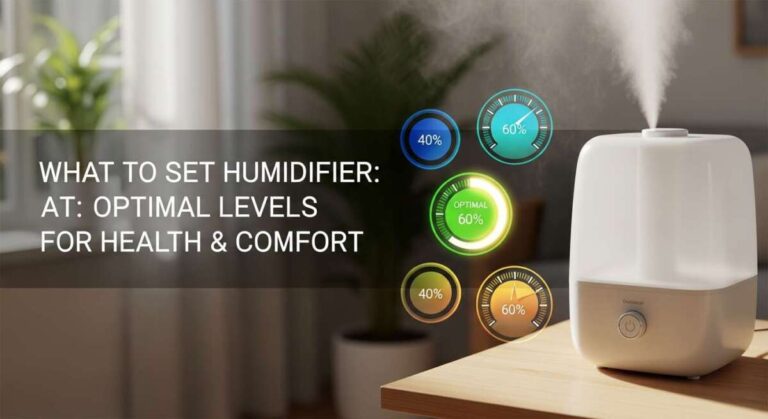
Ideal indoor humidity summer is between 30% and 50%.
- Below 30%: Too dry. Virus risk. Dry skin.
- Above 50%: Too wet. Mold risk. Mites.
- Above 60%: Very bad. Turn it off.
Using a Hygrometer
How do you know the number?
Do not guess. You cannot feel the difference between 40% and 55%.
Buy a hygrometer. It is a small digital gauge. It looks like a clock. You can get one online for ten dollars.
Put it in the room. Look at it once a day.
If it says 25%, turn the humidifier on high.
If it says 55%, turn it off.
This is the most important tool you can own.
Where to Place the Unit
Do not hide it in a corner. The air needs to move.
Put it on a table. Or a nightstand.
Keep it off the floor. If it sits on the carpet, the mist falls down. It makes the carpet wet. This grows mold.
Put a towel under it. This catches any drips.
Do not put it near the thermostat. The cool mist will trick the AC. The AC might turn off too soon.
Do not put it near wood furniture. The mist can damage the finish.
Credit: certezaestore.com
Maintenance: The Most Important Step
I must be honest. Humidifiers take work.
You cannot just fill it and forget it.
If you leave water in it, bacteria grow. Mold grows.
Then, you turn it on. The machine shoots the mold into the air. You breathe it in. This can make you sick.
We call this “Humidifier Lung.” It is like the flu.
My Cleaning Routine
I learned this the hard way. One time, I forgot to clean mine. The tank turned pink. It smelled like a gym sock. It was gross.
Here is how to clean humidifier parts safely:
Daily:
- Turn it off.
- Dump out the old water.
- Rinse the tank with hot water.
- Wipe it dry.
- Refill with fresh water.
Weekly:
- Turn it off. Take it apart.
- Pour white vinegar into the base.
- Fill the tank with water and a cup of vinegar.
- Let it sit for 30 minutes. The vinegar eats the slime. It eats the hard water spots.
- Scrub it with a small brush. An old toothbrush works great.
- Rinse it very well. Rinse it until the vinegar smell is gone.
- Let it air dry completely.
The Danger of “Pink Slime”
Have you seen pink stuff in your shower? That is a bacteria. It loves water.
It loves humidifiers too.
If you see pink slime in the tank, stop. Do not use it. Clean it with bleach or vinegar right away.
This is why daily rinsing is key. It stops the slime before it starts.
Tap Water vs. Distilled Water
Can you use tap water?
Yes, usually. But tap water has minerals. Calcium. Magnesium.
When the water turns to mist, the minerals stay. They turn into white dust.
You will see this dust on your TV screen. On your tables.
It is messy. Also, it is not great to breathe deep into your lungs.
If you can, use distilled water. It has no minerals. It keeps the machine clean. It keeps your air clean.
If you must use tap water, use a demineralization cartridge. Many machines come with one. It looks like a small filter.
When to Turn It Off
You do not need the humidifier every day.
Summer weather changes. Some days are dry. Some days are stormy.
The Muggy Test
Trust your feelings.
Does the air feel heavy? Is it sticky? Do you feel sweaty just sitting there?
If yes, turn it off. You have enough moisture.
Condensation on Windows
Look at your windows in the morning.
Is there water on the glass? Is there fog on the inside?
This is a red flag. It means the humidity is too high. The cool glass is pulling water out of the air.
If you see this, turn the machine down. Or turn it off. Wet windows lead to mold on the window sill.
Frequently Asked Questions (FAQ)
Does a humidifier make the room feel hotter?
A cool mist one does not. In fact, it can make the room feel slightly cooler. Evaporation uses heat. It takes heat out of the air. However, if the humidity gets too high (over 60%), it will feel sticky. Keep it at 50% or lower.
Can I use essential oils?
Only if the machine says so. Some humidifiers have a special tray for oils. But do not put oil in the water tank. The oil can eat the plastic. It can ruin the motor. Check the manual first.
Is it safe for babies in the summer?
Yes. Babies have tiny airways. Dry air clogs their nose. A cool mist humidifier helps them breathe. It also makes a “white noise” hum. This helps them sleep. Just keep it out of their reach.
Does it help with viruses?
Studies show that viruses hate moist air. In dry air, flu viruses float longer. In moist air, they drop to the floor. Keeping humidity at 40% helps protect your home from sickness.
Does it use a lot of electricity?
Cool mist units use very little power. They are like a small fan. Warm mist units use more power because they boil water. Using a cool mist unit will not hurt your electric bill much.
Conclusion
So, should you use a humidifier in the summer?
If you run your AC, the answer is likely yes.
It seems strange. Adding water to summer air? But now you know the science.
Your AC is a dehumidifier. It dries out your home. It dries out your skin. It dries out your nose.
You do not have to suffer. You do not have to wake up with a scratchy throat.
Get a hygrometer. Check your levels. If you are below 40%, turn the machine on.
Remember the rules:
- Use Cool Mist only.
- Clean it every week.
- Keep it between 30% and 50%.
It is a small change. But it makes a big difference.
Go check your air. Feel your skin. Listen to your body.
Stay cool. Stay hydrated. And enjoy your summer.