
How Long to Run Humidifier in Winter: Essential Tips for Comfort
It was a cold Tuesday morning in February. I woke up, and my throat felt like sandpaper.
I rubbed my eyes, and they felt dry and gritty. When I touched the doorknob, ZAP! A static shock jumped from my finger.
Does this sound familiar?
Winter is hard on our bodies. The air outside is cold and dry. Then, we turn on the heater. The heater warms the house, but it also dries out the air even more.
I knew I needed a humidifier. But I had a big question. How long to run humidifier in winter?
Should I leave it on all day? All night? Or just for a few hours?
I did not want to guess. If I ran it too little, my throat would hurt. If I ran it too much, mold might grow on my window sills.
I spent years testing this in my own home. I learned the hard way so you don’t have to.
Today, I am going to share everything I know. I will tell you the perfect schedule. I will explain the signs to look for. And I will help you stay cozy and safe all winter long.
Let’s get started.
The Short Answer: Start Here
If you are in a rush, here is the simple answer.
For most people, running a humidifier for 8 to 12 hours a day is perfect.
Usually, the best time is at night while you sleep. This helps your skin and lungs recover.
But wait.
There is a rule you must follow. You need to watch the humidity level.
You want your room to be between 30% and 50% humidity.
If it goes over 50%, turn it off. If it is under 30%, turn it on.
How do you know the number? You need a tool. It is called a hygrometer.
It looks like a small digital clock. It costs about $10. It tells you the exact humidity.
I have one on my nightstand. It is the best $10 I ever spent. It takes the guesswork out of the equation.

Credit: www.greenwashingindex.com
My Personal Winter Routine (Real Experience)
I want to share exactly what I do. This routine keeps my house comfortable without causing mold issues.
I live in a place with very cold winters. The air gets very dry. Here is my daily schedule:
7:00 AM (Wake Up):
I turn the humidifier OFF.
I open the bedroom door. This lets the moist air flow out into the hall. It also lets fresh air in. This “airing out” is vital. It stops mold from growing in the corners.
8:00 AM – 6:00 PM (Daytime):
I usually leave it off.
If I am working from home in my office, I might run a small unit on my desk. But the main bedroom unit stays off. The moisture from the night usually lingers for a while.
8:00 PM (Evening):
I turn the humidifier ON.
I do this about an hour before I go to sleep. Why? because it takes time to fill the room with moisture. By the time I get in bed at 9:00 or 10:00 PM, the air is already perfect.
10:00 PM – 7:00 AM (Sleeping):
I leave it running on “Medium.”
I close the door slightly, but not all the way. This keeps the moisture near me but allows a little airflow.
This split schedule works wonders. My skin feels great. And I never see wet windows in the morning.
Why Winter Air is So Dry
To understand how long to run humidifier in winter, we need to know why the air is dry.
Cold air is “thirsty.” It cannot hold much water vapor.
Warm air is like a big sponge. It holds a lot of water.
When cold air leaks into your house, it has very little water in it.
Then, your furnace heats that air up.
The air expands. It becomes a huge, dry sponge.
It starts sucking moisture out of everything.
It sucks moisture from your plants. It sucks moisture from your wood floors.
And sadly, it sucks moisture from your skin and nose.
The Symptoms of Dry Air:
- Bloody noses.
- Chapped lips.
- Itchy skin (Winter Itch).
- Static electricity shocks.
- Gaps in wood flooring.
Running a humidifier puts water back into that “thirsty” air. It stops the air from stealing moisture from you.

Credit: www.dreo.com
The Ideal Humidity Level (The Magic Number)
This is the most important section of this article.
You are aiming for a target.
That target is 30% to 50%.
This is the ideal humidity level in winter.
Why not lower than 30%?
- Viruses (like the flu) live longer in dry air.
- Your nose gets dry and cracks. This lets germs enter your body easier.
- You feel colder. Dry air feels colder than moist air.
Why not higher than 50%?
- Mold: Mold loves moisture. If you hit 60%, mold can start to grow on your walls.
- Dust Mites: These little bugs love humidity. They thrive in damp air.
- Damage: Excess water can rot your window frames.
My Tip:
Aim for 40%.
40% is the sweet spot. It is safe for your house. It feels great for your body.
If you don’t have a hygrometer yet, use the “Static Test.”
Walk across a carpet. Touch a metal doorknob.
Did you get shocked?
If yes, the air is too dry. Turn the humidifier on.
If no, the air is likely fine.
Can I Run It All Night?
Many people ask me, “Is it safe to leave it on while I sleep?”
Yes, absolutely.
In fact, night is the best time to use it.
We breathe deeply when we sleep.
If the air is dry, our throat dries out. This can cause:
- Snoring.
- Waking up thirsty.
- Sore throat in the morning.
Using a humidifier helps you sleep deeper. It keeps your nasal passages moist.
However, be careful.
If you have a very small room, running it on “High” all night might be too much.
You might wake up and the room feels like a jungle. The windows might be dripping wet.
My Advice:
If you run humidifier all night, set it to “Low” or “Medium.”
Or, use a unit with an auto-shutoff sensor. It will turn off when the room hits the right level.
Factors That Change the Run Time
Not every house is the same. My schedule might not work for you.
You have to adjust based on your home.
Here are the things that change how long you should run it.
1. Room Size
Do you have a huge master bedroom? You might need to run it 24 hours a day to feel a difference.
Do you have a tiny dorm room? You might only need to run it for 2 hours.
Rule: Bigger room = Longer run time.
2. Drafty Windows
Do you have old windows? Does cold air leak in?
If yes, you are losing moisture constantly. The dry air comes in, and the moist air goes out.
You will need to run your machine longer to keep up.
Fix: Seal your windows with plastic film in the winter. It saves heat and humidity.
3. Outdoor Temperature
This is a pro tip.
When it is extremely cold outside (like 0°F or -18°C), you must lower your indoor humidity.
Why?
Because the windows are freezing cold.
If warm, moist air touches a freezing window, it turns to ice instantly.
Rule: The colder it is outside, the lower your humidity setting should be (aim for 30% on freezing days).
Credit: www.greenwashingindex.com
The Condensation Warning (Protect Your Home)
I learned this lesson the hard way.
One winter, I ran my humidifier on “High” for three days straight.
I felt great. My skin was soft.
But then, I looked at my window.
There was water running down the glass.
It pooled on the wooden sill.
The wood was starting to turn black. Mold was growing.
This is condensation.
It happens when moist air hits a cold surface.
The Warning Signs:
- Foggy windows.
- Water droplets on the glass.
- Damp spots on the wall or ceiling.
If you see these signs, you are running it too long.
Turn it off immediately. Wipe up the water. Open the door.
Remember: We want comfort, but we do not want to rot our house.
Types of Humidifiers and Their Run Times
The machine you buy changes how you use it.
There are three main types.
1. Ultrasonic (Cool Mist)
These are the most popular. They use vibration to make mist.
- Run Time: They are very efficient. A tank can last 24 hours.
- Safety: Very safe. No heat.
- My Take: These are best for bedrooms. They are quiet.
2. Evaporative (Wick Filter)
These use a fan and a wet filter.
- Run Time: These are hard to overuse.
- The Magic: As the air gets wet, the evaporation slows down. They self-regulate.
- My Take: Best for people who worry about mold. It is hard to over-humidify with these.
3. Warm Mist (Steam)
These boil water.
- Run Time: They use a lot of electricity. They empty the tank fast (6-8 hours).
- Benefit: The steam is pure. Boiling kills germs.
- My Take: Good for when you are sick. The warm steam feels good on a congested chest.
When comparing ultrasonic vs evaporative humidifier types, remember that ultrasonic puts moisture out faster, so you need to watch the levels closer.
Improving Efficiency: Don’t Just Run It Longer
You don’t always need to run it longer. Sometimes you just need to run it smarter.
Here are my tricks to get the most out of your machine.
1. Placement Matters
Do not put it on the floor.
Mist falls down. If it is on the floor, the carpet gets wet. The air stays dry.
Put it on a dresser or nightstand.
Ideally, place it 3 feet off the ground.
This lets the mist mix with the air before it hits the floor.
2. Use Distilled Water
Tap water has minerals.
When the water evaporates, the minerals stay behind.
They turn into “White Dust.” You will find this dust on your TV and furniture.
This dust can irritate your lungs.
Using distilled water stops this. It also keeps the machine clean.
3. Close the Door (Mostly)
If the bedroom door is wide open, the moisture escapes into the hallway.
You are trying to humidify the whole house with one small machine. It won’t work.
Close the door to create a cozy “micro-climate” in your room.
Health Benefits of Proper Timing
Why do we go through all this trouble?
Because the health benefits are real.
I used to get a sinus infection every January. Since I started using a humidifier for sleeping, I rarely get sick.
1. Fighting Viruses
Studies show that flu viruses float in dry air longer.
In moist air, the virus particles get heavy and fall to the floor.
Keeping humidity at 40% helps protect you from catching the flu.
2. Eczema and Skin Relief
Dry air sucks moisture from your skin. This causes eczema flare-ups.
Running a humidifier creates a barrier. It helps your skin hold onto its natural oils.
3. Voice and Throat
If you wake up with a raspy voice, your vocal cords are dry.
Singers and teachers swear by humidifiers.
It keeps the vocal cords lubricated while you sleep.
Maintenance: The Hidden Factor
Here is the dirty truth.
A dirty humidifier is dangerous.
If mold grows in the tank, the machine shoots mold spores into the air.
You breathe them in. This can make you very sick. called “Humidifier Fever.”
My Cleaning Schedule:
I am strict about this.
- Daily:
- Turn off.
- Dump out old water.
- Rinse with fresh water.
- Let it dry until evening.
- Weekly:
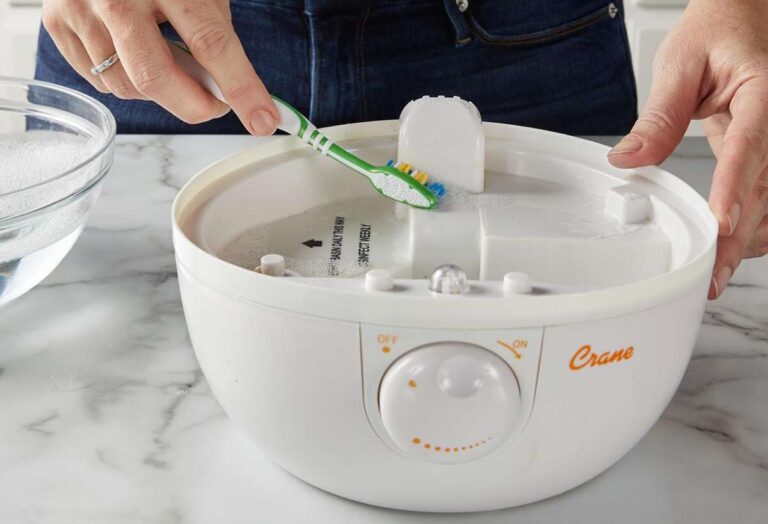
- The Vinegar Soak.
- I pour 1 cup of white vinegar into the base.
- I let it sit for 20 minutes. This eats the mineral crust.
- I scrub it with an old toothbrush.
- I rinse it 3 times.
This simple routine ensures I am breathing clean mist, not mold juice.
This is how you prevent mold in humidifier tanks effectively.
Smart Humidifiers and Timers
Technology can help us.
I recently bought a “Smart Plug.” It connects to my phone.
I plugged my “dumb” humidifier into the smart plug.
Now, I can set a schedule on my phone.
- ON: 8:30 PM
- OFF: 7:00 AM
I never forget to turn it off anymore. It saves electricity. It saves water.
Some newer humidifiers have a “Hygrostat” built-in.
You set it to 45%.
It runs until it hits 45%. Then it turns off.
When it drops to 40%, it turns back on.
This is the ultimate “set it and forget it” solution.
Troubleshooting Common Issues
Even with the best routine, things happen.
Problem: The carpet is wet.
- Fix: The unit is too low. Move it higher. Or, turn the mist level down.
Problem: White dust everywhere.
- Fix: You are using hard tap water. Switch to distilled water. Or buy a demineralization cartridge.
Problem: It is too noisy.
- Fix: You probably have an evaporative fan unit. Switch to an ultrasonic unit. They are silent.
Problem: I see pink slime in the tank.
- Fix: That is bacteria. You need to disinfect it. Use a weak bleach solution (1 teaspoon bleach per gallon water). Rinse thoroughly.
Conclusion
So, how long to run humidifier in winter?
For me, the answer is every night while I sleep. About 8 to 10 hours.
But for you, it might be different.
Use the tools I mentioned. Buy a hygrometer. Watch your windows for condensation. Listen to your body.
If you wake up feeling great, keep doing what you are doing.
If you see mold, cut back.
Winter doesn’t have to be miserable. With a little bit of moisture, you can feel like it’s spring inside your bedroom.
Stay warm, stay hydrated, and breathe easy!
Frequently Asked Questions (FAQ)
1. Is it okay to run a humidifier all night?
Yes, it is generally safe and beneficial to run a humidifier all night to improve sleep and skin hydration. Just ensure the room does not become damp or foggy, which indicates the humidity is too high.
2. How do I know if I am running my humidifier too much?
The clearest signs are condensation on windows (wet glass), damp spots on walls, or a musty smell in the room. If you see water dripping, turn the unit off immediately.
3. What is the best humidity level for sleeping?
The ideal range for sleeping is between 30% and 50% relative humidity. This range keeps nasal passages moist without encouraging dust mites or mold growth in the bedding.
4. Should I keep the door open or closed?
It is best to keep the door slightly ajar (cracked open). This allows for some air circulation so the room doesn’t become a swamp, but keeps enough moisture in to keep you comfortable.
5. How often should I clean my humidifier in winter?
You should rinse the tank daily and do a deep cleaning with vinegar once a week. This prevents bacteria and pink mold from growing inside the warm, wet environment of the machine.
6. Can a humidifier help prevent the flu?
Yes, research suggests that maintaining humidity levels above 40% can deactivate virus particles in the air faster and help your nasal defense system work better against infections.